
In 2016, I wrote an article about the different stoves I used for camping.
A decade later, all those stoves still work.
However, my camping style, how often I camp, and, crucially, who I camp with have all changed.
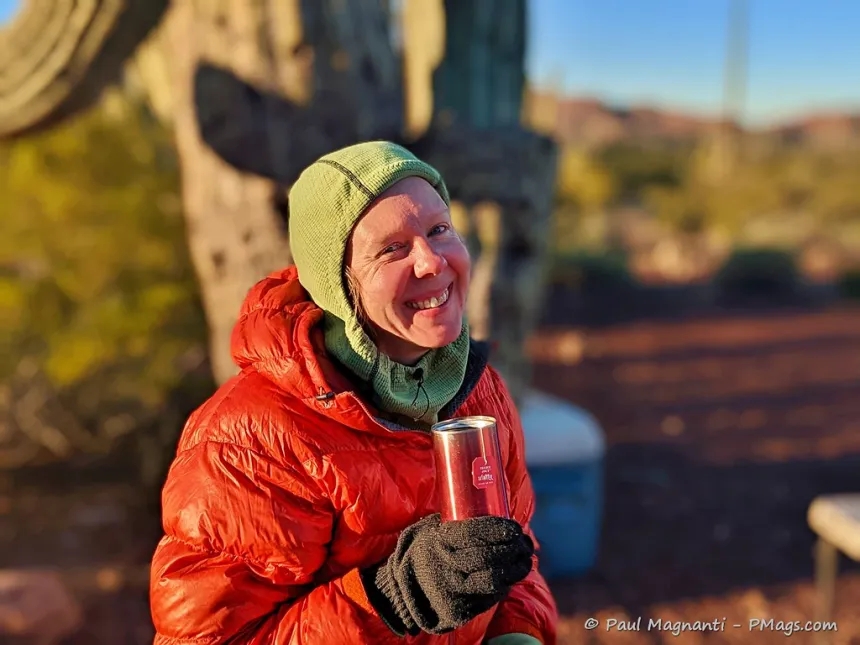
This favorite photo sits across from me as I type. From our trip to Organ Pipe Cactus.
Joan and I often combine camping with backpacking, sometimes for many days at a time. During winter’s short days, we especially enjoy car camping in stunning places that are not ideal for backpacking.
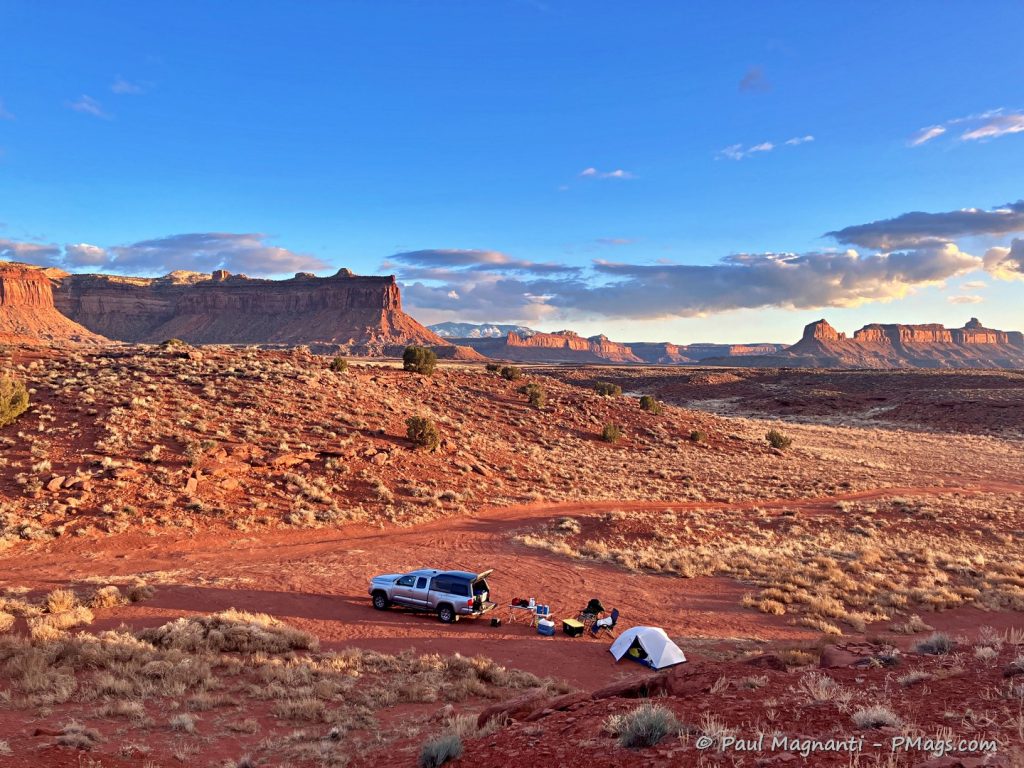
Car camping is not separate from backpacking but part of our larger outdoor toolkit.
Within this outdoor toolkit, we use different stoves for different types of trips:
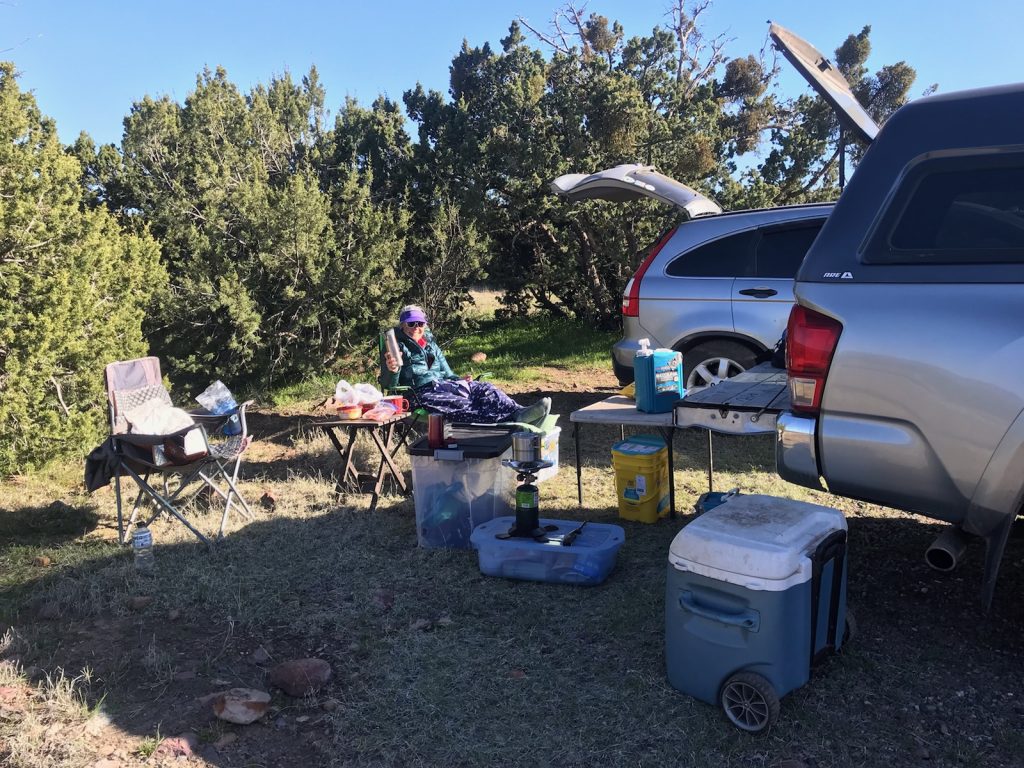
Jan uses the solo kit while camping with Joan (and our perma-camping kit in general). The two-person kit stayed at home. PCO Joan.
- A tabletop stove handles quick meals from the tailgate.
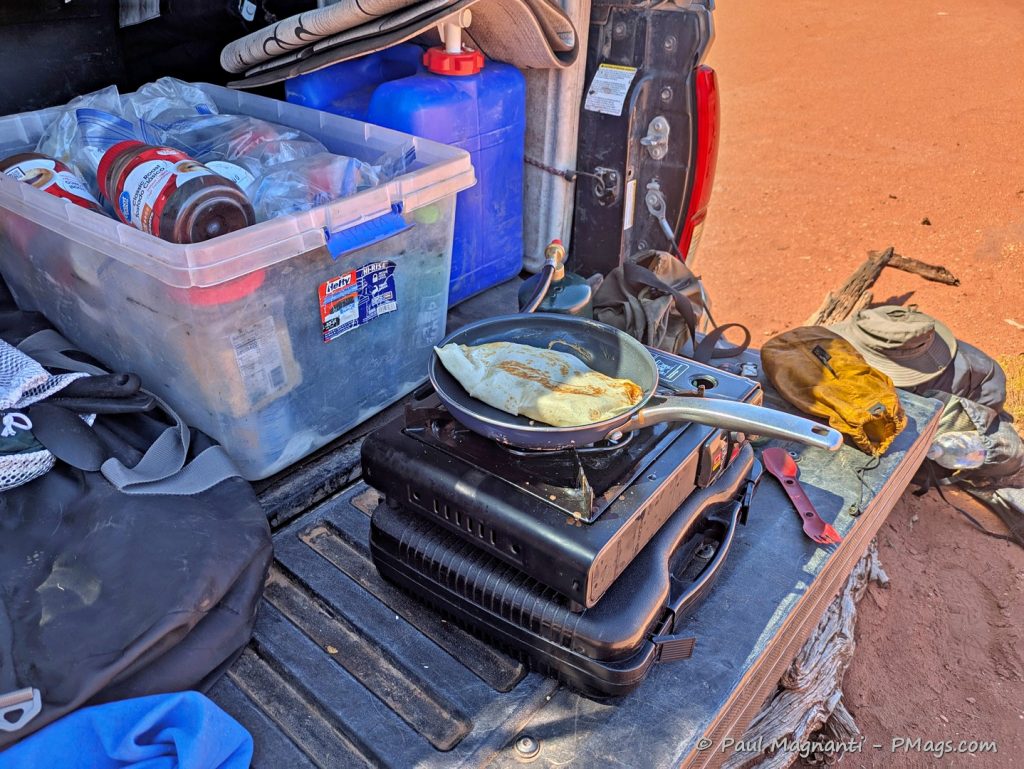
Enjoying a post-Maze-trip egg burrito with some questionable-quality instant coffee!
- A suitcase-style stove with high BTU output makes an efficient basecamp kitchen for multi-day trips.

Joan likes to make pancakes. I enjoy eating them. Perfect!
- And our late-1990s/early-2000s vintage Coleman white-gas stove? It still works, but mostly sits in the shed.
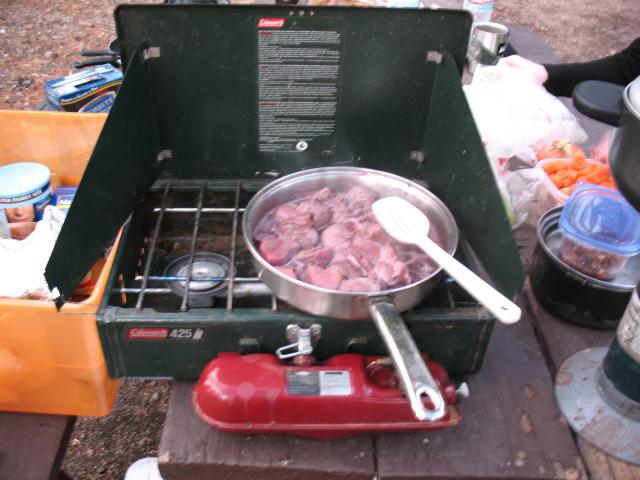
Still using a pantry tote, however!
Here is what we actually use in 2026.
Upright propane stove
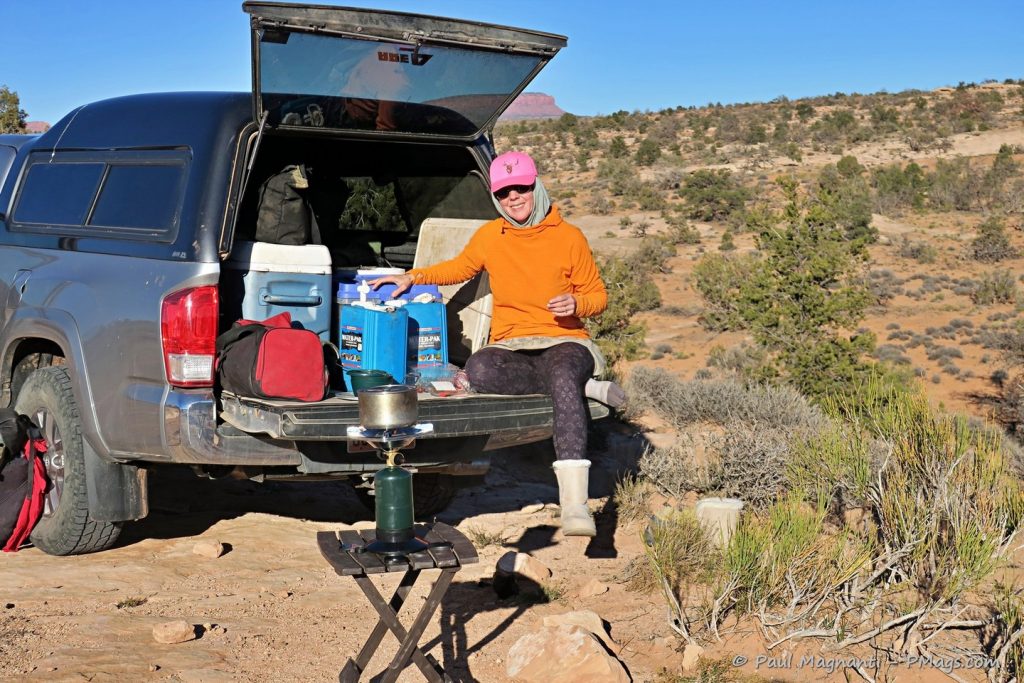
At one point, part of our perma-camping kit. Brewing up some hot drinks after a backpacking trip.
The classic upright propane stove remains simple, powerful, inexpensive, and easy to find.
Screw the stove onto a one-pound green propane bottle, light it, and start cooking. These stoves put out plenty of heat, simmer well, and work better in colder temperatures than a tabletop butane stove.
The tall design works best for boiling water or using smaller cookware. A large skillet makes the setup top-heavy and awkward. And the design itself will always remain top-heavy.
We keep one in Joan’s solo camping cook kit, along with two propane bottles, cookware, utensils, cleaning supplies, and a lighter. Everything fits into a small duffel bag.
Joan can grab the kit for a quick solo trip, use it between backpacking trips, or loan it to someone who needs camping gear. I occasionally use it myself.
The one-pound propane bottles cost more per unit of fuel and create more waste than refillable tanks. Still, they fill a niche for us, and our local area recycles them for free.
Joan and I often camp for one night before starting a backpacking trip or make a quick meal after a trip. For a quick dinner, coffee, and breakfast at the trailhead, bringing our larger propane tank adds bulk for little benefit. The green bottles also work well for road trips and Joan’s self-contained go-bag.
We use them more often now than we did in an earlier phase of my camping life, but they are still not our default fuel for extended car camping.
Tabletop dual-fuel stove
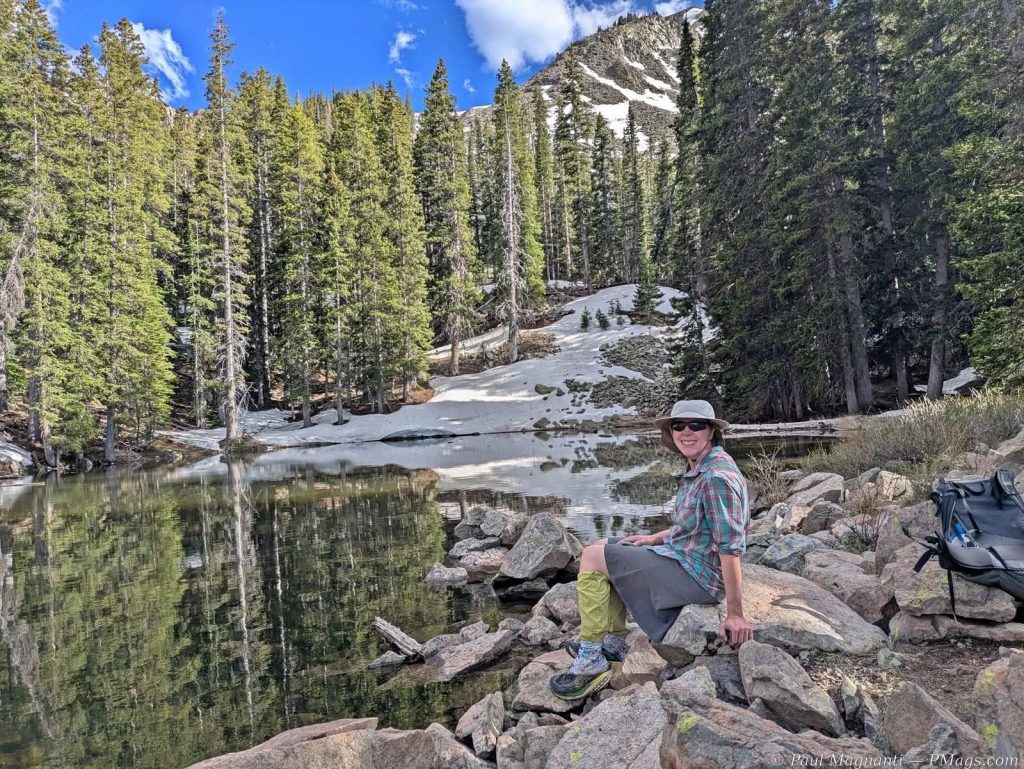
I only have one photo of the stove in use. Here’s a photo of Joan in the La Sals instead.
For quick meals from the tailgate, we use a compact SHINESTAR dual-fuel tabletop stove.
This stove can use a standard butane cartridge or connect to propane with an adapter hose. We usually run it on propane since it works better in colder conditions and is more widely available in outdoor areas.
The tabletop design provides a low, broad cooking surface. It supports a skillet much better than an upright stove and works well for skillet cooking.
Its nominal BTU output does not quite match a large upright burner or our two-burner stove. In actual use, a simple windscreen mitigates much of that difference.
The windscreen keeps the flame centered beneath the cookware, improves boil times, and prevents much of the heat from blowing past the pot or skillet. A lower-output burner with effective wind protection can perform better than a more powerful exposed burner.
I only use this type of windscreen when the propane bottle sits remotely and safely away from the burner.
Do not surround a stove with a windscreen when the fuel bottle remains attached to or enclosed within the stove. Trapping heat around a fuel container can create a dangerous situation. This is known as a VERY BAD THING!!!
For our quick pre-backpacking camps, the tabletop stove strikes a useful balance. It cooks better than the upright stove, takes up far less space than a full two-burner stove, and sets up quickly on the Tacoma tailgate. It also always stays in our perma-camping kit.
Camp Chef Everest
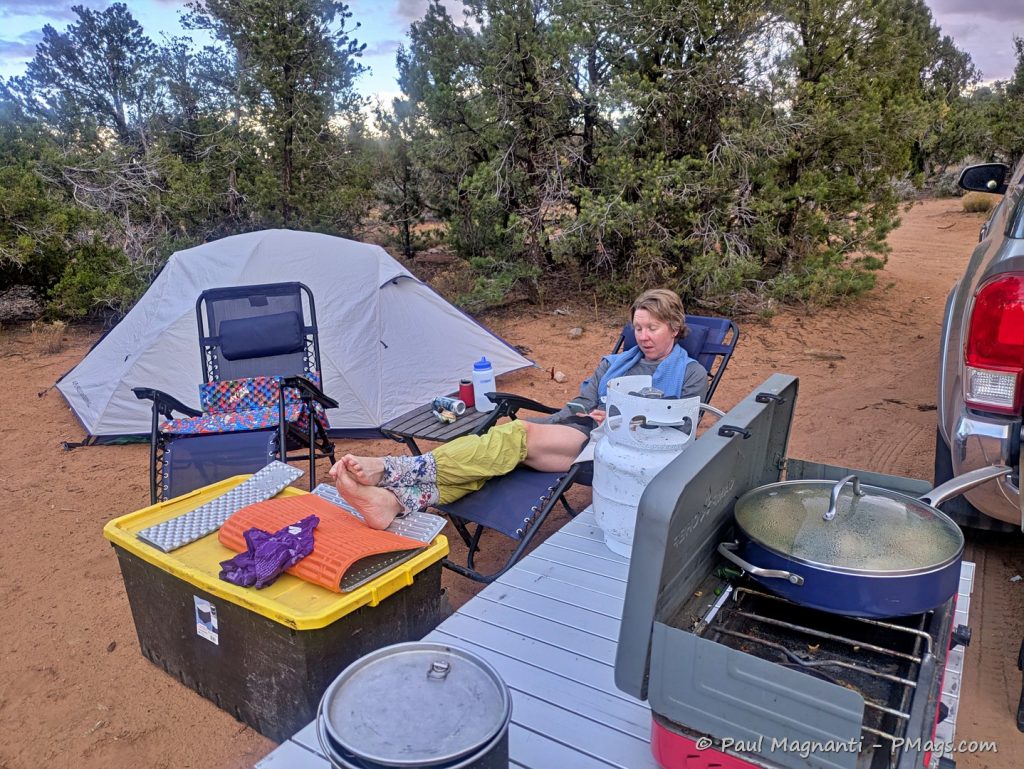
We often camp after backpacking trips too.
When Joan and I plan to cook more substantial meals or spend extended time in camp, we bring our Camp Chef Everest.
The Everest has two 20,000-BTU burners, excellent flame control, integrated windscreens, and enough room for proper cookware. It cooks much like a basic stove at home.
We can boil water on one burner while cooking with a skillet on the other. We can prepare pasta, burgers, stews, pancakes, eggs, or nearly anything else we would make in a simple home kitchen.
The Everest weighs more and takes up more space than the tabletop stove. For one night at a trailhead, we often do not need it. For several nights of car camping, especially when we want to cook rather than just heat food, it earns its keep. The stove “lives” in a tote with most of our basecamp supplies, such as cookware, utensils, the larger propane tank, and so on.
This stove replaced an older TexSport two-burner propane model we used for many years. The two stoves shared essentially the same design under different brand names. The TexSport eventually wore out, and we replaced it with the original Camp Chef Everest.
Unfortunately, camping gear has become more expensive since COVID due to inflation and tariffs. The current version of the Everest stove costs over $200.
The Camp Chef Kodiak offers similar functionality with less output. Honestly, most people do not crank their stove to full power, and its two 10,000-BTU burners should work well for most camping meals. At about $100, it also costs roughly half as much.
The propane adapter hose
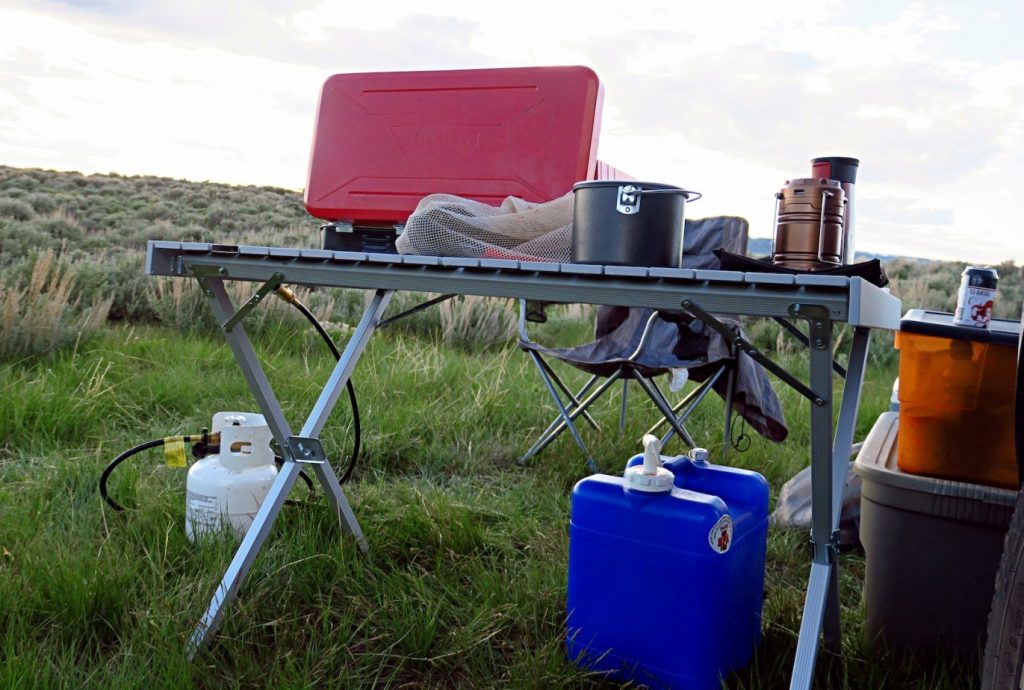
For longer trips, we generally avoid accumulating one-pound green bottles.
A propane adapter hose lets us connect our camping stoves to a standard refillable propane tank. We use a five-pound tank because it provides an excellent compromise between capacity and portability.
A twenty-pound barbecue tank costs less per pound of propane to refill, but it takes up considerable space in a vehicle. The five-pound tank fits our camping style better and supplies ample fuel for most trips.
The adapter hose also means our different stoves share the same basic fuel system. The tabletop stove and the Everest can run from the same refillable tank. With the proper hose and a bit of finagling, even an upright propane stove can use the tank.
I also use a flexible regulator hose for our Everest, which Camp Chef no longer seems to offer. It resembles this version meant for a Coleman stove. The flexible hose lets me place the propane bottle flat and away from the stove rather than suspend it from a rigid metal arm. The setup feels more stable, reduces wear on the fitting, and fits more easily on a crowded table or tailgate. You will need to verify the fit and operating pressure of other hoses for your particular model.
For short trailhead camps, we use the green bottles because they pack easily. For longer camps, we use the five-pound tank because it costs less, lasts longer, and creates less waste.
Neither choice is universally better. The trip determines which fuel container makes sense.
The old Coleman white-gas stove
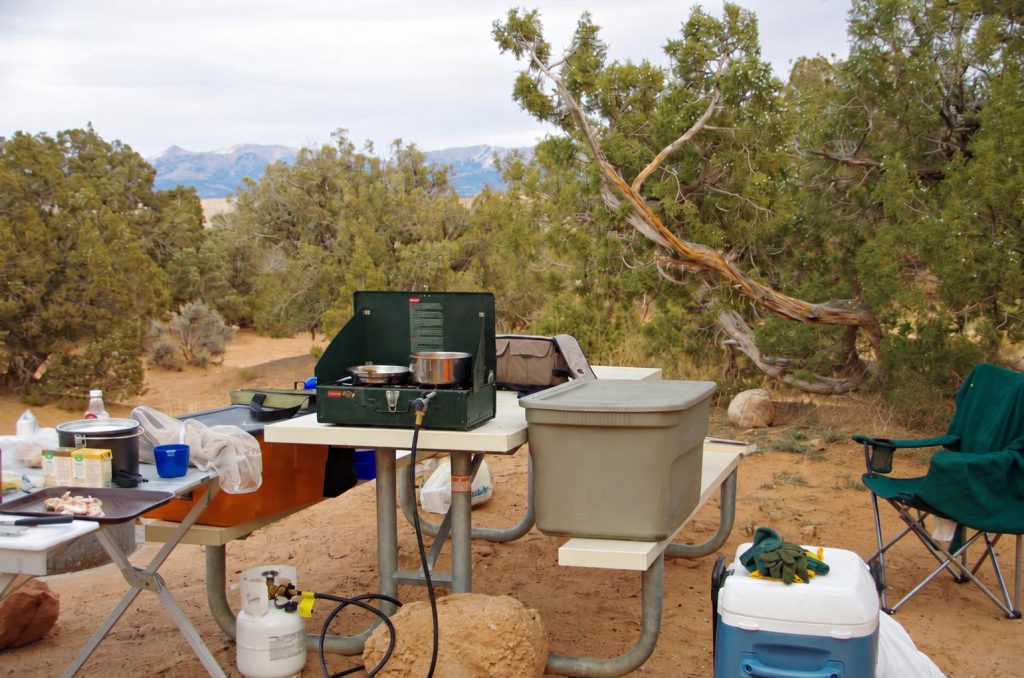
In Capitol Reef, 2014. I also have a white-gas-to-propane converter for this stove.
I still own that classic Coleman two-burner white-gas stove from the late 1990s.
The basic design has existed for generations. These stoves are sturdy, repairable, and effective in cold weather. Many families used one during camping trips, hunting and fishing camps, or classic road trips while enjoying our public lands.
Mine still works. I fired it up a couple of years ago to make sure it still did.
However, it now spends most of its time in the shed.
I rarely use enough white gas before the fuel degrades in storage. The stove requires pumping, priming, and more attention than our propane stoves. It does not simmer as easily, and the burners produce less heat than the Camp Chef Everest. I also doubt deep-winter camping is on our Utah docket anytime soon, when those properties of white gas would prove useful.
I also own a Stansport propane converter that replaces the Coleman’s original white-gas tank and generator assembly. With the converter and an adapter hose, the old Coleman can run from the same five-pound propane tank as our modern stoves.
Propane did not entirely replace the Coleman. Rather, it made the Coleman stove a multi-fuel setup.
The converter gives the stove impressive versatility:
- I can use white gas with the original tank.
- I can install the converter and attach a one-pound propane bottle.
- I can add the hose and run it from a larger refillable tank.
In practice, I still reach for the Everest. It provides more heat, better flame control, easier operation, fewer steps, and piezo ignition.
The Coleman remains functional backup equipment and a piece of classic camping that refuses to die. It sits in the shed, gets tested every so often, and waits patiently for a big camping trip. Or perhaps a zombie apocalypse.
Cookware
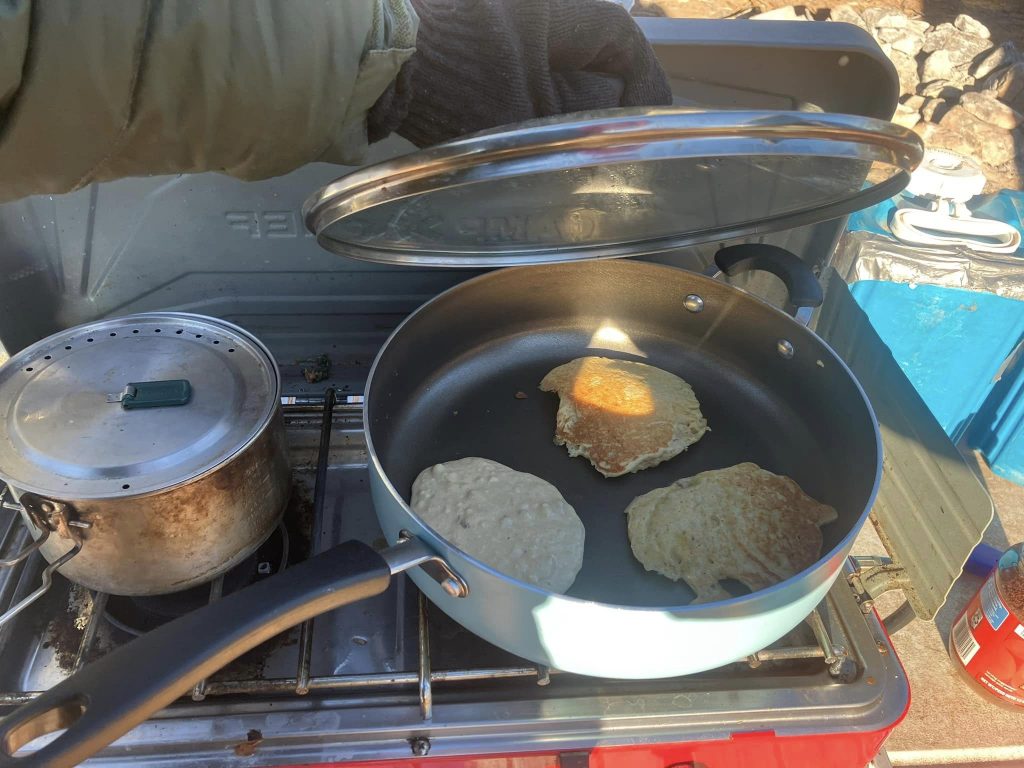
We do not use elaborate cookware for camping.
A few basic pots, a nonstick skillet, and inexpensive utensils cover nearly everything. Discount-store cookware often works better and costs less than specialized camping cookware.
Our Stanley Adventure cook set has lived in our perma-camping kit for years. We supplement it with regular kitchen items as needed.
Car camping gives us the luxury of choosing cookware for function rather than counting grams.
A decade later
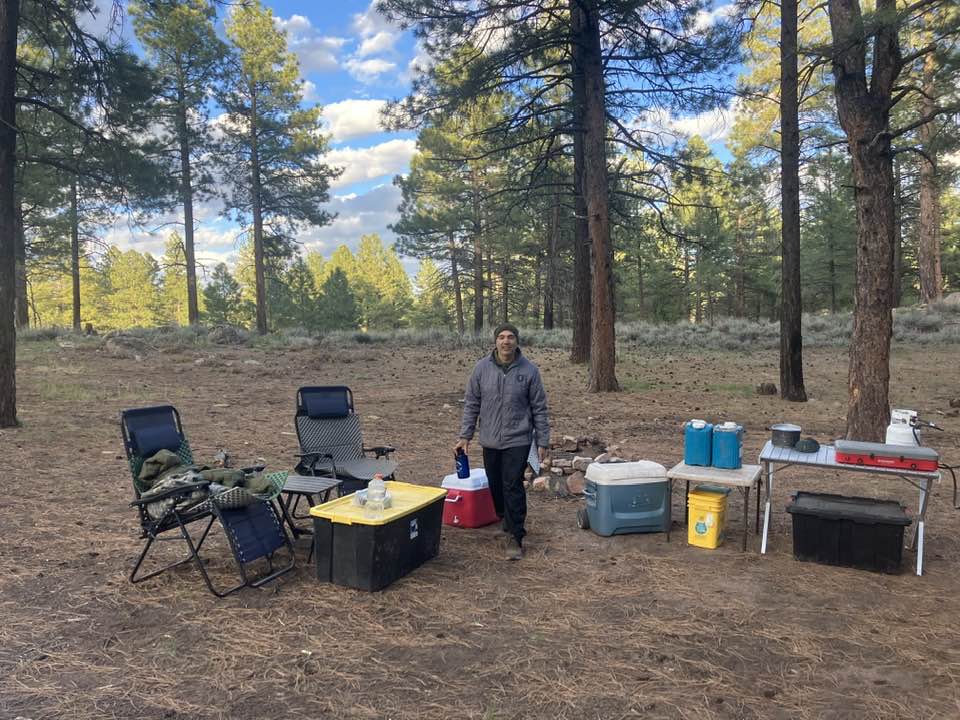
Our current car-camping kitchen, assembled over many years and many trips. We spent “Eight Days at The Edge of Nowhere” backpacking and camping for my birthday.
Ten years ago, I described several camping stoves that worked for me then.
A decade later, my use of camping stoves is more dialed in.
The upright propane stove works best as part of a compact solo or loaner kit. The tabletop stove handles quick tailgate meals and works well with a skillet. The Camp Chef Everest gives us a full camp kitchen. The Coleman still works but rarely leaves the shed.
The adapter hose and five-pound tank connect most of these stoves to a single propane system. The disposable green bottles remain useful when portability and quick setup matter more than fuel economy.
Specifications tell only part of the story. BTUs matter, but so do wind protection, stability, cookware, fuel storage, setup time, and how often we actually reach for a stove.
A powerful burner exposed to wind may perform worse than a modest burner behind a windscreen. A five-pound tank may cost less per meal, but a one-pound bottle makes more sense for a single night at a trailhead. A durable white-gas stove may last for generations, but that does not mean I want to pump and prime it before making breakfast.
None of our older stoves became useless.
Our camping style changed, and some tools now fit our trips better than others.
As with most outdoor gear, the best stove is not necessarily the most powerful, efficient, or technically impressive one.
It is the stove that makes the meal we want, works with the trip we are taking, and lets us get on with enjoying the campsite, the place we call home, and our gifts of time.