
It’s the end of 2025, and we have not changed up our gear much.
We did not get to go bikepacking as we had hoped in 2025, for various reasons.
Perhaps we will get to use our bikepacking gear this coming spring. We’ll see what happens!
Showing our evolution by combining our systems and traveling together, most of this year’s picks are things we liked as a couple rather than individual choices.
Onward to the gear we liked for 2025!

Joan’s pick
Joan wore this garment often this past year. It gives her more coverage and warmth in camp, is comfy for travel, and she likes the fit. It’s on almost every trip we take!

One of my favorite photos of Joan.
Our Picks
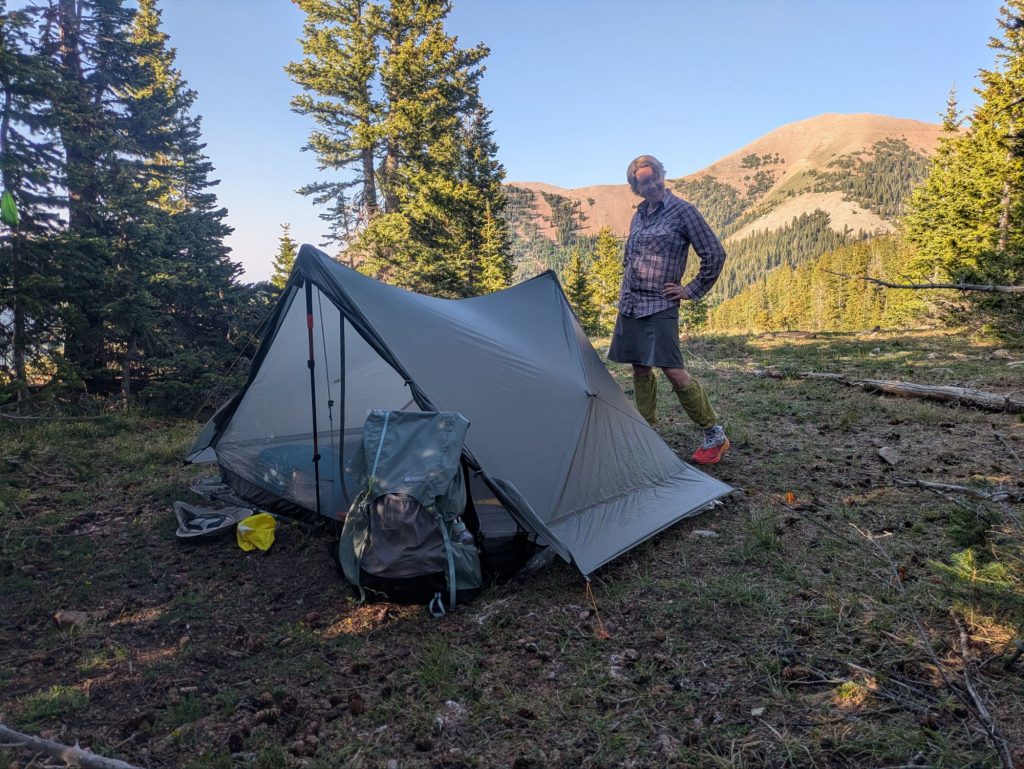
A sub-alpine camp in the La Sal Mountains.
For prime three-season backpacking, we’ve grown to enjoy using this shelter. It is spacious, even for two, quick to set up, and has excellent ventilation. We’ve used it in the desert and the mountains, and it’s now a permanent part of our kit.
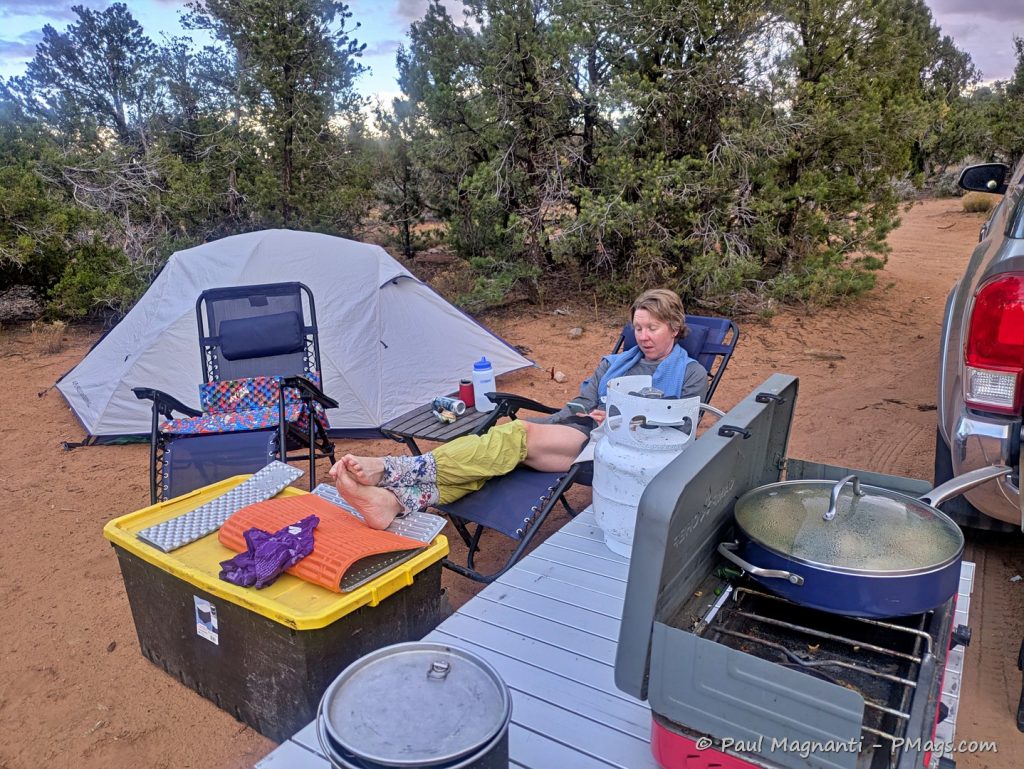
Relaxing camp in between backpacking nights.
I’ve long held that a person should not buy camping pans at outdoor stores and instead purchase them at a discount store or similar. The pans are often of better quality for the price, less expensive, and cook food more evenly.
After a few too many bumps down dirt roads that scratched up our pan a bit too much, I bought a replacement pan for camping this year, and it quickly became Joan’s favorite. The Blue Diamond ceramic pan holds heat well and cooks evenly — always a good choice for camp stoves!
And unlike cast iron, which I love to use at home, it is lighter to pack and less bulky. (That matters for camping to some extent, too!) Joan liked it so much that she purchased a deep saute’ pan, which is now our camping workhorse as well. Very telling? We gradually replaced the non-stick pans in our home with these pans, too. (We kept the cast iron and the stainless steel saute’ pan, however.)
Joan, ever mindful of our gear and how to prolong its use, made some dual-use pan covers to both protect and dry the pans, using recycled camp towels, bankline, and cord locks, too.
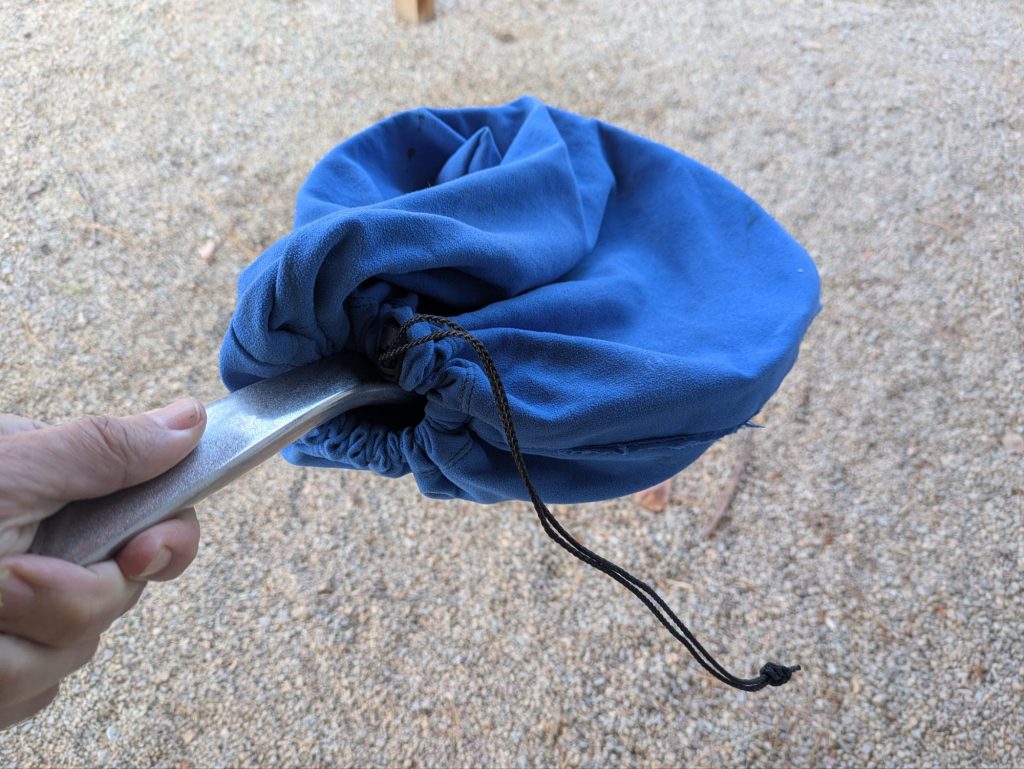
Joan’s handiwork.
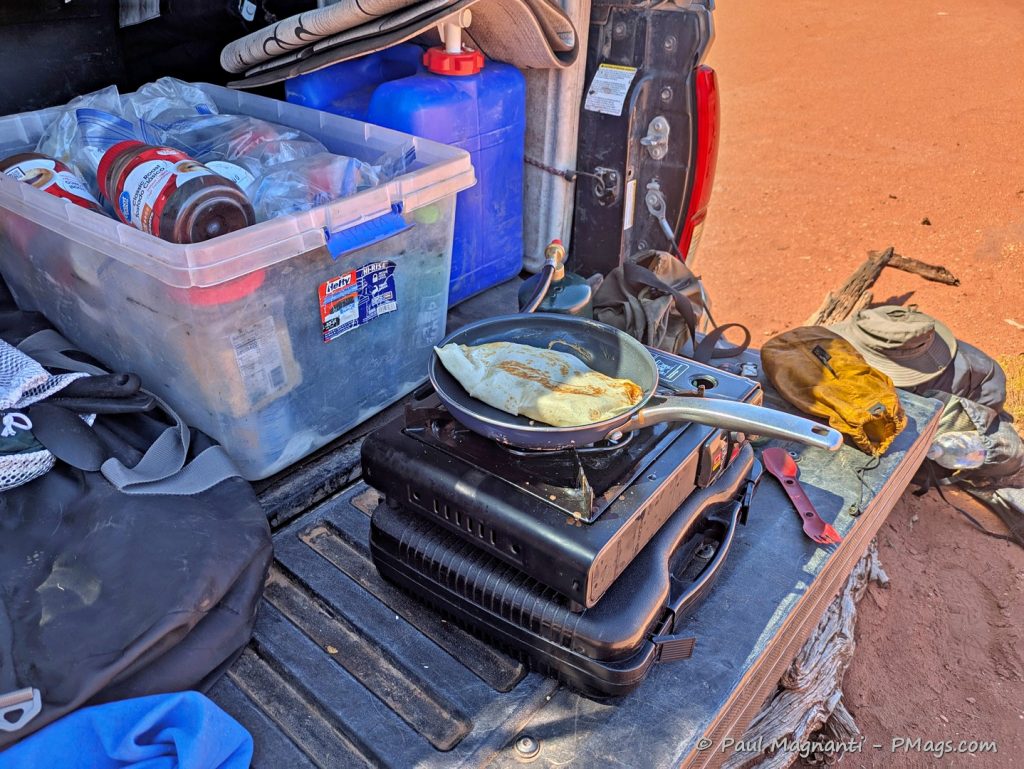
Post-trip egg burrito with some questionable quality instant coffee!
At $34, this compact stove works well on our tailgate, hooks up quickly, and boils water or helps make a quick meal for our pre-backpacking nights. Unlike the more traditional upright one-burner stove, it’s more stable and can handle a skillet better, which is useful when cooking for two. The included adaptor hose lets the stove work with propane as a remote canister setup, too. I suggest adding a simple windscreen to the stove to block wind and improve efficiency.
(DO NOT USE THIS SCREEN ON STOVES WHERE YOU CAN’T KEEP THE FUEL AWAY FROM THE STOVE!)
- Big Agnes Copper Spur HV UL2 (2024)
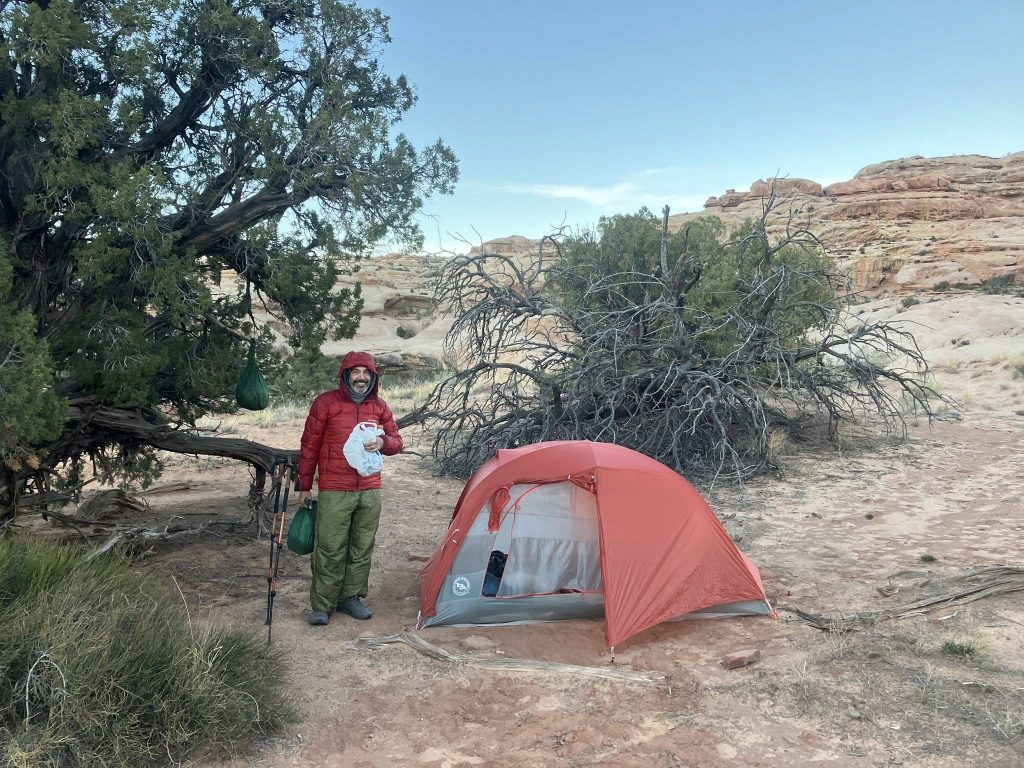
In November 2025. From Joan.
I used a single-wall, non-free-standing shelter for many nights in the backcountry in all kinds of conditions, though rarely with another person.
One snowy, cold, windy, and limited-light evening in December a few years back, Joan and I had a “spirited discussion” because we were cold, tired, and hungry as we fiddled with a shelter that ended up with condensation over the course of the evening.
That Sunday, Joan ordered a Copper Spur HV UL2 (2019) on clearance, unknown to me, and we used the tent effectively over many nights in the backcountry.
However, after many nights and some zipper repairs, it was time to retire it. We picked up the 2024 version on clearance and, overall, liked it. (More versatile vestibule, but we are not as sold on the clips in the Utah sand for the vestibule itself.)
It’s a newer version of an older friend and perfect for late fall to late winter, when the nights are shorter, colder, and condensation is more of an issue.
The zippers are still not as robust, and it’s cozy for two, but it works well for our needs.
As before, it’s not UL orthodoxy by itself, but split up, I carry less than ~2 lbs/ 1 kg, and Joan carries ~1 lb / 500 g. Overall, the tent remains a worthy addition to our kit. I can’t comment on the Copper Spur HV UL2 2025 version directly, but it looks similar, if more expensive. Maybe I’ll review the newer version in 2030!
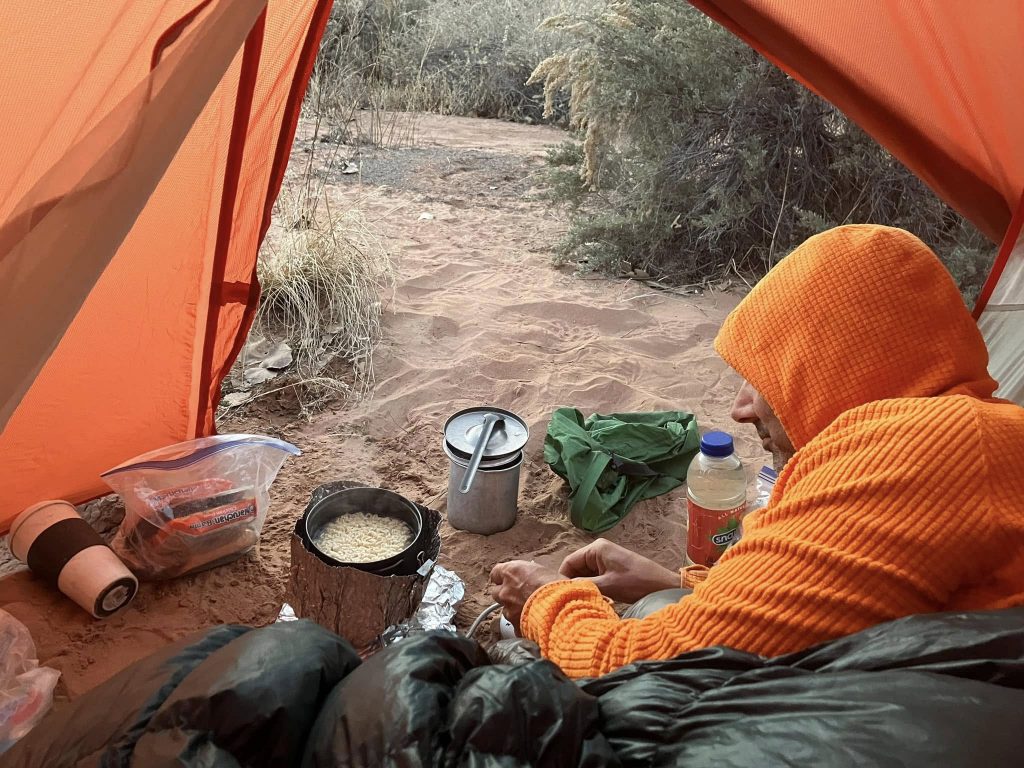
A February trip in the desert.
Fire Maple stoves have a reputation for being solid and reliable, though not as feature-rich as other stoves, which makes this one perfect for the meals we want when backpacking. (Including the all-important chocolate paired with cider and rum, of course.)
Their remote canister stove this past year served us well in High Desert winters and was not as fiddly as white-gas stoves.
As always, I pair it with our dirt-bagger stove platform and windscreen for both stability and improved performance in cold weather.
Simple, effective, light for its category, and not expensive.
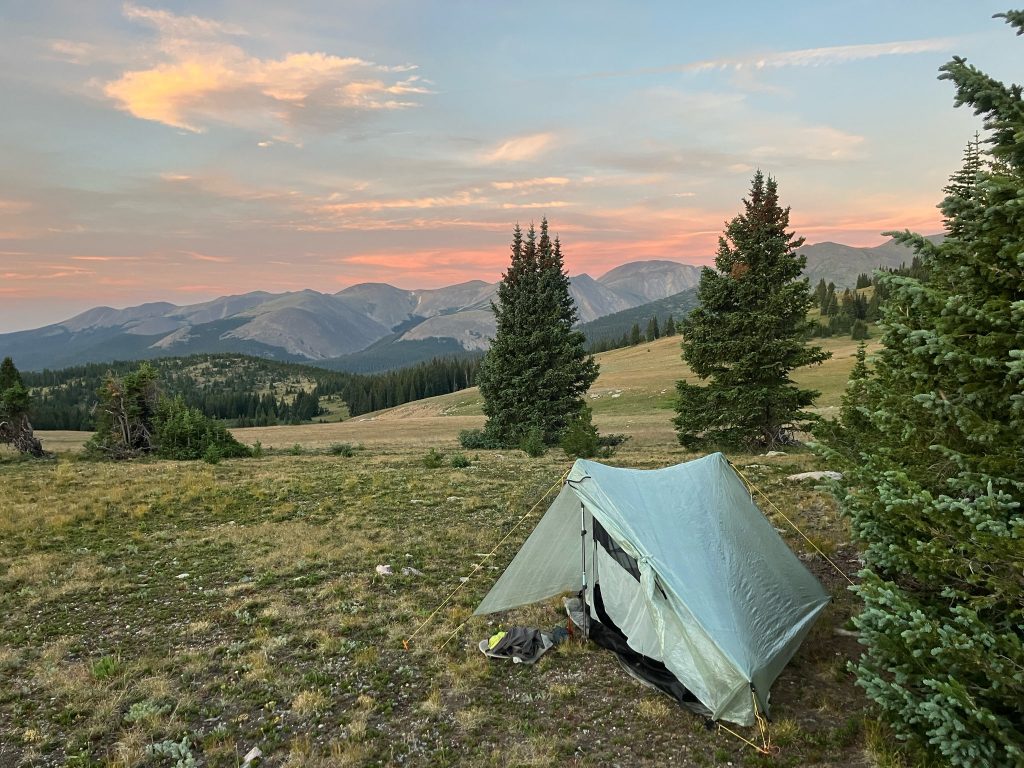
A good photo in ideal conditions. No rain in sight. From Joan.
After a gear failure, Joan switched to a pricey but effective Tarp Tent Notch Li double-wall DCF shelter during the thick of Colorado’s “monsoon” season on The Colorado Trail this year.
At 23 oz / 640 g, it’s impressively light for a true double-wall, and it kept both her and her gear dry. Joan calls it “cozy” (in a good way) and enjoyed using it as a solo shelter.
I used it on my New England trek in October as well to good effect, though with better weather than Joan overall!

A recent trip was fewer than five miles from our home!
Our favorite daypacks tend towards light, simple, and practical rather than overbuilt or overfeatured. Which makes the Loris 25 ideal for the kind of day hikes Joan and I do on the Plateau.
We’ve used it steadily since April 2025, and it’s proven durable on sandstone scrambles, roomy enough for layers and water, and comfortable all day without needing extra fuss. The removable sit pad is a bonus for breaks, and the layout works well if you like to keep things organized.
The closure isn’t as much to our liking as a drawstring pack, and we are not a fan of the zipper on the extension collar, but otherwise, once loaded, it carries well and stays out of the way. Overall, it is a pack we are pleased with.
A mainstay now for both of us.
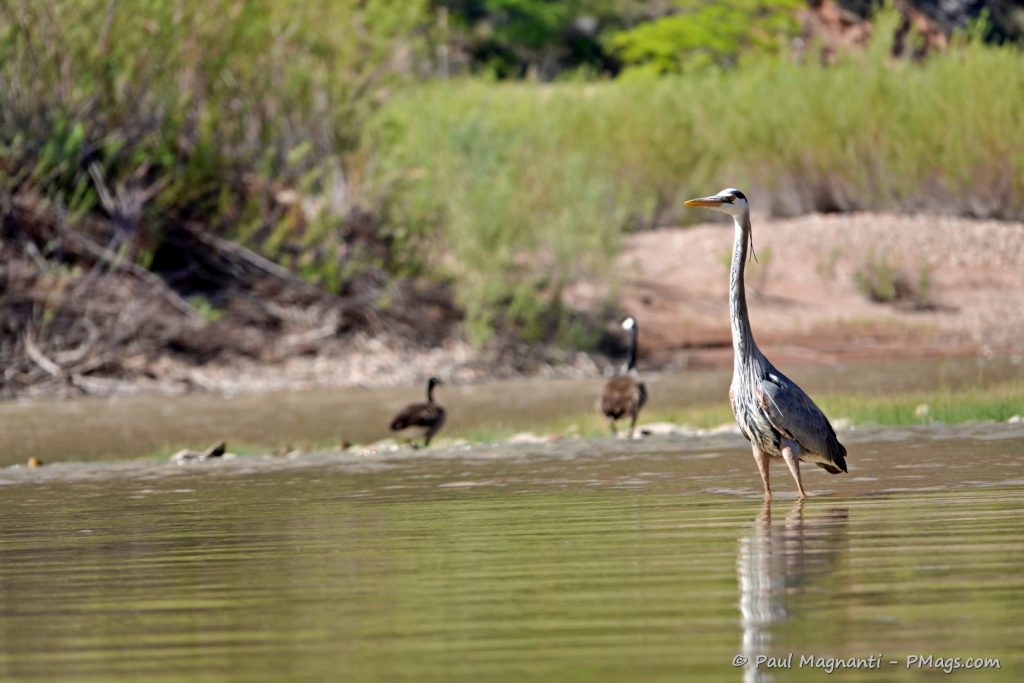
Blue heron along the Colorado River.
A new favorite app for Joan and me! Available for iOS and Android. We always use it in the field, and it’s added another enjoyable facet to our trips. Free and effective.
Sound ID listens to the birds around you and shows real-time suggestions for who’s singing. Compare your recording to the songs and calls in Merlin to confirm what you heard. Sound ID works completely offline, so you can identify birds you hear no matter where you are.
Available for birds in the US, Canada, Europe, with some common birds of Central and South America, and India. More species and regions coming soon.
- And too late for 2025, but contenders for 2026…
We tested out a ULA pack each, which is extremely promising. I can’t say too much now, but we both find it very comfortable, light for its niche, and up to the ULA standards for ruggedness we value so much here in Utah. I used it for my 500-mile New England Walk, and Joan is currently using it in the desert around our home.
We also started using a new version of the Squak Woolie. More of a light layering piece than a base layer, Joan, in particular, loves it as an augment for colder-weather backpacking. I’ve used it briefly, on its own, for some early-November backpacking and hope to use it more in the spring.

Joan on a solo trip in the desert.
Paul’s Pick

On top of Mt. Monadnock in New Hampshire.
A simple hat that’s light, quick-drying, inexpensive, and with a longer bill that works well with sun hoodies on overcast days or in cooler weather when my boonie hat’s not as practical. It is under $15, an excellent value.
~~~
Though backpacking and camping are not about the gear, some good tools help with our outdoor trade. I suspect 2026 will find us liking our usual mix of DIY gear, cottage picks, higher-end items, and some budget picks that will add to our tool kit.