
Joan and I try to get out as much as we can.
And part of that time means we often camp the night before a weekend backcountry trip or camp in between shouldering our backpacks.
Why? It’s a good way to wind down the workweek and let us maximize our time outdoors.
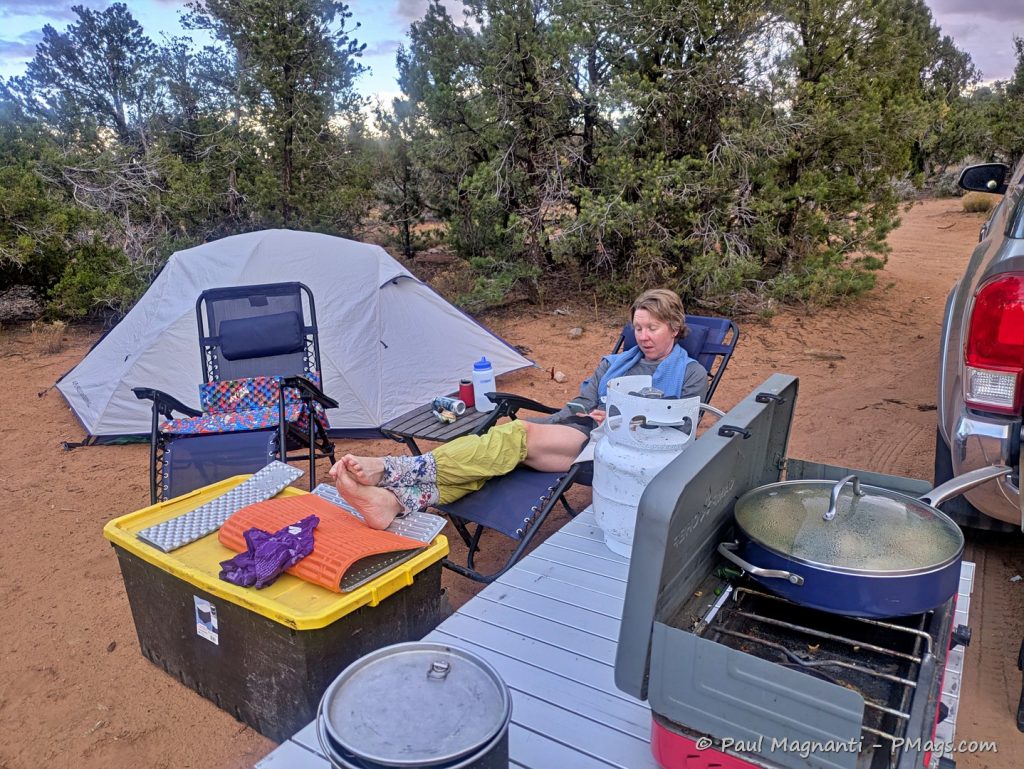
As noted, we often camp after backpacking, too.
The alternative is an early morning drive, groggy miles, and a first day that never quite gels.
Instead, we pull into a dispersed site Thursday evening or Friday after work, set up the Chaos 3, get the stove going, and ease into the weekend.
By the following morning, when we shoulder packs, we’ve already slept well, eaten well, and found the rhythm.
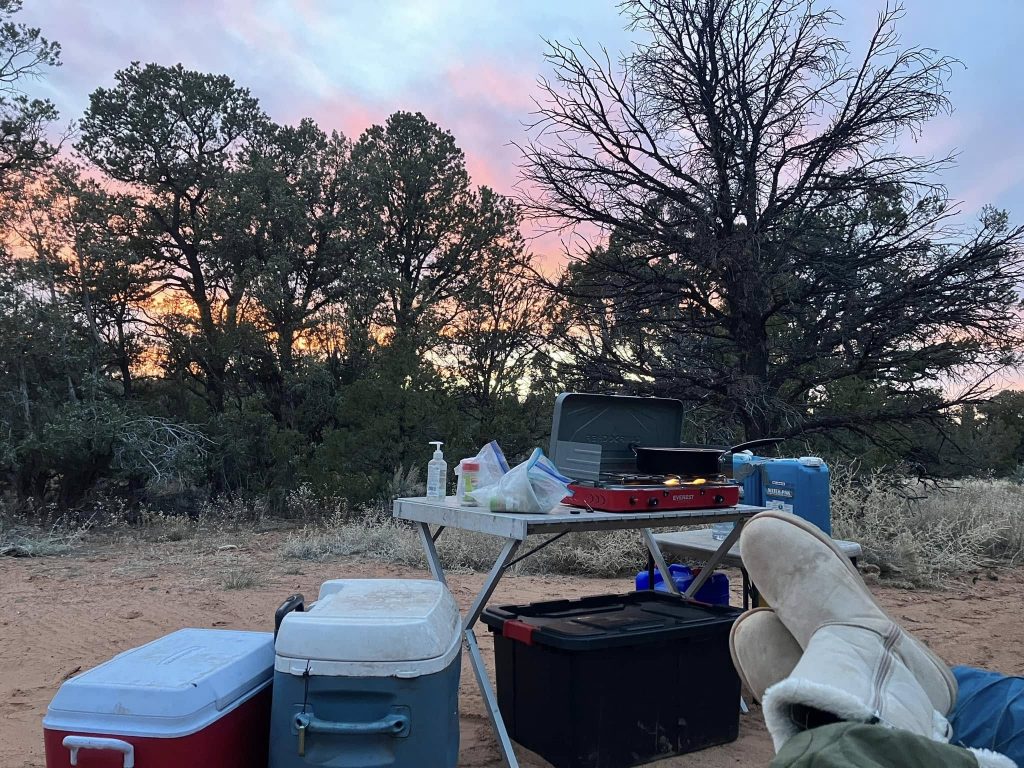
A “Joan-eyed view.”
It’s not backpacking vs. car camping. It’s both activities working together.
How the system works
The camp kit is what we call our perma-camping kit. Totes and duffels stay packed with kitchen gear, sleep system, and extra layers. The truck is always ready. The circa-2010 Igloo cooler gets filled before we leave Moab. The tailgate is the staging area.
Setup goes quickly because we’ve done it a lot, and everything lives where it should.
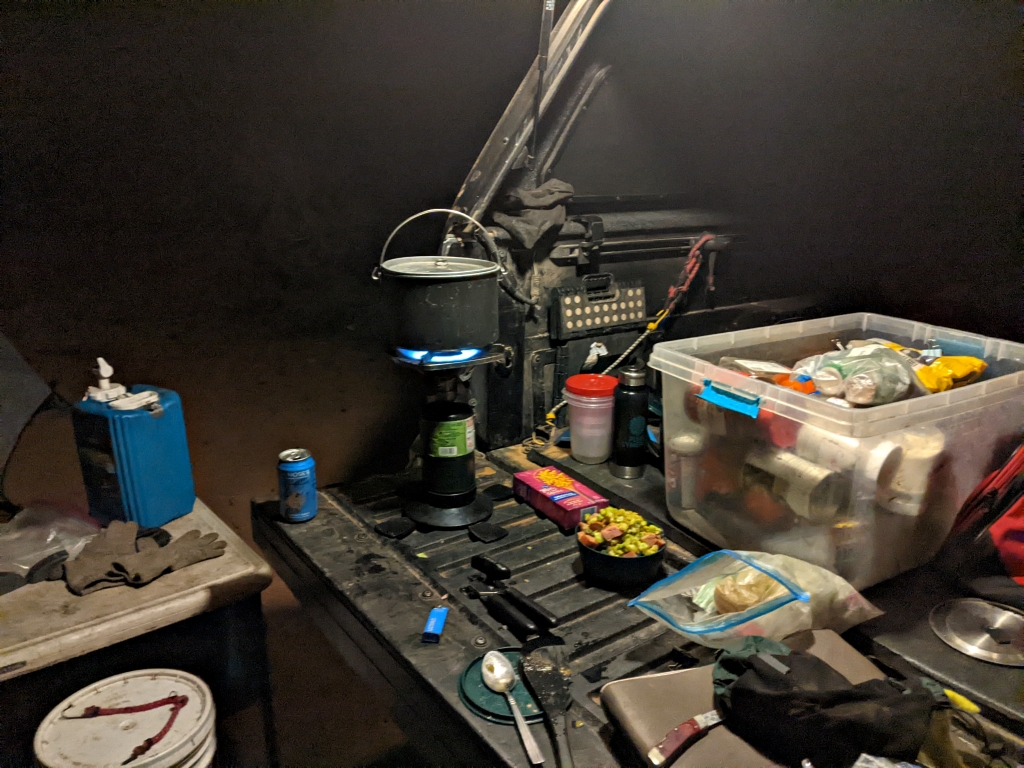
The backpacking kit stays separate and staged the same way. Packs are loaded, or close enough, before we leave home. Friday night is not for packing. It’s dinner, a drink, and getting to bed early.
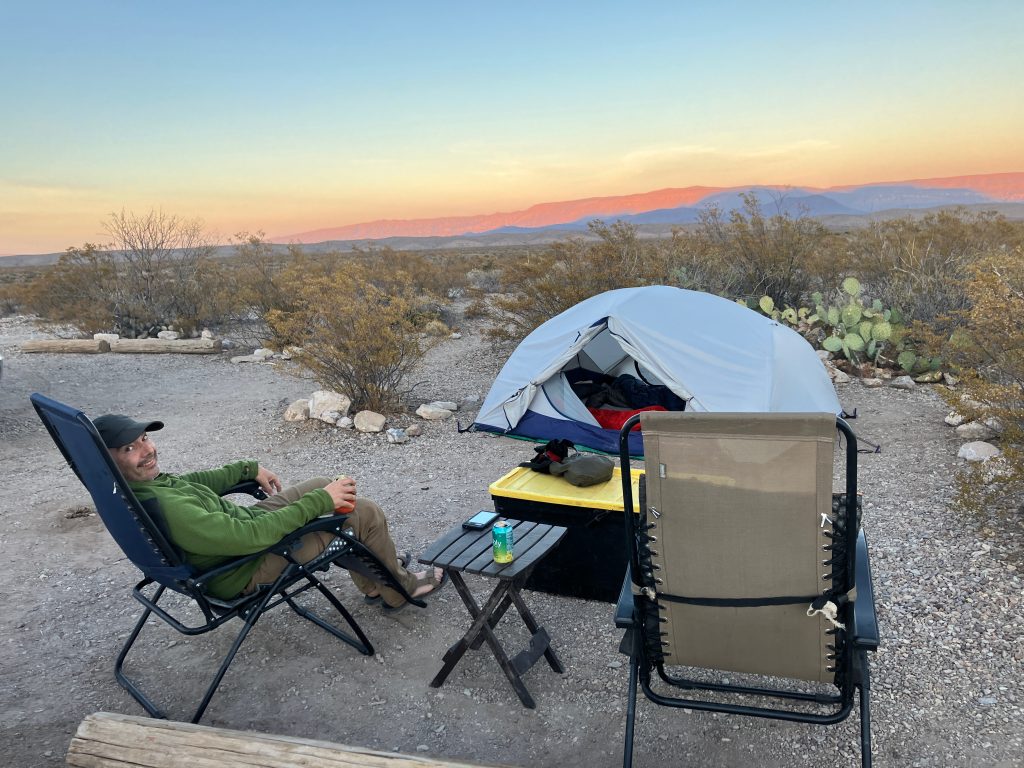
In Big Bend, at one of the backcountry campsites between backpacking trips.
Saturday morning, we break camp, stash what stays, maybe drive a short distance, or just start walking from camp. Either way, we leave the truck with what we need for the trip.
What stays, what goes
Car camping gear stays. The kitchen, the Chaos 3, and the cooler are waiting for us when we get back.
What goes on our backs is the same kit we’d carry anywhere: shelter, sleep system, food, cook kit, layers.
We don’t mix the two systems. Nothing gets borrowed that we’ll need to come back for later.
Car camping gear stays in the truck. It’s bulkier, cheaper, and more forgiving. The backpacking kit stays lighter but includes more fragile gear and clothing, is more expensive, and is ready to go.
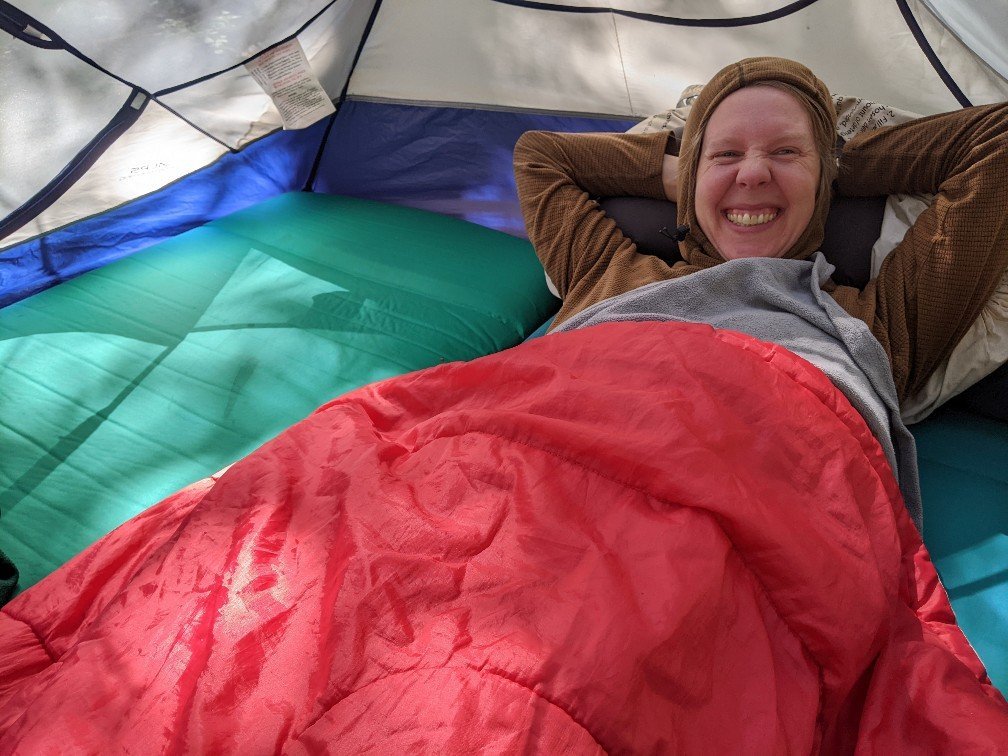
The return matters, too
Sunday afternoon or Monday morning, we walk back to a car with real food in it. Not trail food. We change into clean clothes, stash the gear, maybe do a quick sponge bath, and fire up the stove for coffee, tea, or a simple meal.
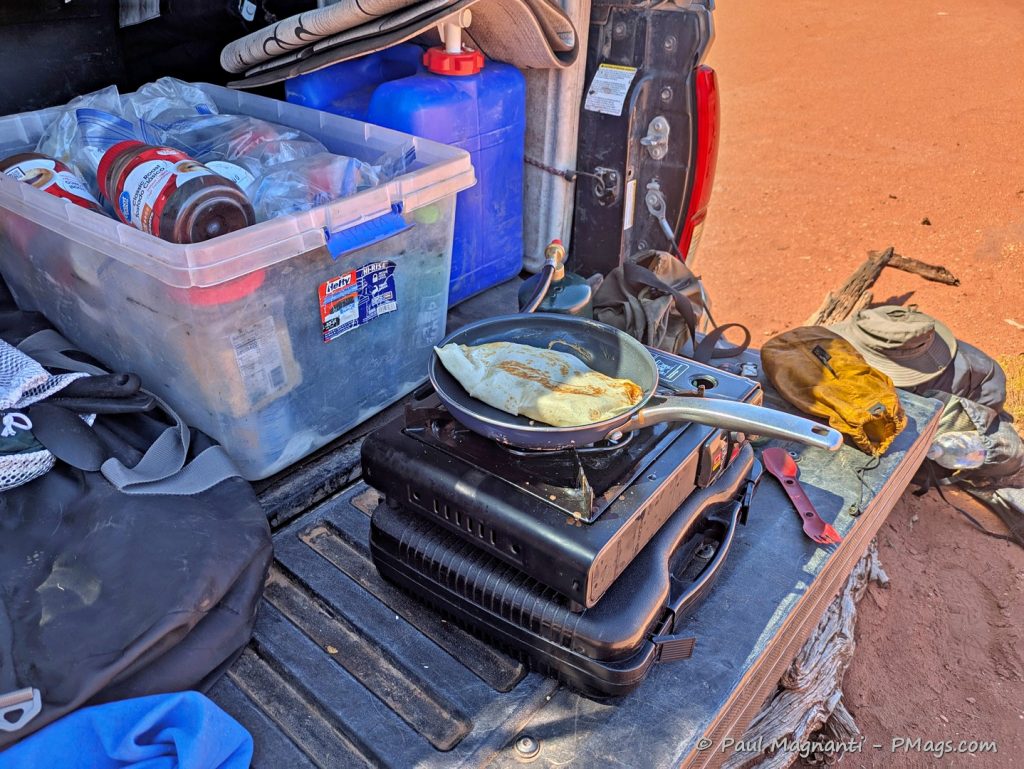
After three days of backpacking and before 1.5 hours down a dirt road.
That tailgate meal brings a small joy. It’s the difference between ending a trip right and grabbing something mediocre at a gas station miles down the road.
We eat, take in the view, and ease back into the drive home.
On the pecking order
The outdoor world sometimes treats car camping like a stepping stone. Something you do before you “graduate” to backpacking.
That’s nonsense.
Car camping done well takes skill. Finding a good site, cooking in the field, staging gear, sleeping comfortably, and leaving a place better than you found it. Those are not beginner skills. They’re the same ones that make the whole system work.
It adds to the time outside. It doesn’t take away from it.
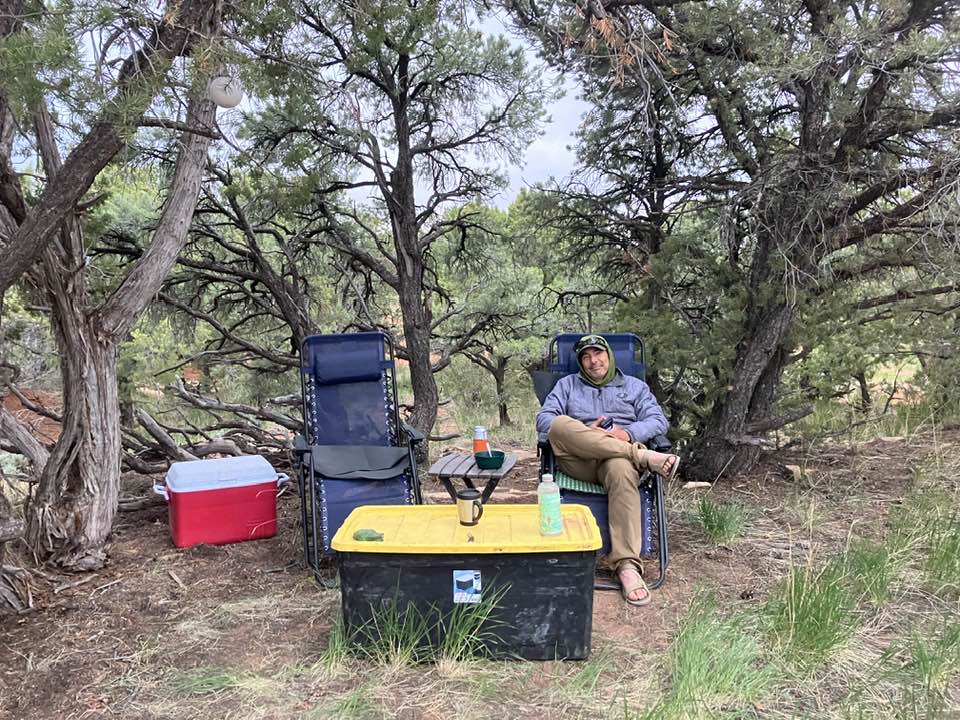
Sometime during our Eight Days at the Edge of Nowhere.
Camp between backpacking trips, and you stay out longer. No hotel or rushing to town. No immediate return to what we call civilization.
Fuel, food, and maybe laundry are the only real limits.
The photo that tells the tale
A shot from a ridge above one of our dispersed sites says it all.
The Tacoma, camp table, cooler, Chaos 3. The whole setup looks small against the backdrop of the Colorado Plateau. You can pick out every piece from a distance.
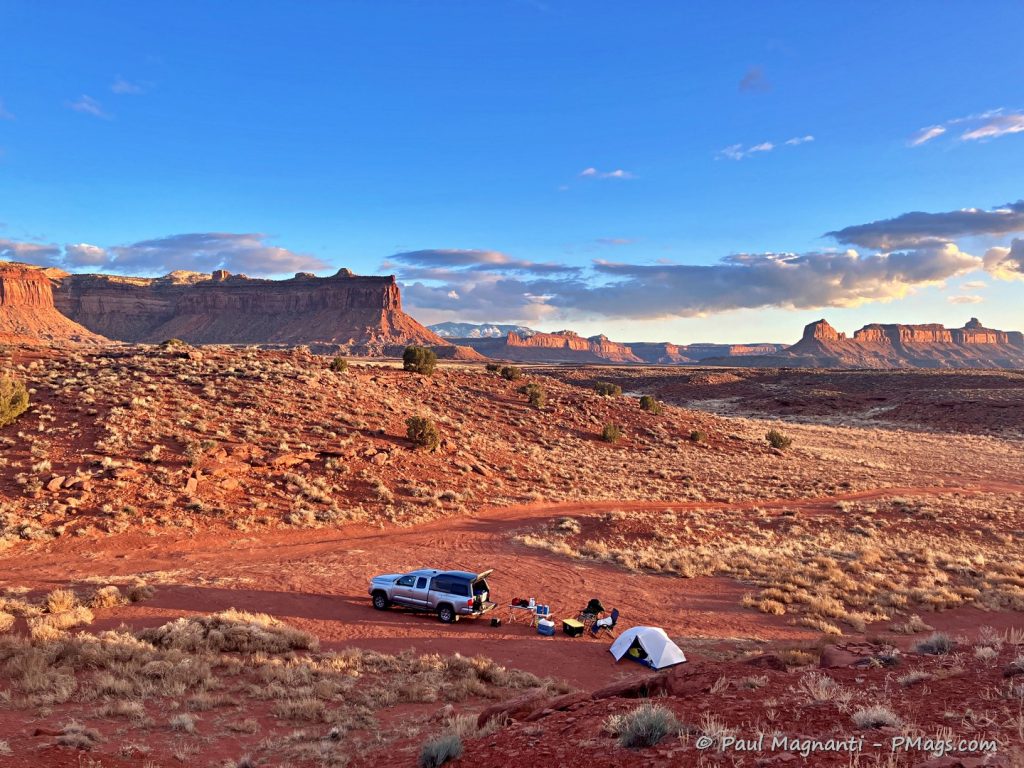
That’s the system: simple, functional, and at home in the landscape. Just enough to enjoy the time out there well.
Backpacking starts the next morning; the weekend starts the night before.
Need a checklist, gear ideas, and budget favorites for car camping? Check out this article.
I like the idea of a “tailgate meal”, I will have to try that on my next trip.
Extends the trip and makes for a more relaxing wrap up than driving home right away!
Not to mention jumping into a car immediately after backpacking all day and finding out you can hardly walk at all when you stop for gas 6 hours down the road.
Exactly!
Dony – I was going to comment this same thing. I love the idea of taking time at the car. I might remember to stretch.
Wow, what a photo! I don’t comment very often, but I read all of your posts. Thanks Paul!
One of my favorites. 🙂