
At the moment, southeast Utah is taking a one-two punch.
A massive fire and, of course, the renewed reductions of Bears Ears National Monument and Escalante National Monument.
Speaking from southeast Utah, none of this feels abstract to me.
This is a place my partner and I deeply love, volunteer in, and ultimately chose over more financially lucrative opportunities to make our home.
We have spent years walking through these landscapes, learning about them, documenting them, and helping care for them. They shape our weekends, our friendships, our work, and much of how we understand the place where we live.
First, the Babylon Fire itself has burned more than 100,000 acres and closed much of Bears Ears. The damage is still being assessed. At least two archaeological sites specifically protected under the newer monument designation burned, for example.
The full effects will take time to understand.
Fire is capricious. One drainage may burn severely while a nearby alcove receives little damage. Some masonry and rock imagery may survive. Other cultural resources, wooden structures, historic cabins, vegetation, wildlife habitat, and the surrounding landscape may not be affected.
The uncertainty is part of the loss.
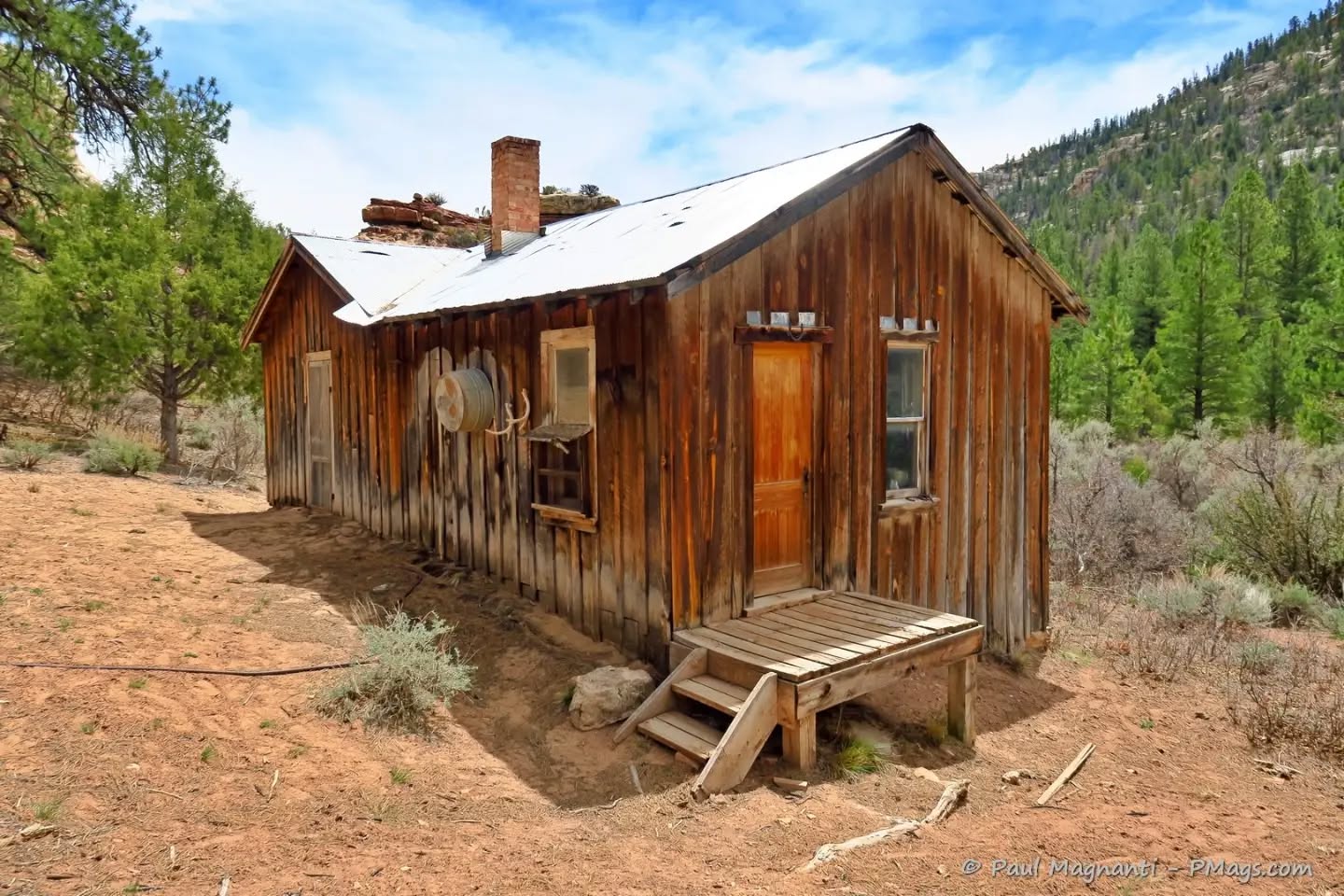
The historic Scorup Cabin that burned.
As often happens with large wildfires, the fire itself will become another front in the political conversation.
Debates over forest management, state versus federal control, road building, agency funding, grazing, fuels treatments, and access will inevitably follow. Everyone will point toward the fire as evidence for a preferred management philosophy.
Some of that discussion is necessary. Some of it may even prove useful.
Much of it will also be predictable.
Large fires tend to become a canvas onto which people project arguments they already wanted to make.
Second, of course, is the reduction in the size of the national monuments. The ongoing debates over how these public lands will be managed in the future are sometimes altered with the stroke of a pen.
A recent Reddit post pointed me toward Ryan Jordan’s Backpacking Light article, “Selling Public Lands Without a Vote: The Quiet Enclosure of the Commons.”
Jordan’s central argument is that public lands do not need to be formally sold to become less public. The same result can happen gradually through reduced oversight, weakened public participation, political appointments, diminished staffing, and management decisions that increasingly treat land as inventory rather than a shared public trust.
The argument resonated with me, as I’ve long suspected that this is the arc of our public lands.
Public lands do not remain public by accident.
Backpackers tend to discuss public lands in terms of immediate recreational concerns. Where can we camp? Is a permit required? Is the water flowing?
Those questions matter. But they sit inside a much larger system of legislation, agency funding, public involvement, and political pressure.
Reddit is useful for discussion at times, but its algorithm naturally favors shorter-term conversation, especially about gear. Which shelter weighs four ounces less? What quilt should someone buy?
But gear is only the means.
The places where we use it are the reason for it. Long-form writing outside social media still matters because it creates a lasting record a feed cannot.
The larger questions facing public lands require context beyond something gamed for SEO engagement.
I worry that de facto privatization is a real possibility.
That does not necessarily mean erecting a fence tomorrow and handing someone a deed. It may mean reducing agency capacity until meaningful oversight becomes impossible. It may mean shifting management toward commercial extraction while public recreation and cultural resource protection receive fewer resources. It may mean weakening public involvement, reducing staffing, or transferring responsibilities to entities without the ability or incentive to manage the land for the broader public.
The mechanism isn’t complicated, which may be why it’s easy to miss. Fewer staff mean fewer people left to review a permit, monitor a site, or read through public comments before the deadline passes. A thinner comment period means the public loses one of the only formal levers it has over land it already owns. And once oversight gets thin enough, commercial users become the default option; not because anyone decided it that way, but because they’re the only ones still showing up with the money and staff to act.
No sale required. Just enough attrition that “public” becomes a word on a sign rather than a fact on the ground.
A concrete example landed close to home just this week. The BLM is proposing to slash the bond a company must post before leasing public land for oil and gas from $150,000 to $10,000 per lease, a 93 percent reduction, while the statewide bond would drop by 95 percent. More poignantly, the same proposal would also establish the agency’s first-ever fee for protesting a lease sale.
The BLM has already sold leases to parcels through the Moab and Vernal field offices twice this year, with a third sale of 35 additional parcels scheduled for September.
None of that requires declaring public land private. It simply requires making the financial barriers to development lower while making public participation more expensive. Fewer people will participate, and fewer objections will be raised.
(Comments on the proposal are open through August 24 at Regulations.gov (Docket BLM-2025-0037). )
The land may remain nominally public while becoming less public in practice.
That distinction is at the heart of Jordan’s article.
For anyone interested in the broader public lands conversation, I highly recommend Walt Dabney’s presentation, produced by the Canyonlands Natural History Association here in Moab.
Dabney grew up in Texas, later served as superintendent of the Southeast Utah Group, which includes Arches, Canyonlands, Hovenweep, and Natural Bridges, and eventually became director of Texas State Parks.
His Texas background gives him an especially useful perspective.
Approximately 96 percent of Texas is privately owned. Public access that many western residents take for granted does not exist on the same scale there.
People sometimes speak casually about transferring federal public lands to the states, as though the only change would be the logo printed on a map or the uniform worn by a ranger.
But states operate under different legal obligations, financial pressures, and management structures. If the costs of fire suppression, road maintenance, law enforcement, recreation infrastructure, and resource protection exceed available revenue, selling or leasing land becomes an obvious temptation.
Dabney explains the history and stakes far better than I can in a paragraph. The presentation runs about an hour, but it is well worth watching:
Outdoor communities often define stewardship through the Leave No Trace principles.
Pack out your trash. Camp on durable surfaces. Respect wildlife. Do not touch or enter archaeological structures. Leave cultural objects where you find them.
All worthwhile practices.
But stewardship cannot stop at personal behavior during a weekend trip.
It also means paying attention to agency staffing, budgets, management plans, public-comment periods, land designations, proposed transfers, and the political choices that determine what happens before we ever shoulder a pack.
It means volunteering when possible, supporting local organizations, contacting elected officials, donating to groups doing useful work, doing an honest assessment of your personal impact, and learning enough about a place to understand what is at stake.
It also means accepting that public lands involve people with many different interests. Hikers, hunters, anglers, climbers, ranchers, tribal communities, archaeologists, local businesses, conservation groups, and nearby residents will not agree on every issue.
A durable public-lands coalition will need to be broader than any single recreational or political identity. That coalition doesn’t require agreement on every point. It requires recognizing that if oversight erodes far enough, all of those competing interests eventually lose their seat at the same table. Grazing allotments, guided outfits, cultural preservation, and quiet solitude don’t survive an agency too thin to manage any of them well.
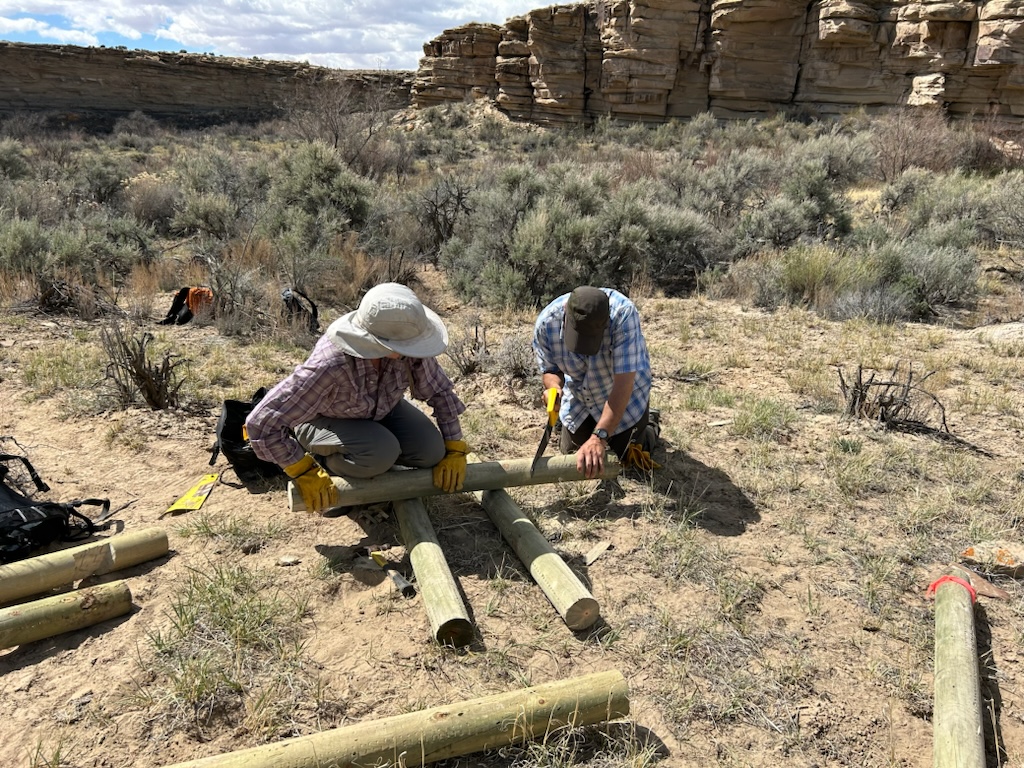
Joan, I, and other volunteers worked with a local rancher to help protect rock images on his property. He voluntarily allows access through a conservation easement.
These lands are not merely lines on a map.
They are cultural landscapes shaped by generations of people who lived, traveled, gathered food, raised families, built communities, and maintained relationships with these places long before modern recreation arrived.
They are wildlife habitat, watersheds, working landscapes, archaeological sites, quiet canyons, and places of extraordinary beauty.
They are also places many of us have spent years walking, stewarding, documenting, and caring about.
A lighter backpack may help us travel through them more comfortably.
It will not ensure they remain available, protected, or meaningfully public.
That requires something beyond gear.
It requires a commitment to the land itself.
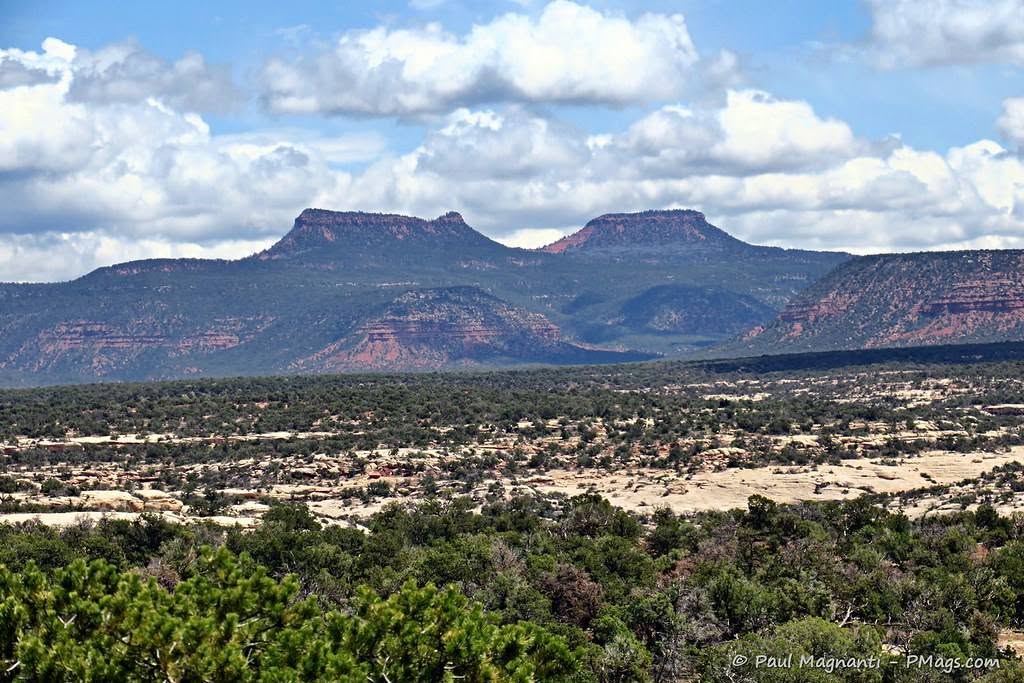
The Bears Ears Buttes
You can’t care for or respect a landscape unless you know something about it. Unless you have been cold or hot or exhausted or dehydrated while walking across it. If you ask most of our key government decision-makers about how they get outdoors they might tell you about their golfing exploits, if they get outside at all. Awesome. Those folks will never see a desert or forest or mountain as anything other than a blank spot on the map that has not yet been exploited for economic gain, whether that’s a golf course or luxury hotel or energy/mineral extraction. All… Read more »