
Living out West since 1999, I have come to see sun protection as an overriding concern.
At elevation, in the desert, or both at once, UV radiation is constant, and what you wear matters.
Sun hoodies are considered the standard for sun protection and are popular among outdoor enthusiasts. You can hike to “The Arch” in the current fashion, grab a beer afterward, and not look out of place on Instagram.
Or you can grab a Western snap button-down, look a bit dorky, and likely feel more comfortable with equally good sun protection, despite what marketing says.
A Western snap shirt is my hiking shirt of choice. This choice comes from practical use over many days in the backcountry.
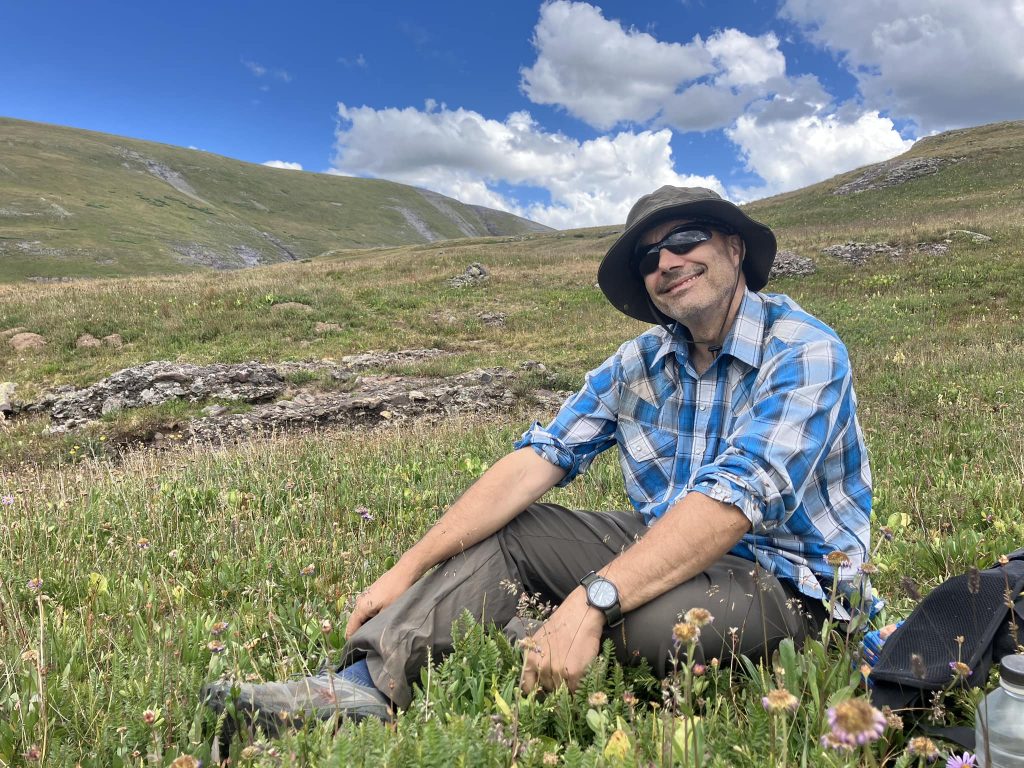
Dorky since 1999. San Juan Mountains, Colorado. PCO Joan.
Why I Still Reach for the Western Snap Shirt
I’ve tried several sun hoodies over the years. I still find my polycotton Western snap shirt works better in hot, dry weather.
I’ve given sun hoodies a fair test, including in conditions where they should perform well. I keep coming back to the same conclusion: for my hiking style and environment, the polycotton Western snap shirt works better.
It’s not just dirtbagger preference; it’s practical, field-tested use after many days in the backcountry.

The fit problem nobody talks about
Sun hoodies usually come in an athletic fit. They taper through the shoulders and torso and fit snug in the lower sleeves. That style looks sharp.
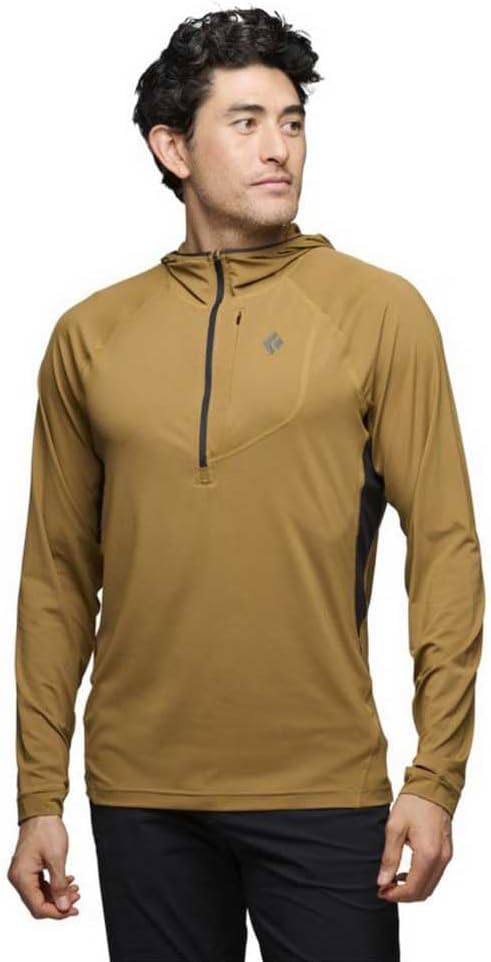
From Black Diamond
That same fit works against both sun protection and comfort in the heat.
The research is straightforward: tight clothing stretches fibers apart, increasing UV transmission. A loose-fitting shirt keeps fibers packed together and blocks more UV. The athletic cut that looks good in photos loses its effectiveness once you start moving. People often report sunburn on the shoulders even with UPF-rated garments.
The Western snap shirt uses a loose cut designed for outdoor work. That fit is intentional. It blocks more sun and lets heat escape.
A loose fit blocks more sun and dumps heat. That’s it. That’s the system.
The sleeves dump heat and keep you comfortable. Reinforced fabric at the shoulders and collar adds protection where sun exposure hits hardest.
The hood problem everyone ignores
The main feature of a sun hoodie is the hood. It covers your head and neck without the need for a wide-brimmed hat.
In hot weather, that same hood traps heat. When people overheat, they drop the hood. I see this constantly. Sun hoodie, hood down, ball cap on top. That means you paid for a feature you didn’t use. You could spend less and get a simple work shirt instead.
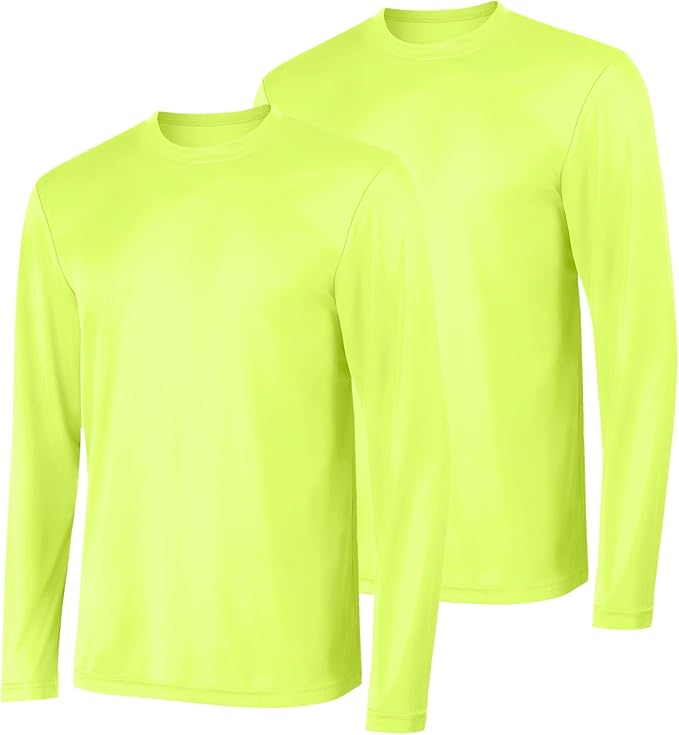
From Hanes
I run hot. When I drop the hood, I lose neck protection. The back of the neck is most affected by sun damage over time.
A Western snap shirt keeps the collar up in any condition. It does not depend on tolerating a hood.
The ventilation problem
Buttons and snaps let you control airflow without removing the shirt. I can open the collar, loosen cuffs, or roll sleeves as needed.
A sun hoodie generally gives you two options: Hood up or hood down.
(Though the thru-hiker favorite, the Jolly Gear sun hoodie is really a baggy button-down hiking shirt with a hood, combining the ventilation and loose fit of a classic hiking shirt with the added coverage of a hood. Granted, “sun hoodie” makes a catchier name!)

Joan met me about a mile from the end of the SEUG Circuit.
The fabric problem
Polycotton blends, usually 60/40 or 65/35, breathe differently from pure synthetic fabrics. They feel less clammy and trap less heat. Polyester helps with moisture and UV resistance. Cotton improves breathability. Dye also helps absorb UV. Research on fabric UV transmission supports this.
A loose shirt creates a small air gap between fabric and skin. That layer helps reduce heat gain and allows sweat to evaporate.
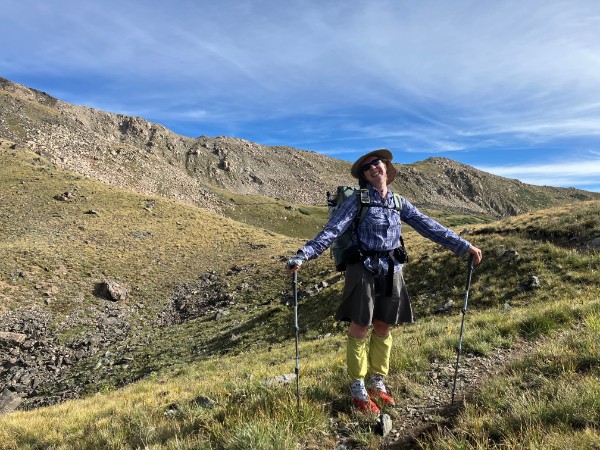
Joan using the system in the San Juans on her Colorado Trail hike.
What the Western snap shirt actually is
It is a garment designed for long days of physical work in hot, dry environments. It uses materials that perform well in those conditions, along with a cut that balances protection and ventilation. You can find one for about $30 at most farm and ranch stores.
The plaid never went out of style because it never needed to.
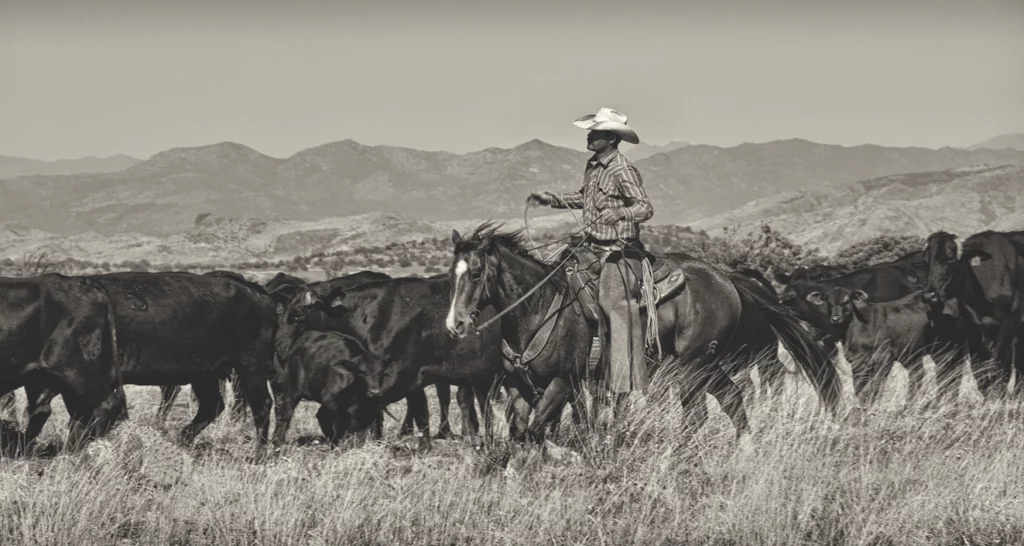
From American Cowboy
UPF Rating?
UPF ratings help, but they do not tell the whole story. The Craghoppers Women’s Kiwi II is made from a 65/35 polycotton blend and has an UPF rating of 40+. It looks very similar to a Western shirt.
The dyes, the weave, the loose vs. tight fit, and the reinforced shoulders and collar all contribute to increased sun protection.
The underlying principles stay the same whether there is a label or not.
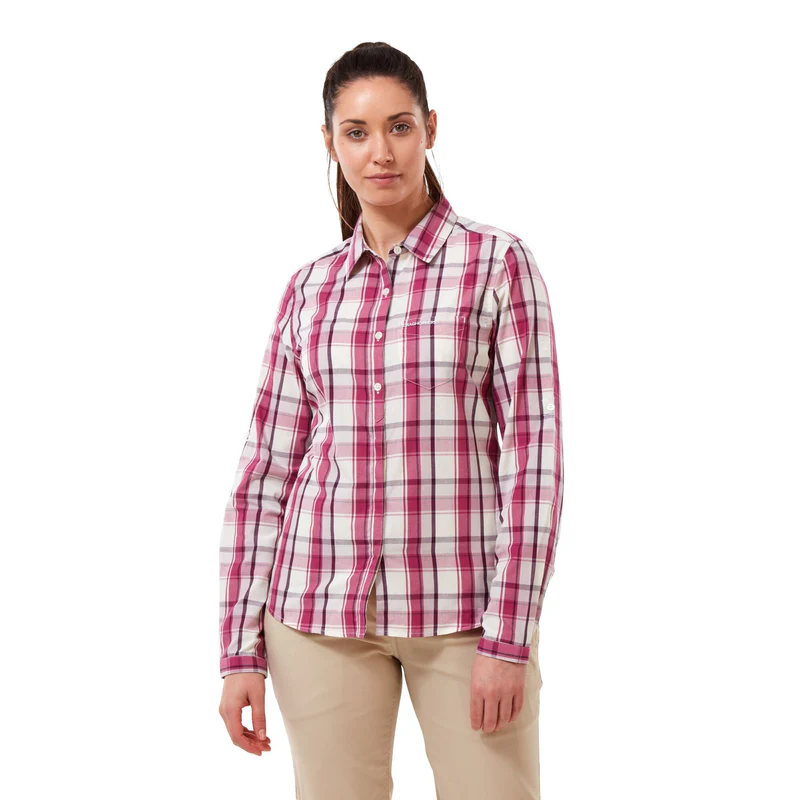
From Craghoppers
Cotton Kills?
I’ve addressed this before. In hot, dry climates, cotton helps with evaporative cooling.
An independent comparison of a Wrangler western shirt against synthetic shirts found that the polycotton shirt dried at nearly the same rate as the polyester shirt. Drying depends more on weight and surface area than fiber type.
But I have to say I’m with Paul on this one: for a measly $20 you can get a good-looking hiking shirt that’s lighter, more breathable, and dries faster (or just as fast) as the Kuhl or Montbell at a quarter of the price.
Oh, and it won’t kill you.
I would not wear this shirt for white water rafting or ski touring.
But I also do not have to take a Tacoma to the grocery store or our Honda to Hans Flat in “The Maze.”
Use the right tool for the job.
When do I wear sun hoodies?
I use them in cooler weather, around 60 to 65F or lower, for active use.
The hood adds warmth and versatility, and different fabrics work well as temperatures drop.
I do not dislike sun hoodies. I just use them where they work best for my needs.
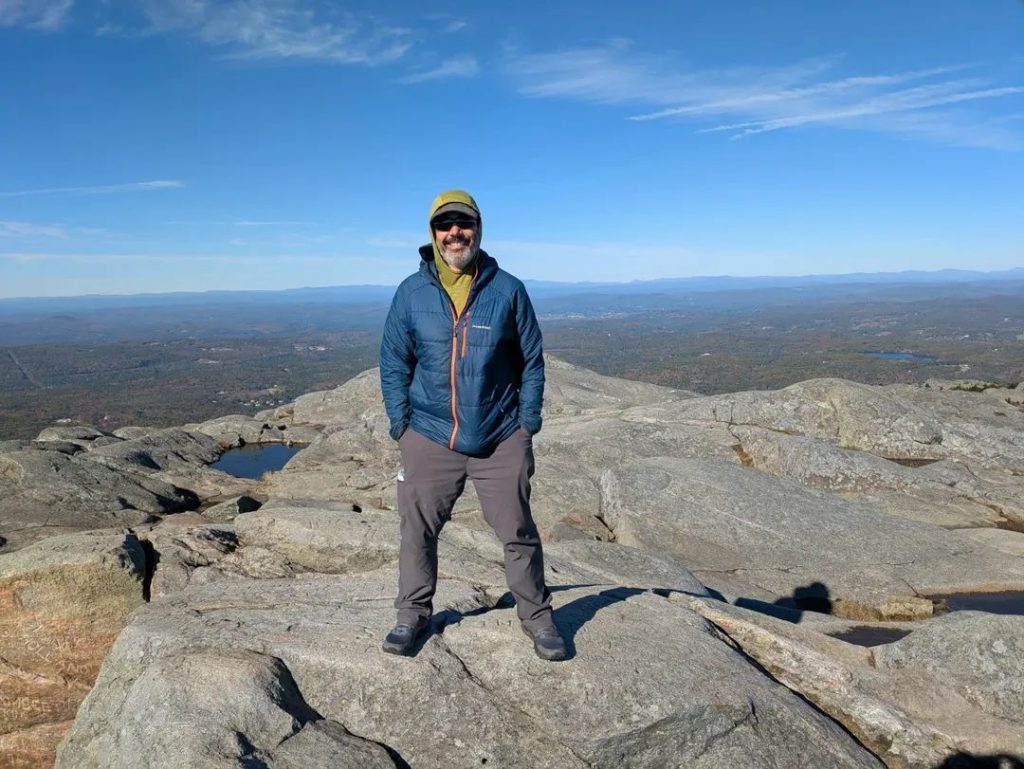
On Mt. Monadnock, NH, in October, on my Walk Across New England.
That includes hot, muggy conditions as well.
In 80°F heat with humidity in New England, I was miserable. The hoodie trapped heat and stayed clammy the entire time.
Same garment. Different environment. Similar uncomfortable results.
Luckily, the trail provides. I found a Smartwool polo shirt on the roadside. Score!

A note on YMMV
Joan runs cooler than I do and burns faster. She often reaches for a sun hoodie when I already feel too warm in one. Different physiology, different needs.

When the weather heats up, she also switches to the polycotton shirt. Field use matters more than online debate.

Joan in Big Bend National Park with her trusty umbrella.
In the end?
If you hike hard in hot, dry conditions and keep dropping the hood anyway, it might be worth asking why.
The answer is not more technical fabric or a higher UPF rating. It is airflow, coverage, and a system that works all day. The Western snap shirt figured that out a long time ago.
It just may work better than the current hot fashion.
Literally.

Can’t find one near you? This 60/40 polycotton blend, at $30, works very well.
Here’s a five-year-old review from a reader, too –
Ha! I decided to give your recommendation of the western snap shirts a try on my hike of the NNML and just realized that I ended up getting the exact same color as yours! The Coeval Club shirts are a good deal- breathable, quick drying, versatile, pop up collar for neck protection, lots of color options. They run a little large, so I sized down.
Amen brother! I’m glad to hear that I’m not the only one that prefers long sleeved, cotton button up shirts to hoodies for hot and dry weather. I’ve tried hoodies and find that they just hold too much heat in for all of the reasons you mentioned. Like you, I do like my hoodie in cooler weather where I can benefit from the additional warmth. Hopefully some folks who have never tried western snap shirts will give them a try after reading your article.
But those metal snaps are soooo heavvvyyyyy!
Seriously though, what advantages do you see in this Western snap style shirt over a simple 60/40 button up dress shirt from a thrift store?
The dyes help a fair amount with UV in addition to the weave vs white color and weave of material like a dress shirt from my understanding. The snaps also come off easier (better for barbed wire…usually not a problem on maintained trails but oddly useful on our usual hiking nowadays! Ha!)
The western snaps also reinforced in the shoulder for better sun protection . Finally, the plaid hides stains better.
Also, more so in my small desert town, thrift stores more of a crap shoot.
Del – excellent question. This my experience, YMMV: I wore a series of women’s dress shirts from the thrift store for years – backpacking and doing trail maintenance. I now wear a nylon/poly blend button-down shirt from NRS, just because the stretch fits my needs for movement with trail maintenance. The durability and function of the full-cotton dress shirts was amazing and even after accidentally cutting my shirt with a saw, it kept holding on for a year. The sun protection was great until the shirt was nearly thread-bare at the shoulders. At this point, the shirts were 10+ years… Read more »
I have observed the same thing about the hood trapping heat and so have largely abandoned use of sun hoodies. I prefer the use of a buff and baseball cap solution for head and neck sun protection. I find that the buff being in contact with my skin much more readily evaporates and cools