
I originally wrote this article back in 2016 as a parody of the annual holiday-season spate of TOP TEN PIECES OF GEAR posts.
The idea that so much gear could be meaningfully “tested” in a single year, and then crowned with a “Top 10” moniker, always seemed suspect to me.
And my number five through ten picks? Nothing. Nada. Gugatz, etc.
Snarky, flip, and true to how I view gear – a tool to use, not part of an identity.
A certain hiker whom I would meet just over a year later even had this to say on the first version of this article:
She seems cool!
However, as I wrote in a 2025 review article about gear, it made me realize just how much my choices have evolved over the years due to technology, technique, trip goals, and sharing my life with someone.
Though I updated this article in 2020, adding new choices compared to the original 2016 version, an important voice was missing: Joan’s, along with her experience, views, and the gear choices that work for her system.
With all that in mind, what started as snark has evolved into a reinforcement of my outdoor credo:
Ultralight isn’t about the lightest number – it’s a flexible toolkit for carrying just enough to stay safe, adapt to conditions, and be fully present in the experience.
And the experience isn’t just about backpacking—it also includes skiing, day hikes, packrafting, and even car camping.
On to the picks!
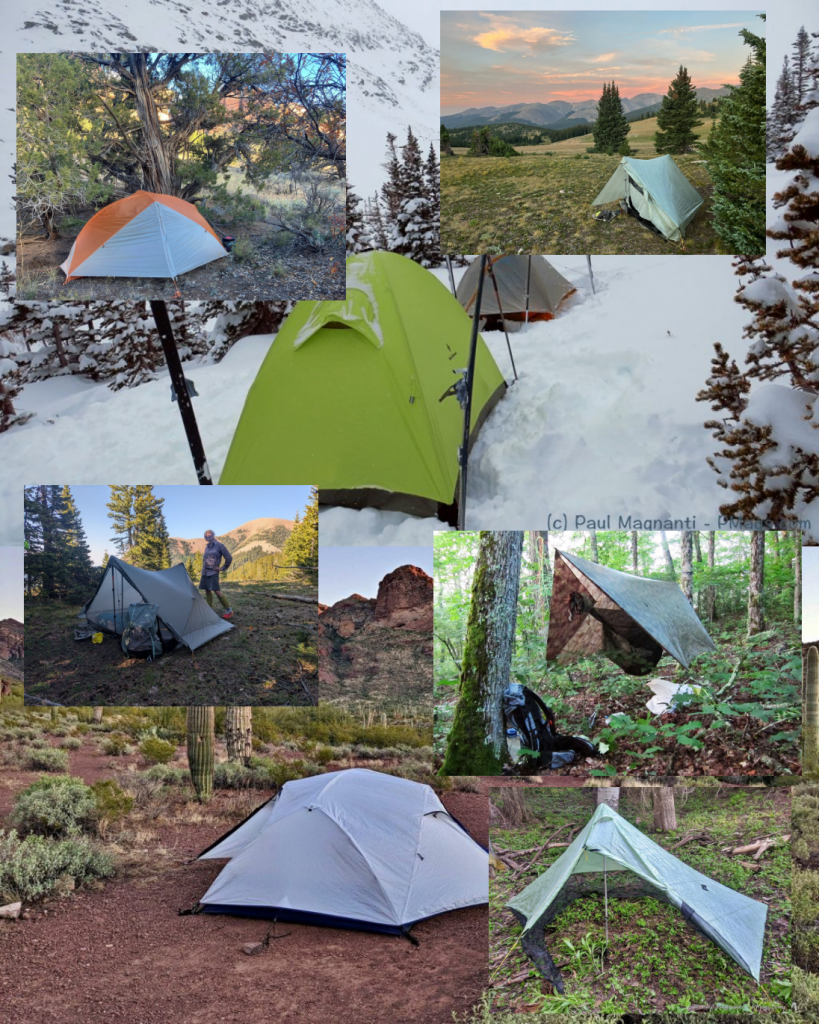
~ Updated December 2025 ~
Joan’s Picks
Joan’s a confirmed hammock camper, especially from her years backpacking frequently in the southern Appalachians.
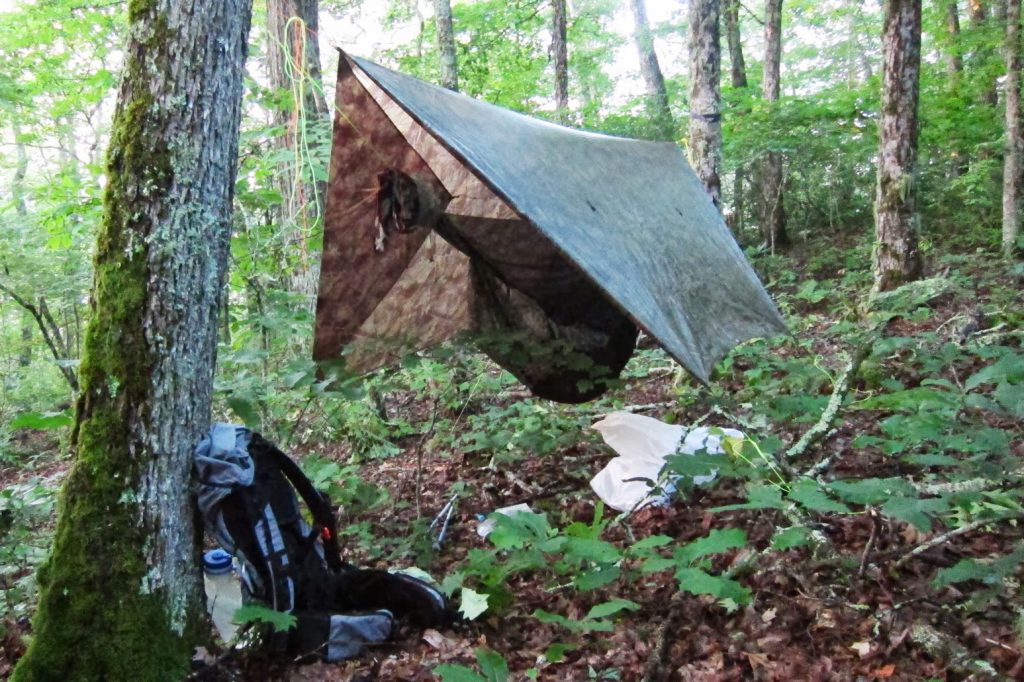
Joan’s hammock is somewhere in the southern Appalachians.
When she’s solo in the mountains near our Moab home, it’s still her shelter of choice, and she can find spots a “ground dweller” like me simply can’t. Alas, the pine bark beetle kill in nearby Colorado made using her beloved hammock more challenging in recent years.
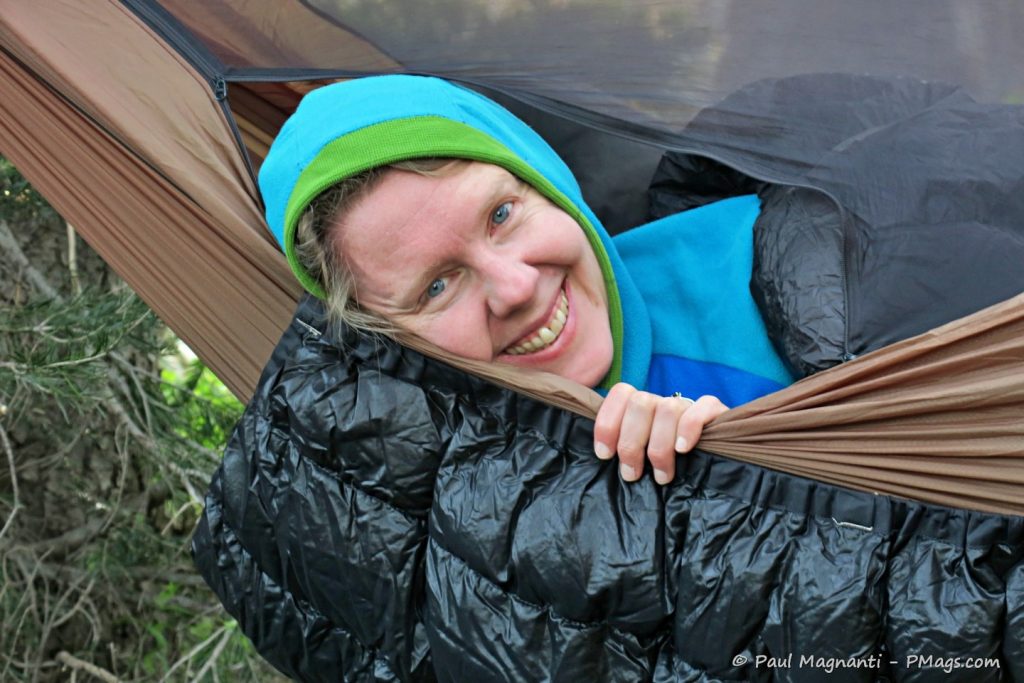
She gave her solo gear kit a test run in the Abajos before her PCT hike while I “cowboy camped.”
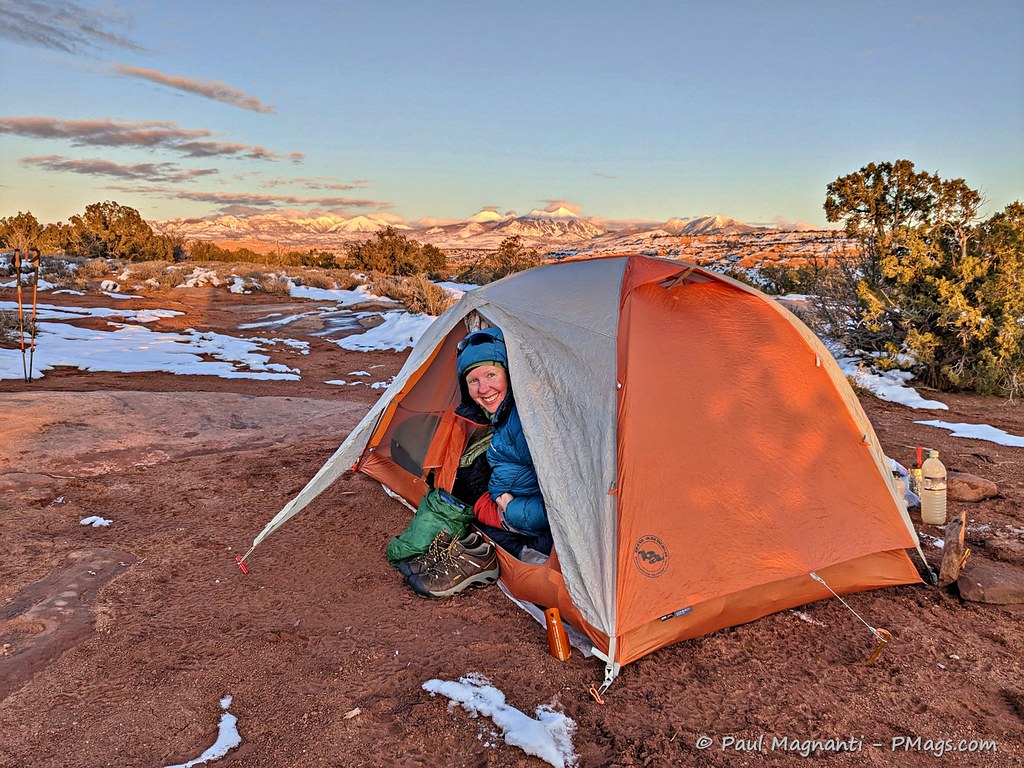
For colder weather with more moisture, or when Joan needs a quick setup in mixed environments (such as a river trip), her solo shelter for these tasks is the venerable Big Agnes Copper Spur HV UL1. At 2 lbs / 1 kg, it’s not ultralight, but it’s light for a fully enclosed solo tent in this category and remains a key part of Joan’s kit.
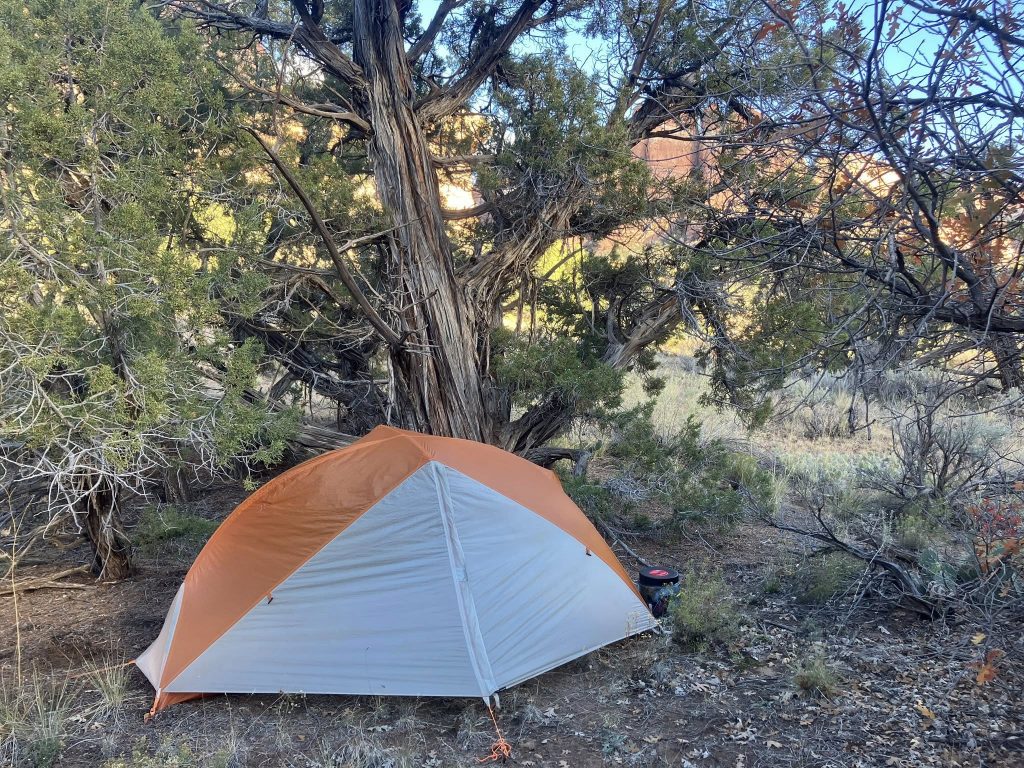
Also useful in the desert when your husband is in New England and using your other solo shelter!
After a gear failure, Joan switched to a pricey but effective Tarptent Notch Li double-wall DCF shelter during the thick of Colorado’s “monsoon” season on The Colorado Trail this year.
At 23 oz / 640 g, it’s impressively light for a true double-wall shelter, and it kept both her and her gear dry. Joan calls it “cozy” (in a good way) and enjoyed using it as a solo shelter.
I used it on my New England trek in October as well, to good effect—though with better weather than Joan overall!
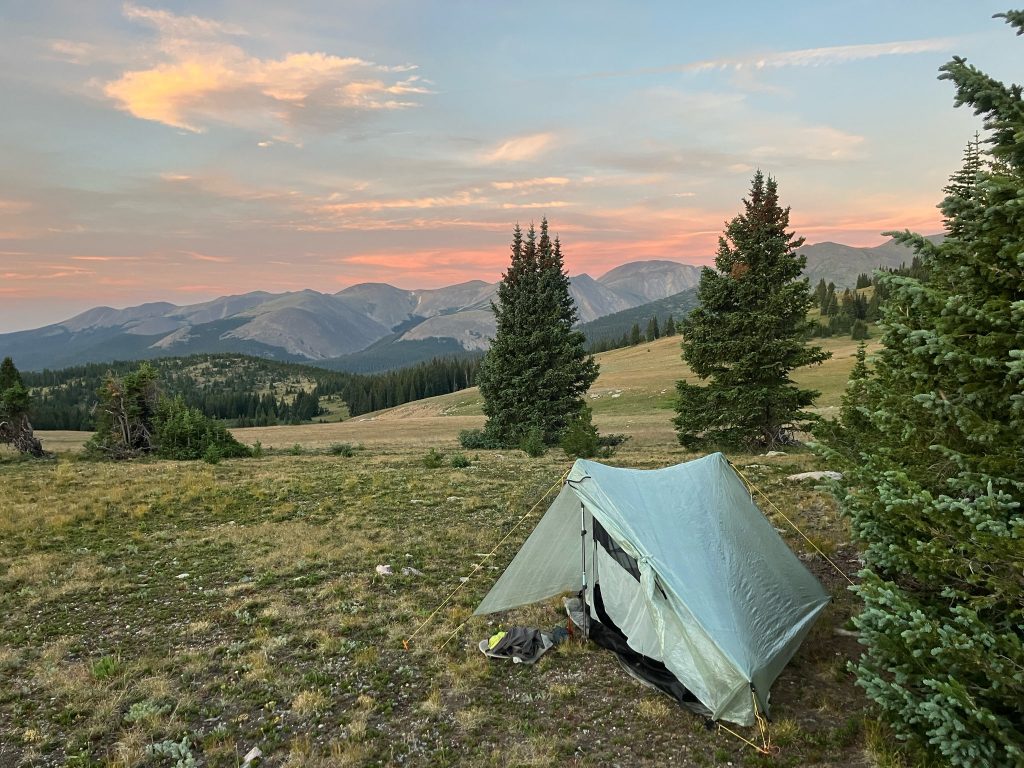
A good photo in ideal conditions. No rain in sight. From Joan.
Our Picks
We logged well over 200 nights in our original 2019 version of this now-classic tent. After many nights, zipper repairs, patches, and far fewer “spirited discussions” because of our shelter, we retired it to loaner duty and picked up a 2024 version on clearance. Both still fit what I wrote years ago:
This tent is quick to set up, makes only a 2 lb / 1 kg carry for me (1 lb / 500 g for Joan), and prevents some “spirited discussions” when we’re cold, hungry, tired, and just want to get the shelter up.
We tend to use it for colder conditions and when condensation becomes more of an issue. And maybe in a few years, I’ll look at the Copper Spur HV UL2 2025 version!
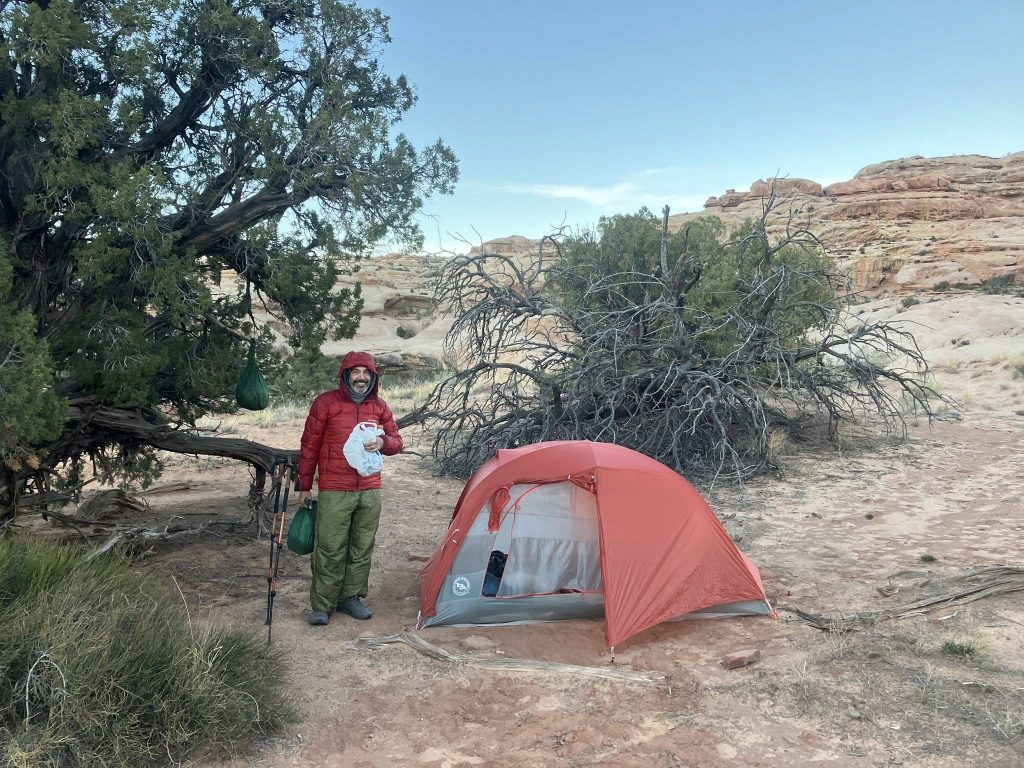
In November 2025. From Joan.
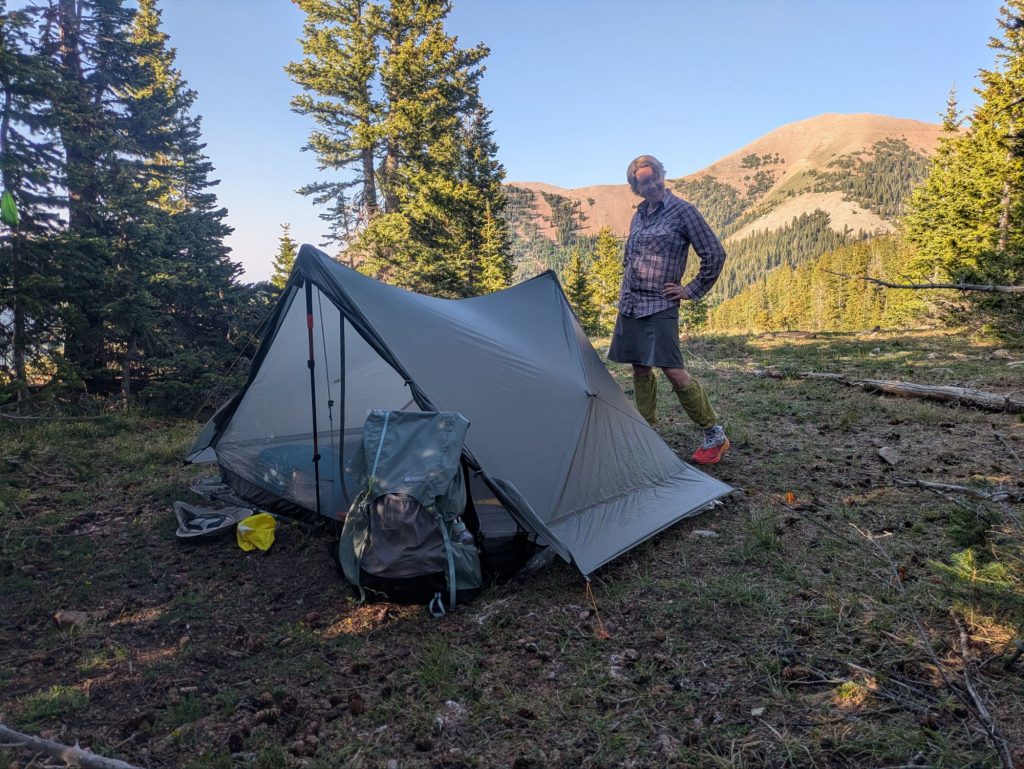
For prime three-season backpacking, we’ve grown to enjoy using this shelter. It is spacious, quick to set up, and ventilates exceptionally well. We’ve used it in both desert and mountain environments, and it’s now a permanent part of our kit.
At ~24 oz / 700 g, it packs easily and remains a key piece of our kit going forward.
Joan and I enjoy car camping as an adjunct to our backpacking trips, especially during winter when certain areas make more sense than backpacking.
The tent type I’ve always advocated? A mid-range budget backpacking tent sized for three instead of a bulky car-camping tent. Backpacking tents handle wind and rain far better, and a mid-range tent offers solid value compared to a higher-end model.
The ALPS Mountaineering Chaos 3 fits all those categories for us. You can often find it for around $200. The chunky zippers stand up to abuse, it’s spacious for two, and we’ve waited out torrential downpours and heavy winds while staying warm, dry, and comfortable.
It’s our home on many shoulder-season and winter car-camping trips.
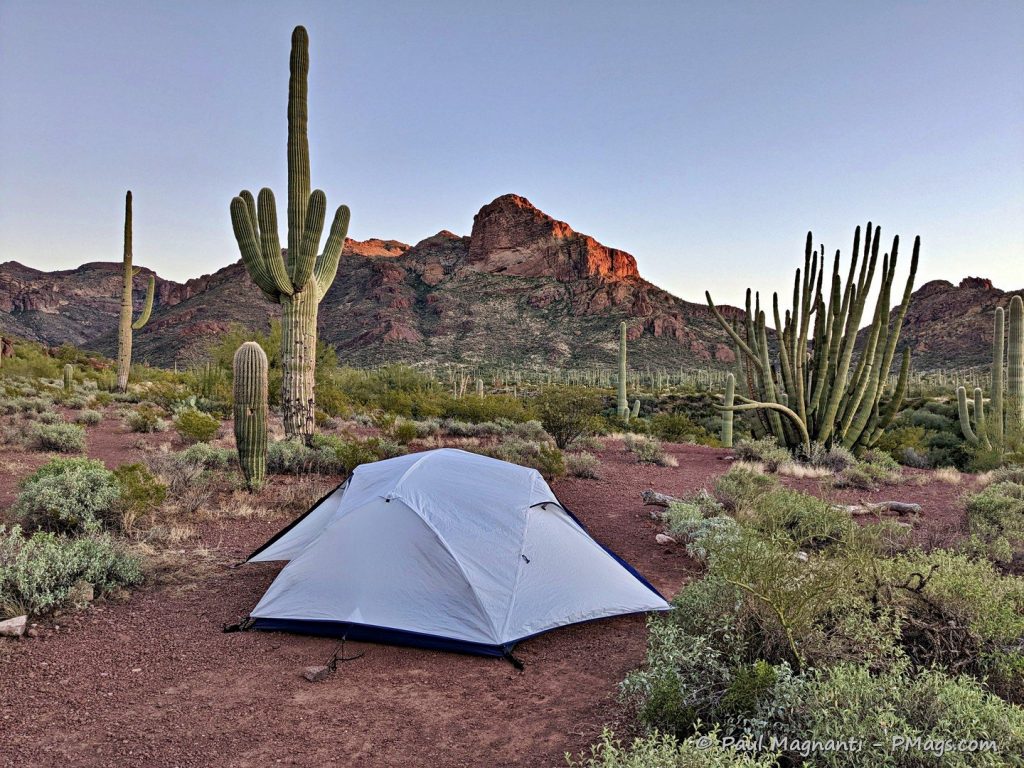
In Organ Pipe Cactus National Monument.
Paul’s Picks
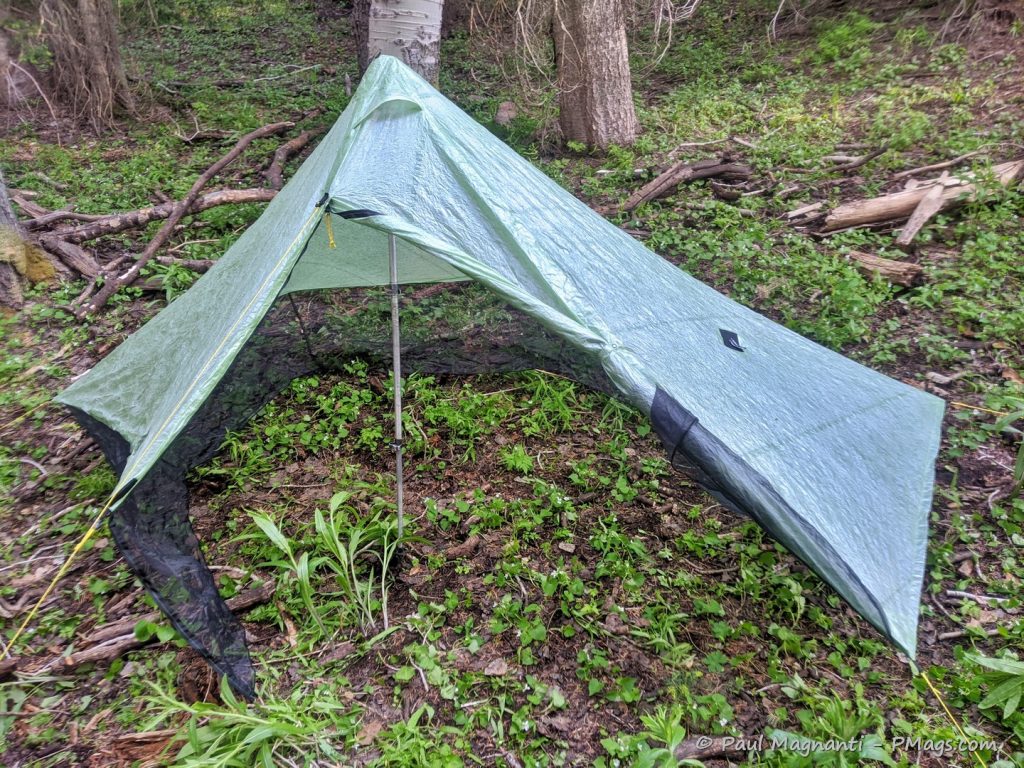
I’ve used some form of the SMD Wild Oasis since 2005. It’s a mid-tarp and remains my favorite shelter type overall.

On the CDT in 2006, with an earlier form of this shelter.
This tarp style is highly versatile. With good pitching, it handles moderate snow loads, performs well in wind, has a small footprint, and sets up quickly.
In 2020, Joan picked up the now-discontinued DCF version for me, and it’s been my companion on solo trips in the desert and mountains ever since.
The slightly larger and heavier SMD Deschutes Plus (with bug netting) is made of silpoly, costs about $200, carries roughly a 3-oz penalty versus the DCF version, and is not quite as water-resistant.
Besides being less expensive, silpoly packs smaller and is more durable overall than DCF. Nick Gatel has a good overview of this newer version.
I have a feeling some version of this shelter will be my solo go-to shelter for years to come.
At sub-3 lbs, this single-wall, free-standing shelter is ideally suited for winter backpacking when you’re on the move rather than making an extended basecamp. Technically a two-person tent, it’s realistically sized for one person.
At the end of a day of winter travel, I want something quick to set up so I can get in my bag and get dinner going. The Black Diamond Firstlight fills that role. It’s a bit of a splurge given its narrow ideal-use window. It doesn’t breathe well, but in the cold, dry Intermountain West winters, that’s acceptable.
I don’t use this tent as often as I once did, but I’ve logged many excellent overnight ski tours with it. My skis and this tent are waiting.
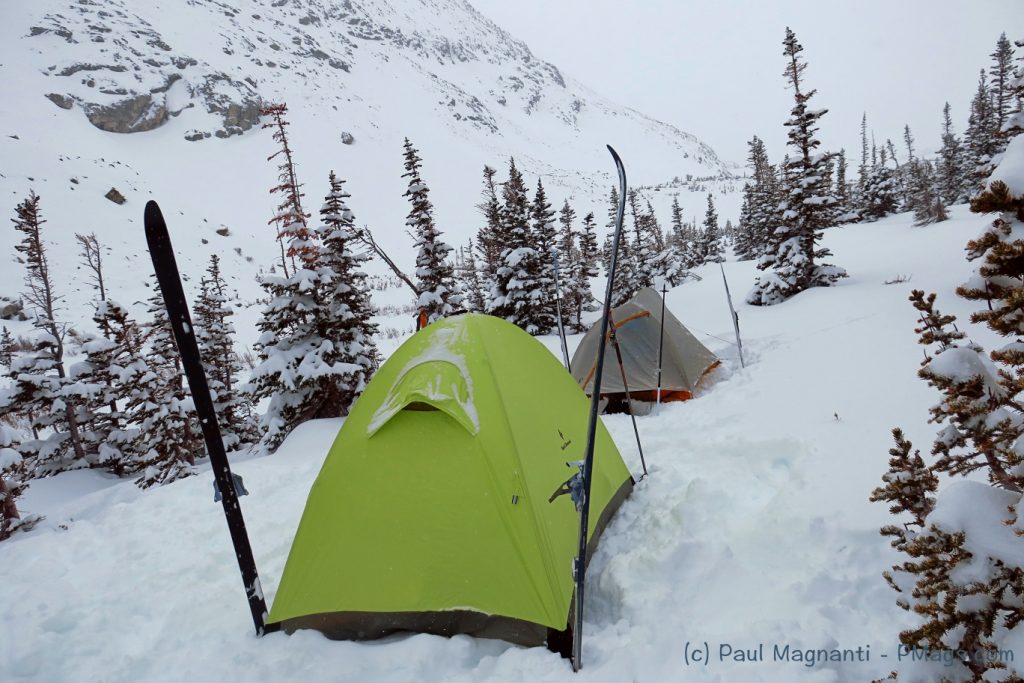
In the Indian Peaks Wilderness
~~~
What began nearly a decade ago as a jab at list culture has become a straightforward record of how my outdoor life has changed over the years. The materials differ, the trips evolve, and the priorities adjust. But the core idea holds: gear is a tool.
Whether it’s a tarp in the desert, a double-wall tent in cold rain, a hammock in the Southeast, or a roomy tent for winter car camping, the right shelter is the one that lets you sleep well, protects you from the elements, and lets you enjoy your time outdoors. The details change. The purpose does not.
Very interesting post. I’ve never tried a tarp as a shelter. Well…I did once but I didn’t sleep in it. It was more of a rain shield. I usually prefer tents. I also have never tried a natural shelter and don’t know if I want to either. Funny post and thanks for the contributions.
My wife and I absolutely love our SMD Lunar Duo. Soooo much room!
Oh the numberless nights I’ve spent in my SMD Skyscape Scout, far, far away from the hand of man and deep in the heart of the Olympics. STILL just $125! My personal choice for best bang fer yer buck piece of kit.
I like # 5-10. I’ve aleady got a tarp, and you just spared me from having to read more boring gear reviews, or contemplating whether my tarp is good enough. Much appreciated!
#5-10 are my favorites, too. 😉
First-time poster here, and I want to first of all thank you for your awesome blog, which has helped me get into backpacking. I have used a number of tips from your posts and have enjoyed several backpacking trips that I learned about here. Due to a recent injury (torn Achilles), I’m trying to figure out how to further lighten my load so that I can hike more safely. I am considering switching from my tent (which is almost 4 lbs with footprint) to a flat tarp. My question is, how often are the bugs a problem for you? I… Read more »
Hi Ryan, The only time I notice any issues with insects in Colorado are low lying areas near water in the early part of the summer (say June or so when the snow is starting to melt). There are exceptions. Last year when we had a massive snow dump in May, this pattern persisted well into the summer. Otherwise Colorado is pretty bug free in the high country. Something like this is simple and effective. Used something like it (may even have been the same brand) in the Sierra around snow melt time. http://www.amazon.com/Coghlans-Mosquito-Net-Single-White/dp/B000KKB2OS/ref=cm_cr_arp_d_product_top?ie=UTF8 Let me know if you have… Read more »
Thanks! I think for now I’ll just buy the tarp, and start off late-season (late August or Sep.) so that I don’t have to deal with bugs. Then, if I become a tarp convert and want to use it when bugs are out, I’ll try the bug net. Would you say that an 8×10 tarp is big enough to keep a tall person (who is a novice) dry in his down sleeping bag?
Not sure how tall you are, but I’m 5’6″ and find it a palace. Obviously I am not tall. 😉 Probably enough room for someone up to 6’2″ easily. After that? I am not sure to be honest. See above about me not being tall. 🙂 If you are not sure, grab an inexpensive 8×10 tarp from the hardware store and set it up. Enough room for your height? You are out less than $10 for this test and can use the tarp for something else. And you know to buy a larger tarp.
Thanks again for the tips. I ended up buying a “Bearpaw Lair” tarp (similar to the ZPacks Hexamid) because I found one used and cheap. My recovery from injury is going quite well and I happen to have a free long weekend at the very end of July… the mountains are calling! Do you think that bugs will be an issue this year in the high country at the end of July? (for something like the 4-pass loop or the Pawnee-Buchanan loop, etc). In light of my recent Achilles injury, I’d feel a lot safer backpacking out there if I… Read more »
Probably be OK esp towards night. Lower lying areas nears water may be an issue.
So which of the 5 would you take on a CT thru?
Depends on the time of the year. But I took a tarp when I did the CT in early fall.
No place for the Shangri-La?
I can’t list a tent I’ve never used (Consistently)… I know, odd! 😀
I enjoyed my night alone in the Bryant Ridge Shelter a great deal. Tarps are good too.
There are plenty of run-down and old miner cabins out here which look like AT-style shelters but not nearly as palatial. Fewer mice, though. 😉