
Back in 2019, I wrote an article titled “Communication Technology Options: A Vendor-Neutral View.”
Looking back at it seven years later, I think the overall framework held up rather well.

At the time, I wrote:
5G coverage will mean faster connectivity with mobile devices and a more robust data capacity.
Low Earth orbit satellite technology will make 24/7 internet communication possible all over the globe and in all places.
In 2019, those statements seemed like reasonable speculation. Today, they describe reality.
Starlink has become a household name. Portable satellite internet is no longer limited to government agencies, research expeditions, and well-funded organizations. A reasonably portable and increasingly affordable Starlink Mini can provide internet access in many remote locations.
It’s too heavy to schlep while backpacking, but many RVers, rafters, field crews, people at base camps, and van lifers (of course!) regularly use this technology.
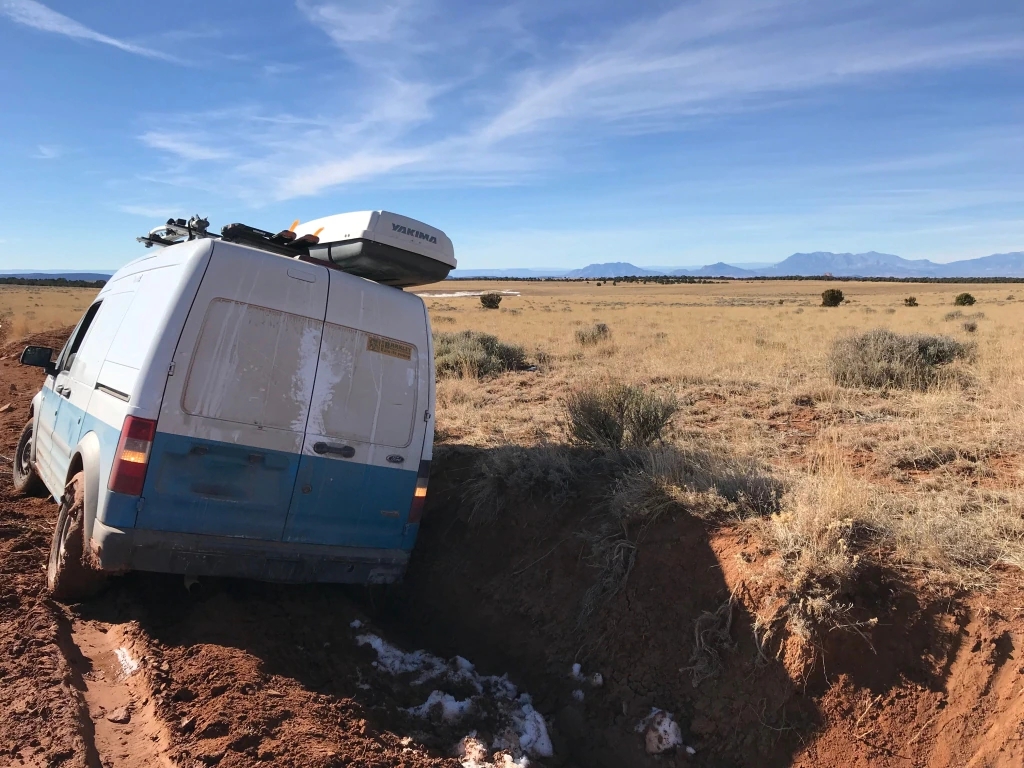
Perfect from when you take your van into muddy roads and need to use VOIP to call the off-road tow truck company for about $2000! From REI.
The larger trend, however, is even more interesting.
Back in 2019, satellite communication generally meant carrying a separate device. If you wanted to communicate beyond cellular coverage, you packed a Garmin inReach, SPOT device, or a Personal Locator Beacon (PLB).
Today, many people already carry some form of satellite communication in their pockets.
Apple’s satellite messaging capability allows communication when outside cellular coverage. Other phones offer a form of this capability, too. T-Mobile’s partnership with Starlink pushes the concept even further by enabling satellite communication on phones people already own.
That’s the wrinkle I did not fully anticipate in 2019.
I expected Low Earth Orbit satellite networks to become commonplace. I did not expect satellite communication to become integrated into mainstream consumer devices quite so quickly.

Neither did astronomers nor radio operators. From Space Australia
That development puts Garmin in an interesting position.
Newer inReach models offer photo sharing, voice messaging, and other expanded communication options. And, to their credit, they are now allowing SOS services even if you discontinue a data plan.
However, dedicated two-way satellite messaging devices are becoming a niche product.
There are good reasons to carry a separate device. Redundancy matters, and dedicated communicators offer excellent battery life and provide a communication system separate from the phone you use for navigation, photography, and everything else.
At the same time, history suggests that most people prefer carrying one device rather than two.
Any remaining technical advantages of a standalone InReach-like device will likely continue to shrink with each passing year.
We’ve seen this pattern before.
Dedicated GPS receivers largely gave way to smartphones for most users. Point-and-shoot cameras were largely replaced by mobile devices. MP3 players followed a similar path.
My gut feeling? Dedicated two-way messaging devices are headed in the same direction.
Adding voice messaging and photo sharing feels a bit like rearranging deck chairs before that ship hits the proverbial iceberg. Those features may appeal to some users, but they do not address the larger trend. Most people will eventually default to a single device that does it all.

From Pinterest
Dedicated satellite communicators will likely remain useful for guides, SAR personnel, field crews, expedition travelers, and others who value redundancy. Much like dedicated cameras or GPS units, they will become increasingly specialized tools rather than the default solution for backcountry communication.
Interestingly, this trend may strengthen the case for Personal Locator Beacons (PLBs) for certain edge cases and specialized uses. Winter mountaineering, extreme cold weather, and international travel come to mind.
And, as a gentle reminder, a PLB and a satellite messenger are not the same thing.
A PLB is not trying to be a smartphone or a messaging platform. It works on government satellites, has a battery life of 5-10 years, can operate in temperatures as low as -40 F/C and as high as 133F / 56C in some models, and requires no subscription.
It performs one task: sending an emergency distress signal when everything else has gone wrong.
It’s a reliable “Hail Mary Pass” for when the proverbial fecal matter hits the oscillating device.
 As I noted in 2019, the technology continues to evolve rapidly.
Satellite communication will become increasingly standard in the years ahead. Much as we no longer think about GPS receivers or 4G coverage as separate technologies, satellite connectivity will become part of the communications infrastructure we expect our devices to have in the backcountry.
At the same time, I think we’ll continue to see a place for simple, purpose-built emergency devices.
If I had to make a prediction, Garmin survives by focusing on markets where redundancy, reliability, and battery longevity matter most. Aviation, marine, emergency response, and expedition travel all come to mind. I’m less certain about the long-term future of lower-market-share products, such as SPOT.
PLBs may persist longer than many people expect because they don’t compete with smartphones and instead rely on a government satellite system. The “set it and forget it” approach, no subscription fees, and a single purpose that works in extreme conditions remain compelling advantages for some users or groups.

From Pinterest
But technology is only part of the story.
The biggest change is the ongoing cultural shift and evolving expectations that I wrote about quite some time ago, and that people wrote about even earlier than I did.
I’m concerned that if communication becomes readily available at any time, people, especially in American work culture, will expect that level of connectivity from you as well.
As the Watermans wrote –
“When a new technology is applied to the backcountry, we tend to focus on its practical uses. When someone later points out a gadget’s impact on the quality of the wilderness experience, we tend to classify such ramifications “secondary” or “side effects” of the technology’s application. By taking this view, we preclude questioning the original, intended use of this technology. But in fact the changes that a new technology makes on the wilderness experience are not all secondary, but are intrinsic to the very nature of that technology. The medium is the message. The tool becomes the experience.”
The challenge is no longer whether communication is possible from remote locations. The challenge is deciding how much connectivity we actually want or expect from others.
I still think of a cartoon from 1997 that remains remarkably relevant today –
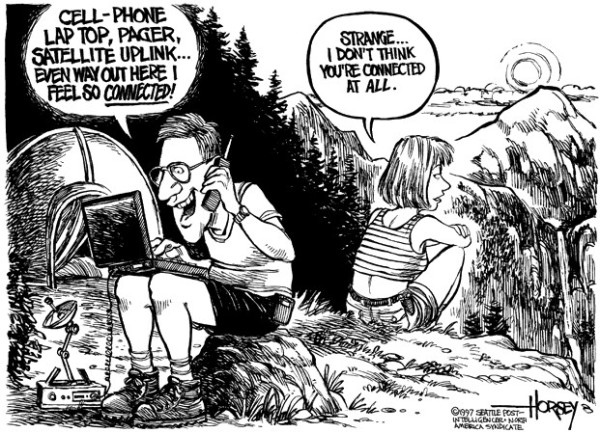
We are on the cusp of always being connected in the backcountry. Is it what we want? And will we expect it of everyone?
As someone who has been backpacking since the 1980s, one of my trail memories is learning of major news events only after coming out of the woods. Because they were within a couple of years of each other, the two most striking were the deaths of Princess Diana and JFK, Jr. In both cases, I came off weekend hiking trips and heard about them by turning on the car radio.
Since both trips were to places in the mid-Atlantic states that aren’t particularly isolated, being out of the loop there is already part of the past.
Exactly!
Those weren’t remote expeditions.
But nobody expected you to have known sooner. You heard it on the radio first.
That baseline is gone now. And what strikes me is that it went without any real collective decision about whether we wanted it to. The technology arrived, the expectation followed, and opting out became its own statement rather than the default.
Yes, one of these weekends was on the AT north out of Duncannon, PA–certainly not a wilderness!
Barely 15 years later, i was hiking the AT north out of Penn-Mar Park towards Pine Grove Furnace, and spent a fair part of the hike babysitting my boss over the phone.
Connectivity has its downsides.
Interesting post. The benefits of 2 way comms (i.e. Garmin inReach) over a PLB seem pretty clear to me. Better communication can help rescuers assess a situation, prioritize resources, and avoid unnecessary responses. You raise a great question: Does the ability to communicate automatically create an obligation to communicate? I personally believe people still have the option to choose how much they communicate, even when the technology is available. For me, the only people who know how to reach me are my emergency contacts. They know to contact me if there’s something important, such as a fire in the area… Read more »
Thanks for the thoughtful comment. The attention issue may prove to be the larger challenge. It’s not necessarily that someone expects an immediate response. It’s that the same device carrying your map, camera, and emergency communications is also carrying texts, emails, group chats, and all the other noise of everyday life. That convergence is harder to opt out of than a single-purpose tool. PLBs increasingly serve a different purpose than satellite messengers rather than competing with them. Two-way communication offers clear advantages for most users. PLBs still make sense for edge cases : mountaineering, very cold conditions, situations where a… Read more »
When star link phones become common, I think that will put pressure on the Iridium network. The network might end before Garmin gets “acquired”. The future will be fast and interesting.
Good point! The infrastructure question will be interesting to watch.
I’ve been arguing for years that connectivity (specifically the permanent presence of cellular and satellite signal) is inconsistent with the Wilderness Act. DEFINITION OF WILDERNESS (c) A wilderness, in contrast with those areas where man and his works dominate the landscape, is hereby recognized as an area where the earth and its community of life are untrammeled by man, where man himself is a visitor who does not remain. An area of wilderness is further defined to mean in this Act an area of undeveloped Federal land retaining its primeval character and influence, without permanent improvements or human habitation, which… Read more »
Thanks for sharing! I think there’s a broader discussion to be had about what “unconfined recreation” and “opportunities for solitude” mean in an age of ubiquitous connectivity. Unfortunately, that genie left the bottle a long time ago and granted its three wishes to people who aren’t us. Ha! The Wilderness Act obviously couldn’t have anticipated satellite messaging or direct-to-cell service. A radio signal itself doesn’t leave an imprint on the landscape the way a road or communication tower does. But I’d argue it can leave an imprint on the wilderness experience if it changes our expectations and behaviors. Wilderness Ethics… Read more »
An important aspect of my 2014 JMT thru-hike was being off-line for ~2 weeks so I could better immerse myself into the Sierra. I was happy not answering incoming calls/texts or tempted to check social media. However, with an upcoming campground host gig at Zion, I opted for a Starlink Mini, despite my dislike for Elon. I’m still wrestling with the pros & cons.
For sure. Starlink is impressive technology. One of the last projects I worked on with the NPS was setting up Starlink at a remote district here in Utah. It’s not overly expensive, it’s reliable, and it works well.
I’d argue that internet connectivity is a utility at this point, much like electricity or running water. If you’re living somewhere full-time, especially hosting a high-profile campground like Zion, having reliable internet is more of a necessity than a luxury.
Having said that, putting so many eggs in the Musk basket gives me pause, too!
Have fun at Zion!