
As we passed on it seemed as if those seens of visionary inchantment would never have and end… Meriwether Lewis, May 31, 1805
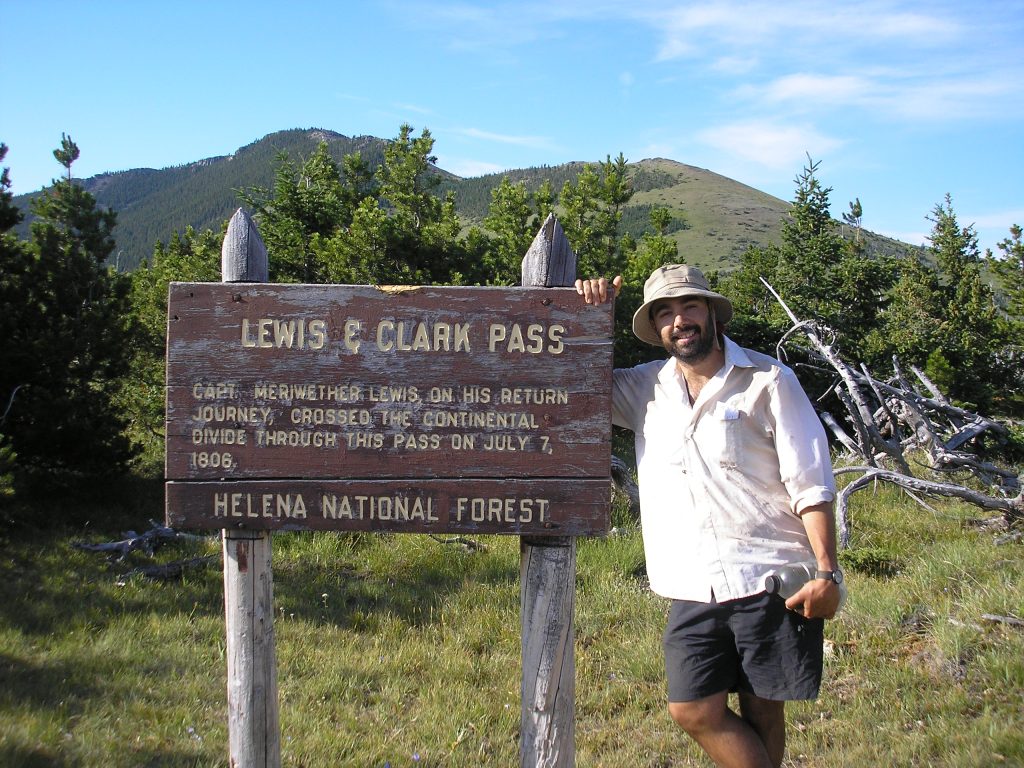
On the CDT in July 2006, almost two hundred years to the day after Lewis crossed the Continental Divide. As with Lewis, I turned 32 years old that year.
Back in 2006, I thru-hiked the Continental Divide Trail and, in many places, walked where the Corps of Discovery traveled two hundred years previously.
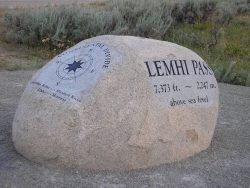
That year, of course, marked the end of the Corps of Discovery bicentennial. From St. Louis, the expedition traveled up the Missouri River, crossed the Continental Divide, continued to the Oregon Coast, and returned.
Because I enjoy history, I not only researched my CDT thru-hike but also read and watched as much as I could about the Corps of Discovery.
I watched the Ken Burns documentary about the expedition and, of course, read the seminal Undaunted Courage by Stephen Ambrose.
I also spent considerable time with Carolyn Gilman’s Lewis and Clark: Across the Divide, the companion book to the national bicentennial exhibition, which sits on my desk as I type this article.
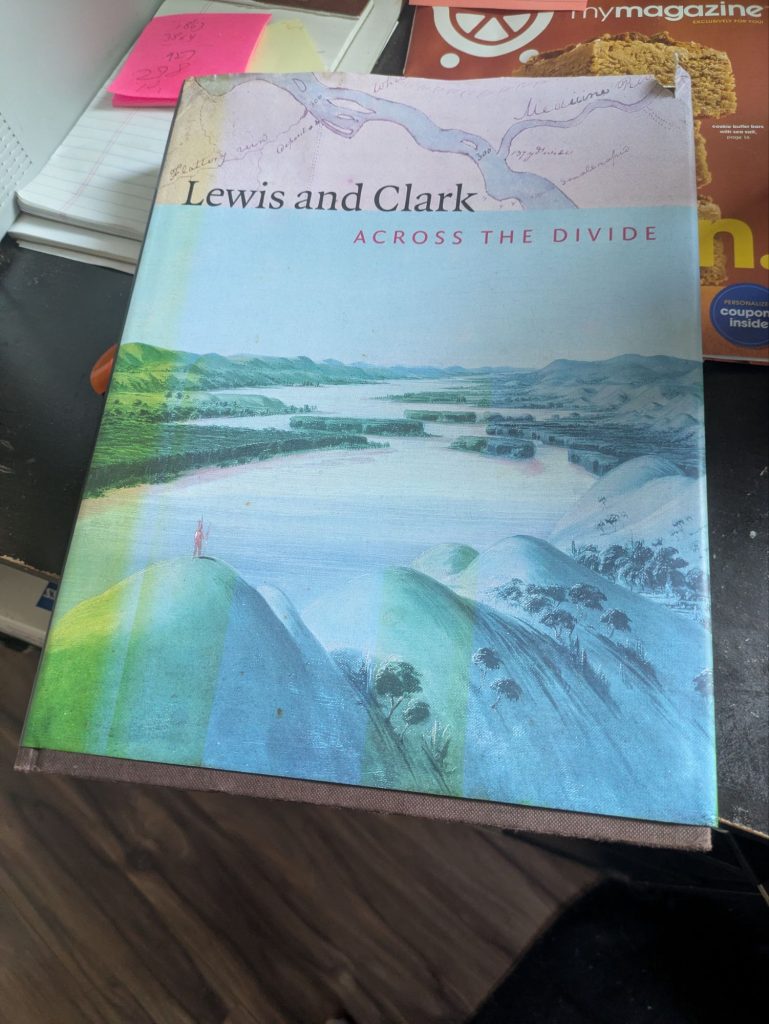
Along with coupons I need to clip out!
With more than 400 photographs of maps, paintings, artifacts, and other material from the expedition and the cultures encountered along the way, the book gave the history a living presence. I could see some of the actual items the Corps carried, along with objects made and used by the Indigenous people whose countries they traveled through.
Ambrose supplied the sweeping narrative, Burns supplied the landscape, and Across the Divide showed many of the tangible things left behind.
These accounts inspired me to seek my own “scenes of visionary enchantment” as I made my way down the Continental Divide.
Twenty years later, most people realize that the dominant bicentennial narrative still omitted important voices. In Ambrose’s case, some of the history also does not hold up particularly well.
The familiar version became the story of Lewis, and to a lesser extent Clark, and their travels.
Sacagawea, York, the enlisted men, Indigenous leaders, French Canadian boatmen, interpreters, and many others became supporting characters in Lewis’s story.
Craig Fehrman’s This Vast Enterprise: A New History of Lewis & Clark tells a broader, more complicated, and ultimately more compelling story.
A familiar journey from different viewpoints
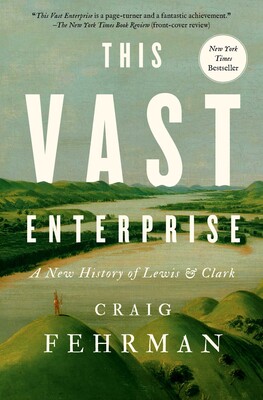
Fehrman does not discard Lewis and Clark or minimize their accomplishments. They still planned and led an audacious expedition across thousands of miles. They negotiated with dozens of Indigenous nations, gathered scientific information, mapped enormous stretches of country, endured brutal conditions, and brought nearly everyone home alive.
That remains an extraordinary achievement.
But Fehrman shifts the viewpoint.
Instead of looking almost exclusively over the captains’ shoulders, he builds chapters around people such as John Ordway, York, Sacagawea, and several Indigenous leaders who encountered the expedition.
It reads less like history and more like an engaging narrative.
This approach changes the story.
In particular, I enjoyed the narrative about John Ordway.
The expedition’s de facto first sergeant brought a grounded, pragmatic, yet inquisitive viewpoint. Coming from what we would now call the working class, he became, in many ways, one of the gears that kept the expedition moving.
Ordway no longer appears as merely one of the reliable sergeants. His journal reveals the daily work of keeping the expedition functioning and offers details that Lewis and Clark either missed or did not consider important enough to record.
York becomes more than “Clark’s slave” who impressed Indigenous people with his skin color and physical strength. He hunted, carried a weapon, voted with the others, endured the same labor, and contributed to the expedition’s success. After experiencing unusual freedom during the journey, he returned east and again became an enslaved person under Clark’s control.
That contradiction should make us uncomfortable.
Clark often comes across as the practical, steady, and more humane partner. In many ways, he was. But his treatment of York after the expedition complicates that reassuring image.
Sacagawea also becomes more than the woman with a baby who conveniently guided the captains west. She was young, displaced, and living with a man old enough to be her father who probably acquired her through purchase or gambling. She recognized terrain, helped the Corps communicate with the Shoshone, gathered food, saved critical items when a canoe nearly capsized, and made her own wishes known at key moments.
She did not guide the expedition from St. Louis to the Pacific. She did, however, contribute knowledge and credibility that the Corps could not have manufactured on its own.
She is more than the familiar tale often told.
Oral tradition as history
One of the strongest aspects of This Vast Enterprise is Fehrman’s willingness to draw on Indigenous oral tradition.
Traditional histories of the expedition rely heavily on the journals. That makes sense. Lewis, Clark, Ordway, Gass, Whitehouse, and others left an unusually detailed written record.
But the people they met generally did not record those encounters in bound journals written in English.
If historians only accept the written documents produced by the expedition, the American visitors automatically control the story. Indigenous people appear when Lewis or Clark notices them and disappear when the captains move on.
Fehrman treats oral histories as evidence rather than decoration.
He spent years visiting archives, speaking with descendants, and collecting stories passed down through families and communities. These accounts reveal how Indigenous people remembered the expedition, what they believed the Americans wanted, and how their descendants understood the consequences of those encounters.
Oral tradition does not provide a magic window into the past. Stories can change through generations, just as written sources can contain mistakes, self-serving claims, omissions, and outright lies.
Fehrman understands this limitation.
He does not accept every family story without question. He compares oral accounts with journals, geography, later testimony, genealogy, and other available evidence. At times, he can only say that an event probably happened or that a claim remains plausible.
I found this approach far more honest than either dismissing oral tradition entirely or presenting it as unquestionable fact.
It’s a nuanced and refreshing take.
Living where Indigenous people have shaped the landscape and carried oral traditions for generations, I am especially aware of this fact, more so than when I first took a deep dive into the history of this expedition twenty years ago.
Oral history can preserve an essential truth even when individual details blur over time.
Fehrman also admits when he makes an inference. For people who left few or no written words, he reconstructs what they may have seen, understood, or felt from the best available evidence.
Some readers may think he occasionally reaches too far. Fair enough.
But Ambrose also made inferences, often while writing with considerably more confidence and placing Lewis firmly at the center of the story.
The difference is that Fehrman usually shows his work.
Ambrose and the heroic narrative
I still understand why Undaunted Courage became so influential.
Ambrose wrote an engaging book that captured the imagination.
He made the landscape, physical labor, risk, and personalities feel immediate. For many readers, including me in 2006, the book offered an accessible doorway into the expedition.
But Ambrose wrote a biography of Meriwether Lewis more than a complete history of the Corps of Discovery.
That is a distinction I did not think about at the time.
Lewis is his hero. Clark becomes the dependable partner. Everyone else tends to enter the narrative according to how they helped, hindered, or impressed the captains.
Ambrose also wrote with a certainty that later scholarship does not always support. He sometimes turned possibilities into conclusions, accepted convenient interpretations, and shaped the evidence into a satisfying national epic.
Fehrman writes with more restraint.
He portrays Lewis as intelligent, observant, capable, ambitious, moody, and increasingly troubled. He also lets Lewis make mistakes. The expedition’s diplomacy did not always succeed. The captains sometimes misunderstood the people they met. Their speeches about American sovereignty carried far less meaning to Indigenous nations than the Americans assumed.
The Corps entered a continent already filled with trade networks, political alliances, rivalries, well-traveled routes, and extensive geographic knowledge.
They did not walk into an empty wilderness.
They entered other people’s countries.
That distinction does not make the journey less impressive.
It makes the history more accurate.
The expedition as a group effort
Fehrman’s broader viewpoint also makes the expedition itself seem more remarkable.
The traditional “Lewis and Clark” shorthand suggests that two exceptional men crossed the continent while everyone else followed.
In reality, the Corps succeeded through accumulated skills.
Drouillard hunted and interpreted sign language. The enlisted men hauled boats against the Missouri current, repaired equipment, built forts, hunted, paddled, carried loads, and endured cold, hunger, insects, injuries, and exhaustion. Indigenous communities provided food, information, horses, directions, shelter, and diplomatic support.
Sacagawea and Charbonneau provided essential language connections. York’s presence affected encounters in ways the captains could not have predicted. Ordway and the other sergeants kept the military unit functioning.
Lewis and Clark deserve credit for creating enough trust and flexibility to hold this unusual group together.
That may be their greatest accomplishment.
They enforced military discipline, sometimes brutally by modern standards, but they also adapted. They listened to enlisted men more than many officers of the era would have. They divided responsibilities according to skill. They made decisions in the field without waiting for instructions from a government thousands of miles away.
It took a crew working together toward a common goal. Excellent leadership can harness talent and provide direction, but each member still contributes the necessary effort to make the larger effort succeed.
For anyone who has worked in an organization with a common mission, Fehrman’s account feels refreshing compared to the traditional heroic narrative of earlier works.
The intriguing appendices
The appendices are among the most fascinating parts of the book for me.
Fehrman waits until after completing the main narrative before examining some of the more intriguing and difficult claims surrounding the expedition.
Did Lewis or Clark father children with Indigenous women?
Did York?
What happened to Sacagawea after the years covered by the familiar story?
Can oral traditions, family histories, genealogical records, and modern DNA evidence clarify events that the journals omitted?
Fehrman examines these questions seriously but does not pretend that suggestive evidence equals proof.
The family history surrounding Joseph DeSmet and a possible connection to Meriwether Lewis struck me as particularly intriguing. The claim rests on more than a random modern family legend, and Fehrman presents evidence that makes the possibility difficult to dismiss. But he also stops short of declaring the case solved.
I came away thinking the connection is highly probable, though still lacking definitive proof.
Claims involving Clark and possibly York also deserve consideration. We know that other expedition members fathered children during or around the time of the journey. No serious historian disputes that sexual relationships occurred between Corps members and Indigenous women.
Assuming that Lewis and Clark, men in their early thirties, remained entirely apart from this activity because their journals stayed discreet seems questionable.
But possibility is not documentation.
Fehrman places these subjects in the appendices for good reason. They matter, and some may well be true, but they should not be treated as established facts in the main narrative.
The same applies to the competing accounts of Sacagawea’s later life. Written records, oral traditions, descendants, and DNA research add important evidence, yet gaps remain.
These appendices show Fehrman’s method at its best. He takes oral tradition seriously, tests it against other evidence, explains what we know, and leaves uncertainty intact.
History often works that way.
Lewis and the end of the journey
Fehrman’s account of Lewis after the expedition makes for difficult reading.
Lewis returned as a national hero but struggled to complete the promised books. He faced financial problems, bureaucratic disputes, political pressure, physical illness, alcohol, and possible drug dependence. The expedition’s clear purpose and daily structure disappeared.
Lewis had spent years making decisions that mattered immediately. Afterward, he faced paperwork, creditors, disputed expenses, and expectations he could not meet.
It is a sad tale familiar to people who once found intense focus and purpose in a mission they could not easily duplicate afterward.
His final journey along the Natchez Trace becomes especially haunting.
Lewis reportedly began speaking aloud to Clark, who was hundreds of miles away. He believed he could hear Clark approaching and said that he always knew his co-captain would come to rescue him.
Clark had served as Lewis’s steady partner through the defining achievement of both their lives. In Lewis’s collapsing mind, Clark remained the person who would arrive, restore order, and help him through.
But Clark was not there.
After hearing of Lewis’s death, Clark wrote:
“I fear O! I fear the waight of his mind has overcome him.”
Fehrman does not offer one succinct explanation for Lewis’s death. Depression, exhaustion, addiction, illness, financial pressure, damaged honor, and the loss of purpose all form part of the story.
That lack of a simple answer feels correct.
A new standard account
This Vast Enterprise does not replace the journals, nor does it render all earlier history worthless.
The Ken Burns documentary still gives an excellent visual sense of the journey and the landscape. Undaunted Courage remains an engaging biography of Lewis and an important part of the expedition’s popular revival during the 1990s and bicentennial years.
Across the Divide still provides an invaluable visual and material record of the people, cultures, and objects connected to the journey.
But the dominant narrative of that era now feels like the product of a particular historical lens.
It tells a heroic national story centered on two European-American captains, especially Lewis, who venture into an immense landscape and return with knowledge of the West.
Fehrman tells a story about many people moving through already inhabited countries, each carrying different goals, knowledge, limitations, and understandings of what occurred.
The result does not diminish Lewis and Clark.
It makes the expedition larger.
Joan and I recently watched a presentation at the Moab Museum about the famous Buffalo Soldiers and their impact on Utah and Moab itself.
It covered a part of history I did not know about, and many people who grew up in Moab did not know either.
As Robert Burch, executive director of Sema Hadithi, meaning “Tell the story,” stated:
“We are not here to rewrite history. We are here to add missing chapters to the book.”
Twenty years ago, I walked portions of the Continental Divide with Ambrose’s Lewis in my imagination. I thought about the captains crossing the same divide, seeing the same broad landscapes, and finding their own scenes of visionary enchantment.
I still think about them.
After reading This Vast Enterprise, however, I also think more about Ordway maintaining his journal day after day. I think about York experiencing a form of freedom and then losing it. I think about Sacagawea recognizing the country where she had been captured. I think about Indigenous leaders trying to understand these visitors, their medals, their speeches, and their claims of a distant new father.
And I think about all the people whose experiences never made it into the captains’ journals.
I think about the missing chapters.
This Vast Enterprise offers the most complete, nuanced, and readable modern account of the expedition I have encountered.
The book retains the adventure, physical hardship, complicated personalities, and vast landscapes that drew me to the story in 2006.
It simply lets more people belong to that story and adds the missing chapters that make it fuller, richer, and more rewarding.
It is one of the best books I’ve read in 2026, and I suspect it is one I’ll think about for a long time.
Read the book and fill in those missing chapters.
Want to read the book? Consider your local library!