
In 1999, at the start of the modern ultralight era, I lightened my gear load.
I went from an overbuilt EMS 5500 pack to a simple rucksack, traded my boots for trail shoes, switched to a tarp, and rocked a homemade Pepsi-can-style stove.

From a Google Image Search long ago
A light stove that worked well for boiling water and simple boil-and-cook meals, but had limitations and trade-offs compared to other stove types.
I used this type of stove on many long hikes and weekend backpacking trips over the years.
But around 2012 or so, my views of alcohol stoves changed. Open-flame bans, hotter, drier conditions, and the adoption of both no-cook meals and increasingly lightweight canister stoves for shorter trips all led me to eschew this ultralight backpacking stalwart.
I used alcohol stoves less and less. However, they still filled the niche of longer, solo, shoulder-season hikes.
The alcohol stove I switched to for these hikes turned out to be the White Box. A simple side-burner stove that fits my modest needs.
These thoughts all came about when Joan and I realized we’d worn out our trusty Optimus Crux canister stove. Joan owned the stove before we met, and after many nights of backpacking over the years, we simply wore it out. Threads that no longer secured the stove and leaking gas meant a no-go. The Coleman F1 met a similar fate.
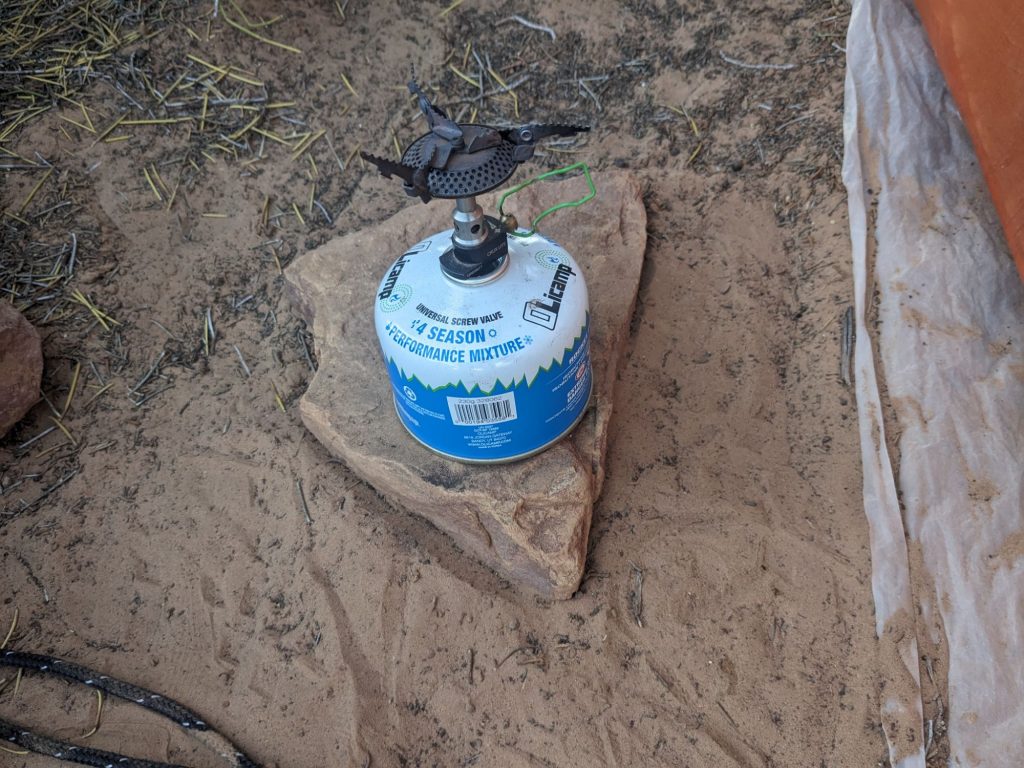
The Optimus Crux Lite on our FSCP.
While considering a replacement, I dug through my various stoves and pulled out the White Box stove I used on my Walk Across New England last fall.
I never wrote a review of this stove. Instead, I did something that would make a modern YouTube gear reviewer cringe: I used the stove for nearly twenty years before writing this review.
I used it for many years and on many trips, including long hikes and other trips I no longer quite remember.
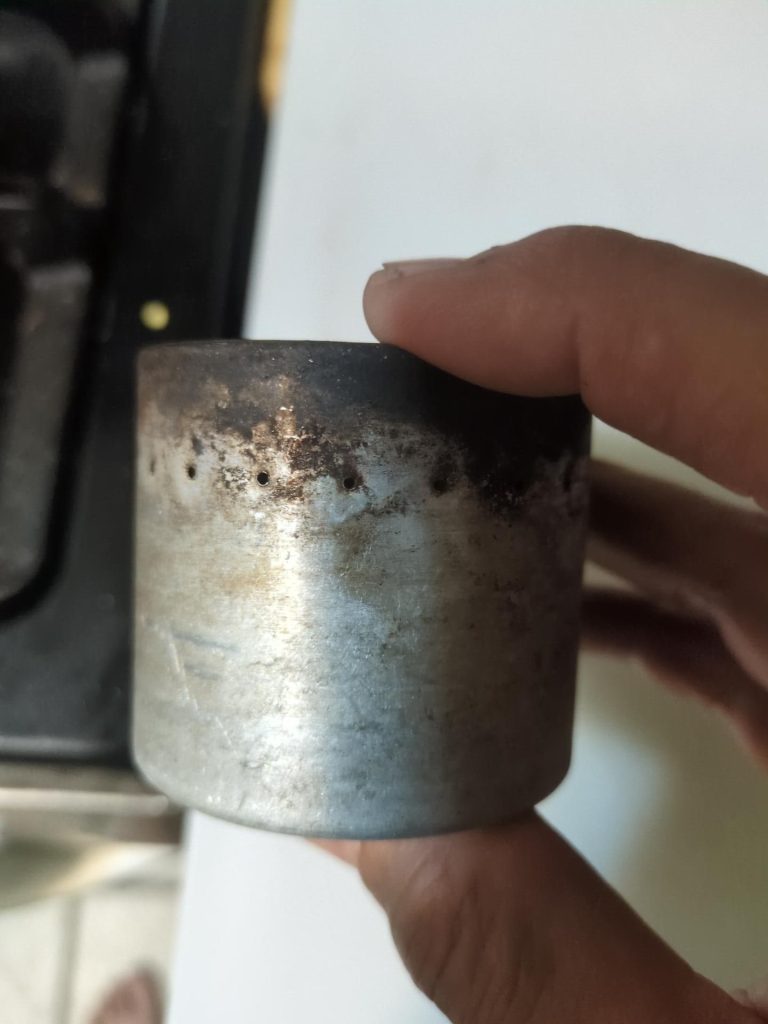
Multiple bag nights, repeated heating-and-cooling cycles, and more than a few times schlepping my gear between homes left literal marks over the years. The stove has a slight dent, and two of the jets now burn more weakly than the others. It still boils water and lets me drink hot chocolate on those increasingly rare cool New England mornings.
Other alcohol stoves may weigh less, use fuel more efficiently, and perhaps work better for group trips. Some are so simple that even I can make them.
The White Box, however, is sturdy, made to high standards, simple to use, and supports the pot directly. A lighter burner may save about 14 grams (0.5 oz), but that advantage diminishes when I add a separate pot stand. No muss, no futz. In the end, I preferred the White Box over a cat-food-can stove. The cat-food-can stove is simple to make, but the White Box is even simpler to use in the field. I don’t need a separate pot stand and can place the pot directly on the stove.
All in all, I have a 42 g(1.5 oz) system, including the windscreen.
Some reviewers also list a pot grip as necessary because the pot or its handle can get too hot. I use a classic dirt-bagger grease pot for my solo hikes and already carry a bandanna, so this supposed disadvantage has never mattered to me. I simply lift the pot with the bandanna. Others say that small pots do not work well with the White Box stove, but again, that does not apply to me or my use. I also did not find that the stove tipped over easily, as some stated, perhaps because of the pot I chose.
Speaking of which, I also like how, unlike the Caldera stove system or similar systems, the White Box does not tie me as closely to a specific pot and windscreen. Finally, some people feel the stove takes too long to ignite, or “bloom,” compared to other stoves.
I find that none of this matters at the end of the day as I take in the last rays of daylight on a beautiful red-rock evening.
It’s a stove for boiling water, eating my meal, and taking in the scenery, not a finely tuned engineering project.
I also own a similar BottleStove that saw little use.
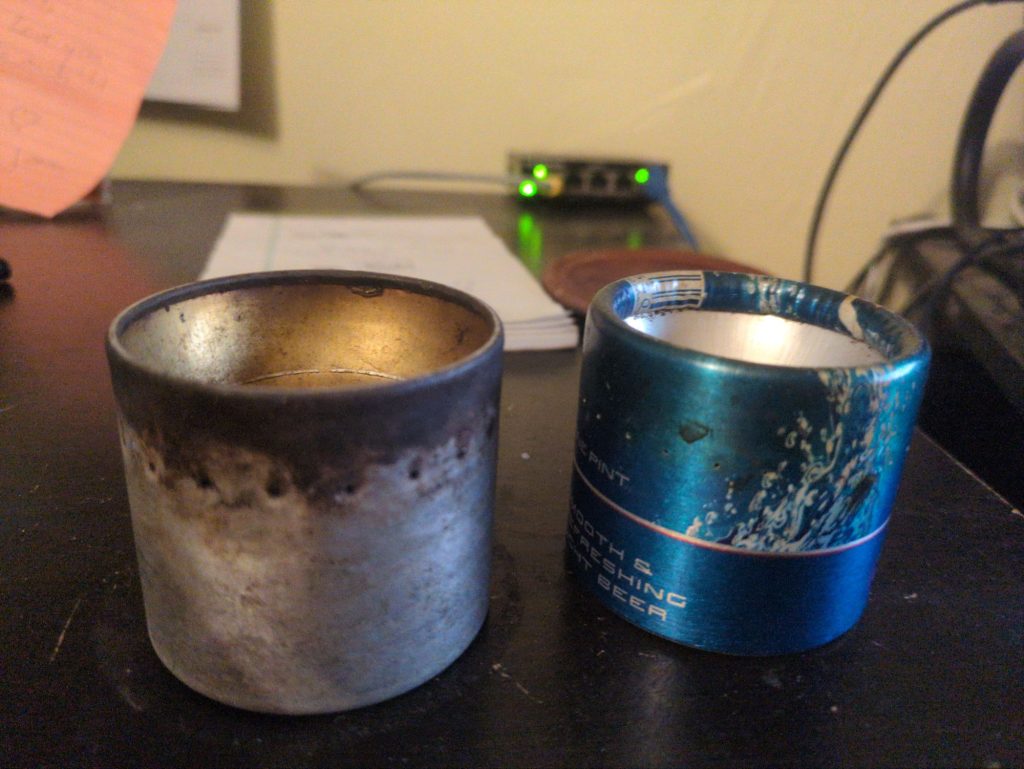
A side-by-side burn shows the difference. The BottleStove produces a cleaner, more even flame pattern because it spent about 15 years moving from one cardboard box to another. The White Box shows considerably more wear but still functions.
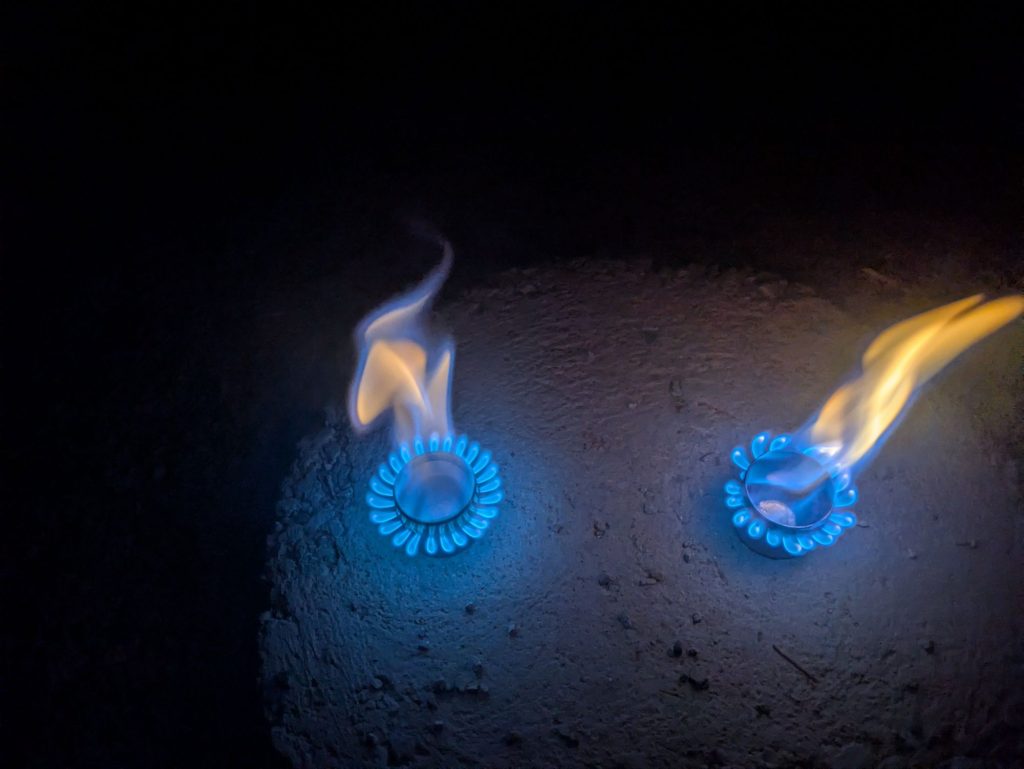
The lack of a windscreen and pot accounts for the orange flames in this photo. Bottle Stove on the left, White Box stove on the right.
Alcohol stoves occupied a prominent place in lightweight backpacking culture when I received the White Box around 2008.
Today, they fill a narrow niche.
Stove enginerds still enjoy testing and refining them. Some backpackers appreciate their quiet operation and simplicity. A few long-distance hikers, including me, still find them useful for cooking one hot meal per day between resupply points with access to fuel, especially during shoulder seasons when burn bans aren’t a consideration or when a hot drink caps off a cool evening. Hunting for canisters in town, especially on lesser-known routes, also makes me appreciate the simplicity of an alcohol stove, with its fuel available at many gas stations and hardware stores.
As mentioned, I wrote in 2013 that I expected to use alcohol stoves less often. Fire restrictions, inexpensive and lightweight canister stoves, and the increasing acceptance of stoveless hiking pushed alcohol stoves into a specialized role.
That prediction proved accurate.
As I wrote:
If I were to go on a long hike and absolutely wanted a stove, I suspect I’d take the alcohol stove. Even before I adopted going stoveless, I tended to only do one hot meal a day during longer trips (even when I did the Appalachian Trail). For longer trips into colder weather, or perhaps even trips back East, I just may mail myself a cook pot and an alcohol stove. A hot meal and a hot drink is undeniably psychologically satisfying at the end of the day during colder weather.
Whether walking across Utah or enjoying the changing fall colors of New England as I walked south to the ocean, the White Box stove filled that niche rather well for me.
Specifications alone do not determine which gear lasts in actual use. Other types of alcohol stoves may use less fuel, boil water faster, or save 14 grams under controlled conditions. In the field, the best tool is often the one whose limitations do not realistically matter and whose simplicity keeps me reaching for it.
I plan to retire the White Box while it still works and let the lightly used and near-identical BottleStove take over for the same occasional solo, longer, shoulder-season use.
I should have written this review in 2008 or so. Instead, I used the stove for nearly twenty years.
Better late than never.
And maybe I’ll get another alcohol stove replacement in 2044.