
Back in 2015, I wrote about my stove quiver. In 2020, I followed up with a video about the backpacking stoves I used then.
Six years later, my stove choices have changed somewhat.
Not necessarily because newer equipment works better, but because my backpacking has evolved, I live in a different climate than I did during my Colorado years, and I now share many of my trips with Joan.
Much like my recent look at camping stoves a decade later, I thought I’d revisit the backpacking stoves I use in 2026.
As with my other Quiver articles, I don’t claim these are the best, lightest, most efficient, or cheapest stoves available.
They’re simply the tools that work for me.
I don’t believe in one piece of equipment for every situation. I prefer the right tool for each trip.
Sometimes, the right tool means leaving the stove at home entirely!
With that in mind, here’s my current quiver of backpacking stoves.
Three-season backpacking with Joan: Fire-Maple Green Peak 1
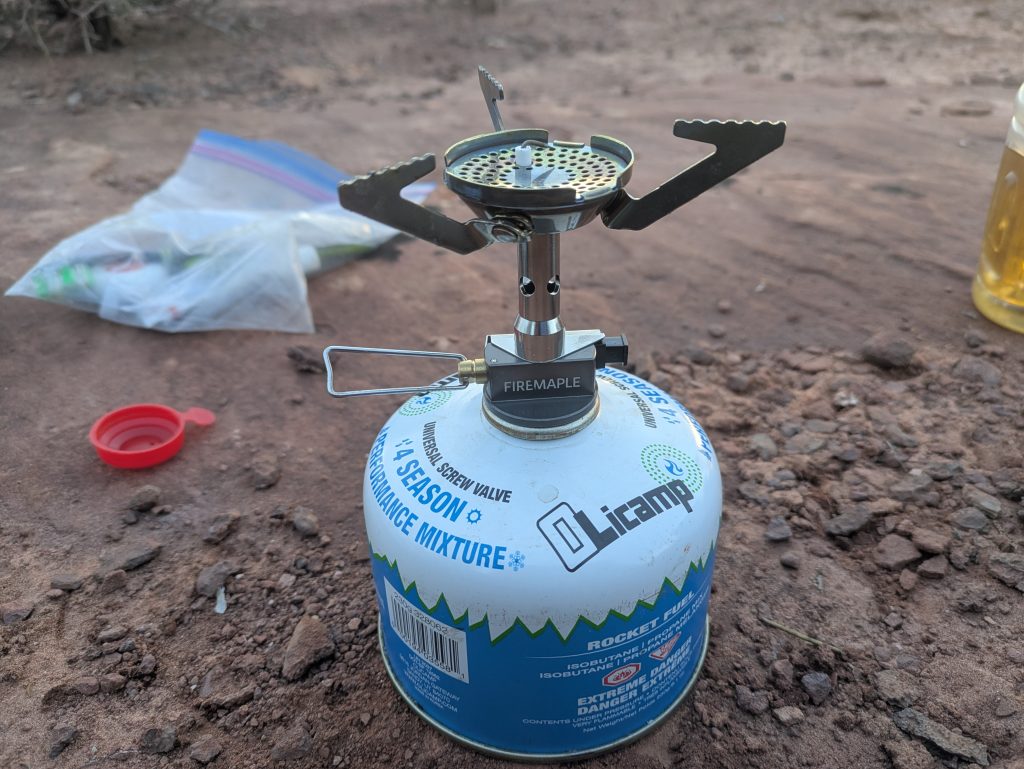
For many years, we used our trusty Optimus Crux Lite for many nights in the backcountry. Alas, after many nights in the bag, we wore out the threads.
We replaced it with the Fire-Maple Green Peak 1, which we bought on sale for about $16. And it already impresses.
The stove weighs about half an ounce more than the Crux Lite, but that’s a small penalty for shared gear. It also offers more wind resistance than the older stove it replaced, which I found helps with fuel efficiency.
I’ve also become increasingly impressed with Fire-Maple over the past few years. The company makes some well-regarded budget stoves that perform well without the premium prices of more heavily marketed brands.
I use a few of their stoves now, and I’ve been pleased with them.
Sometimes a $20 stove is all you need.
Cold-weather Utah backpacking: Fire-Maple FMS-118
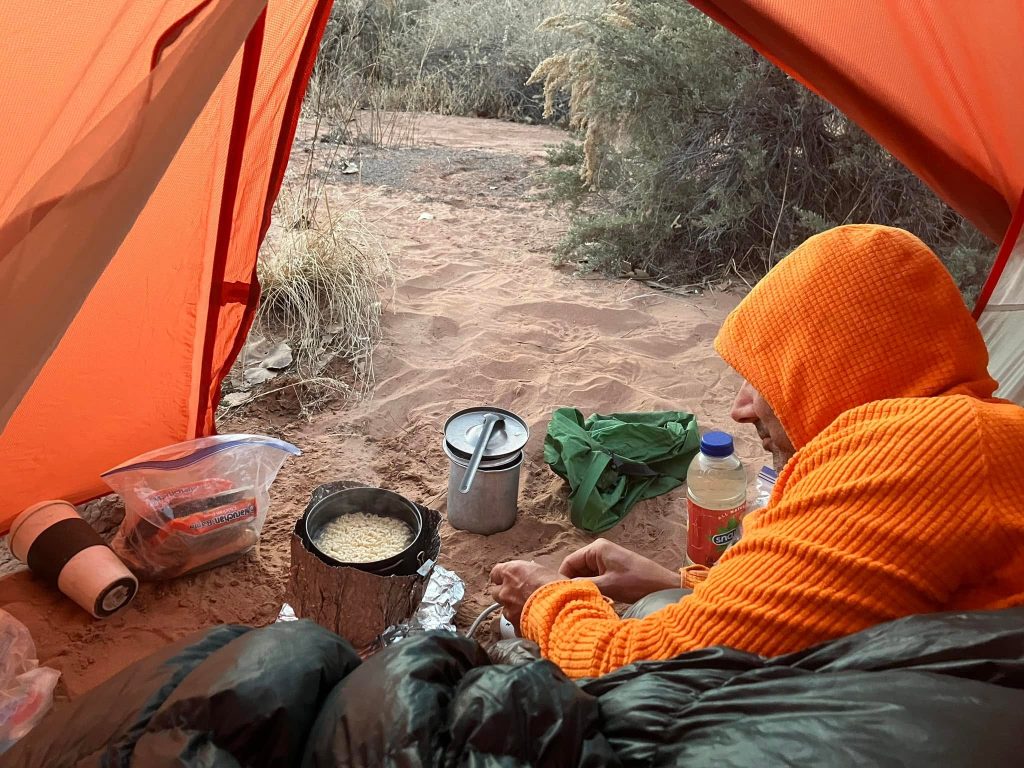
From Joan.
For colder backpacking trips, typically from mid-November through mid-February, we use our Fire-Maple FMS-118 remote canister stove.
Most of my winter backpacking these days takes place in the Utah desert, where overnight temperatures often drop into the high teens or low 20s.
Cold, certainly, but not the sustained deep-winter conditions I encountered more often while living in Colorado.
The FMS-118 has a remote fuel canister connected to the stove by a hose. Unlike a traditional upright canister stove, this arrangement lets me use a windscreen and invert a compatible canister after preheating, improving performance in colder conditions.
The lower stove profile also makes for a stable cooking setup.
I pair it with my homemade dirtbagger stove platform and a windscreen, a simple solution that provides a useful base for cooking in winter conditions.
This combo reflects heat, blocks the wind, and improves fuel efficiency.
The FMS-118 handles most of our Utah winter backpacking needs without the additional fuss of a white gas stove.
And when Joan and I camp together in colder weather, I can also make her a hot water bottle for the night.
A small luxury that she appreciates!
Note: Fire-Maple no longer makes this stove; the FMS Blade 2 is a newer, near-identical version.
Deep winter and snow melting: MSR SimmerLite

MSR SimmerLite being tested pre-trip.
I still own the venerable MSR SimmerLite white gas stove.
I used this stove extensively during my Colorado years, especially for winter backpacking and trips that required substantial snow melting.
White gas stoves have distinct advantages in deep winter. They work well in very cold temperatures, provide plenty of heat output, and make sense when you need to melt large quantities of snow.
But my backpacking has changed.
Living in the Utah desert, I rarely take the deep-winter trips that once made the SimmerLite an essential part of my kit.
In fact, I use the stove so infrequently that my white gas can deteriorate before I get a chance to burn it off!
I typically fire up the SimmerLite about once a year to make sure everything still works.
It remains a capable stove, and I’ll happily use it again if I take a trip that involves melting substantial snow or sustained deep-winter conditions.
But for the relatively mild desert winters I typically encounter, a remote canister stove is simply easier.
The SimmerLite didn’t become obsolete as much as I no longer need it for the niche it once occupied.
Solo shoulder-season backpacking, longer hikes: White Box Stove (alcohol)
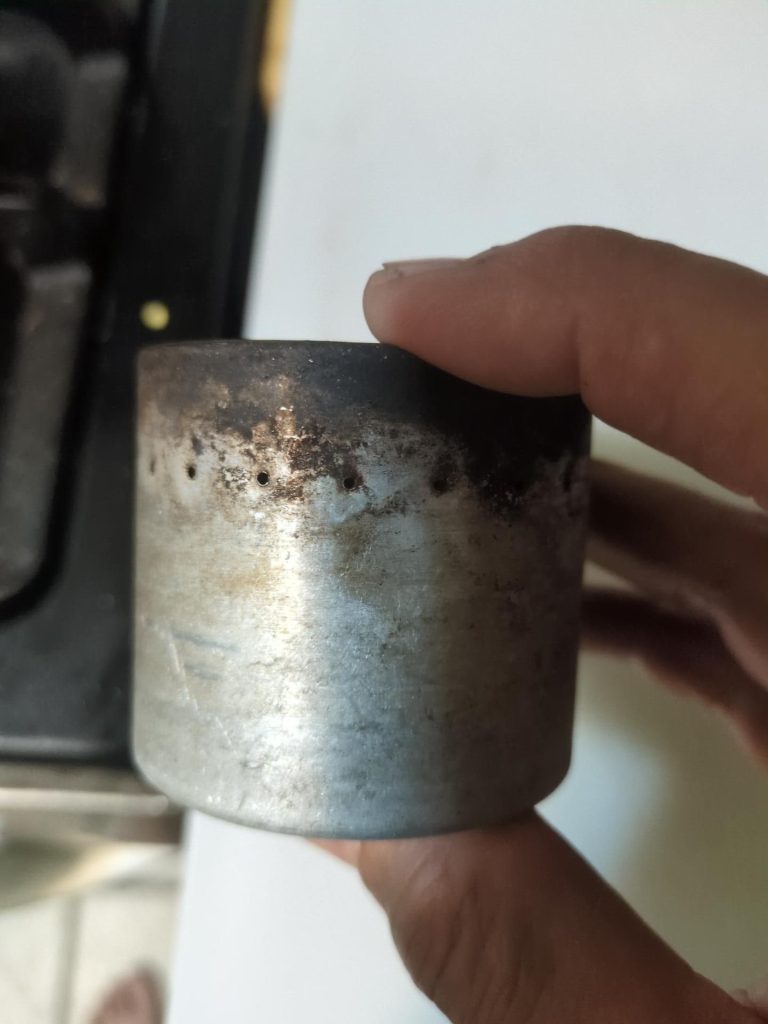
Ah, my old backcountry companion: the White Box alcohol stove.
I’ve used this simple stove since about 2008, and it remains a warhorse, mostly retired to the stable.
It’s lightweight, inexpensive, simple, and has almost nothing that can break.
For solo shoulder-season backpacking, particularly when I make only one hot meal a day, the White Box works beautifully.
Boil some water, make dinner, and enjoy the evening.
I don’t need a stove for elaborate cooking or melting large quantities of snow on these trips.
Alas, there’s a significant limitation: Alcohol stoves often fall under fire restrictions in the West.
Many fire restrictions prohibit stoves without an on/off valve, effectively ruling out alcohol stoves such as the White Box.
As a result, I use mine much less frequently than I did in years past.
Having seen firsthand what wildfires can do to the landscapes I enjoy, I’m certainly not going to ignore fire restrictions for a hot meal.
When regulations and conditions allow, however, I still happily bring it along. I also enjoy not having to hunt down canisters when resupplying.
Nearly two decades later, the White Box still works.
Three-season solo backpacking and longer hikes: No stove!

Joan will also eat cold on longer hikes.
Of course, sometimes my favorite stove is no stove at all.
On many of my solo three-season trips, especially longer hikes, I go stoveless.
No stove, no fuel, no pot, and no time spent cooking.
Tortillas, cheese, nuts, salami, and other grocery store staples provide plenty of calories without requiring a hot meal.
And after a long day of hiking, I often prefer eating something quickly rather than spending time preparing dinner. Or eat a meal and hike on, especially with longer daylight hours.
Going stoveless also simplifies resupply on longer hikes. I don’t need to find fuel, wonder how much remains in a canister, or carry cooking equipment.
Does a hot meal taste good after a cold and wet day? Absolutely.
But for many three-season trips focused on distance, the convenience of cold food outweighs the pleasure of a hot dinner.
And I don’t consider going stoveless a radical position.
Sometimes I want a hot meal.
Sometimes I don’t.
As with much of my backpacking, I choose what works for the particular trip.
Backup stove: Generic canister stove
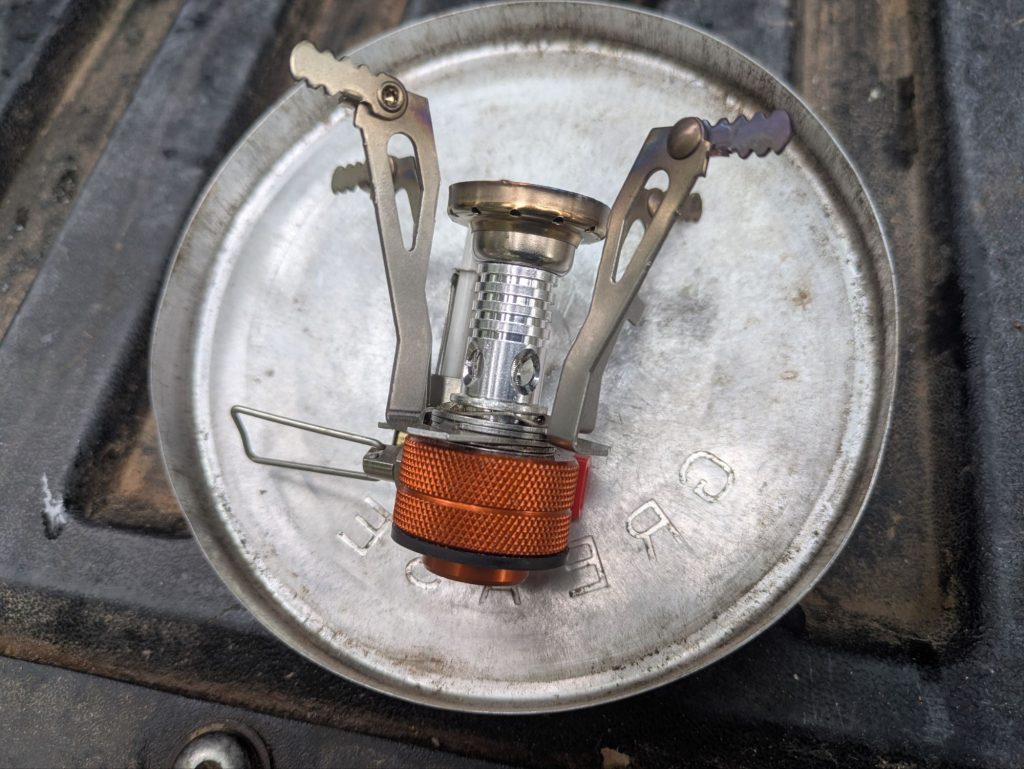
I also have my generic $10 canister stove.
It’s inexpensive and works well enough for my needs.
I typically used it as a backup or when Joan had our Optimus, and I needed a stove for a separate trip.
Nothing particularly exciting about it. It’s just a stove that works.
Sometimes an inexpensive stove that reliably boils water is all I need.
No longer in the rotation: BRS-3000T

I’ve previously written about the BRS-3000T as an alternative to alcohol stoves.
On paper, it looks appealing.
At approximately 0.9 oz (25 g), the stove weighs very little, packs down small, and costs relatively little.
If your primary concern is shaving every possible gram from your pack, I get the appeal.
But after using it in the field, I stopped using mine a few years back.
The small burner head doesn’t work particularly well with about 1-liter pots, and I find its fuel consumption disappointing.
Yes, I’ve seen the kitchen table reviews showing how efficiently the BRS boils a measured amount of water under controlled conditions.
My experience in the field differs.
Wind, pot size, flame distribution, and performance over repeated trips matter more to me than a single boil test in a sheltered kitchen.
I find the BRS goes through fuel faster than I’d like, particularly compared with stoves that have wider burner heads.
And saving an ounce on the stove doesn’t mean much if I end up carrying more fuel.
The weight of the complete cooking system matters more than the stove alone.
The BRS certainly has its fans, and I’m sure it works well for many people.
It just doesn’t work particularly well for me.
A few thoughts on stove weight, fuel, and efficiency
One thing that hasn’t changed over the years is my skepticism about looking at stove weight in isolation.
A stove is only one part of a cooking system.
You also have the pot, fuel, fuel container, and whatever accessories you need to make the stove work efficiently.
A very light stove that burns more fuel may not save weight over a longer trip.
Similarly, carrying an oversized fuel canister for a short trip adds weight without necessarily providing much benefit.
For Joan and me, sharing a stove and cooking setup makes sense. The Green Peak’s modest weight penalty becomes even less significant when two people share it.
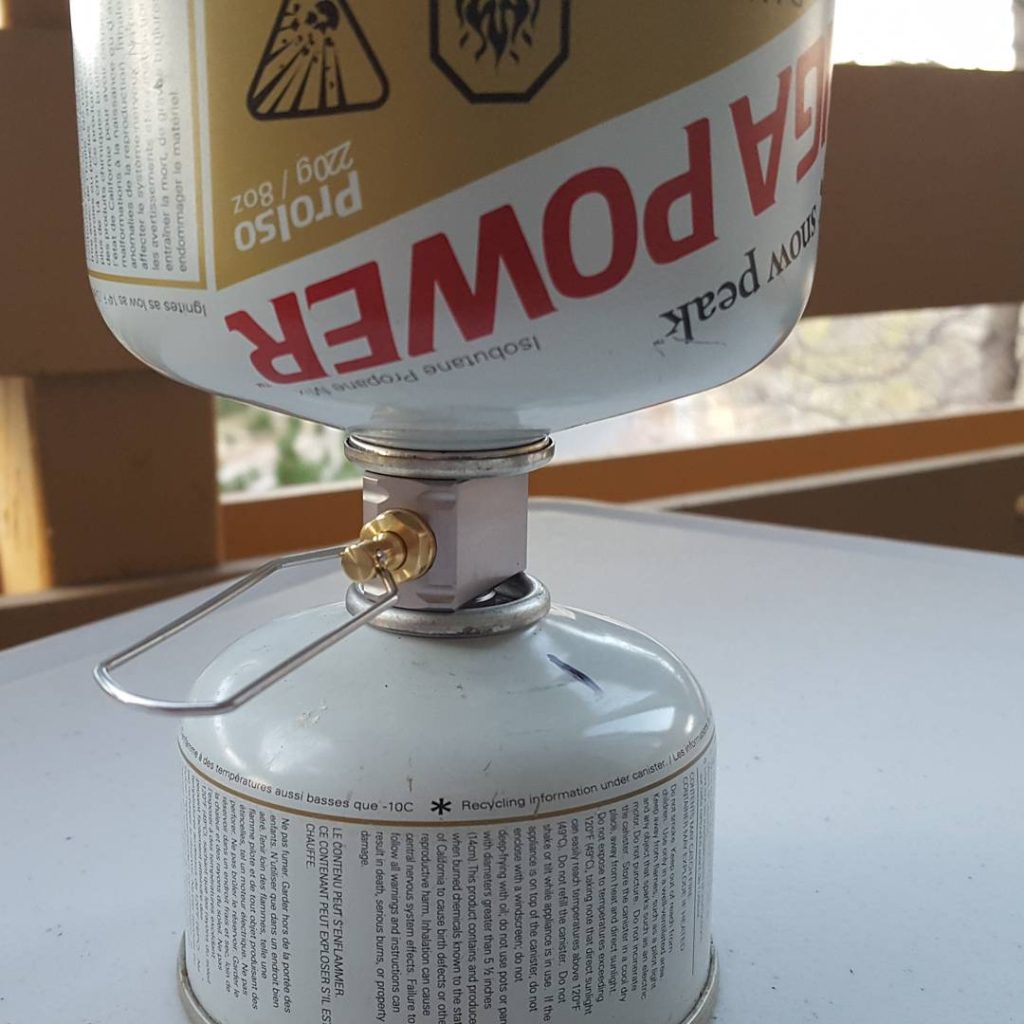
I also occasionally transfer remaining fuel between compatible canisters using my G-Works Gas Saver, taking care to avoid overfilling and following appropriate precautions.
This practice helps me use partially filled canisters instead of accumulating a collection of nearly empty ones.
And I find it amusing that a simple tool I’ve used for years suddenly became the latest revolutionary backpacking accessory when a company started selling a similar device with different branding!
The power of marketing…and red paint, apparently.
Final thoughts

To quote Joan, “We sure know how to make 42 inches of space work for us for the 14 hours of darkness!”
Looking at my backpacking stove quiver in 2026, I see a mix of old favorites, newer budget equipment, and gear that I rarely use anymore.
My White Box Stove still works after nearly two decades.
My MSR SimmerLite is still ready for the occasional deep-winter trip.
The Fire-Maple FMS-118 handles most of our cold-weather backpacking, while the Green Peak has become our regular three-season stove.
And for many solo trips, I don’t carry a stove at all.
I’ve also become increasingly impressed with Fire-Maple. The company offers several capable, affordable stoves that, in my experience, perform as well as I need without the premium prices of more heavily marketed brands.
Much like my quiver of packs, my stove choices reflect the different trips I take.
No single stove works best for every situation.
Someone taking weekend trips in the Southeast may have different needs than someone melting snow in the Rockies or backpacking across the Utah desert.
And someone cooking elaborate meals will have different priorities than someone who boils water once a day.
My choices reflect the trips we take, the food we prepare, and the conditions we encounter.
The right tool for the job matters: what works best for the system and the task at hand, not just a single line on a spreadsheet.