
I’ve written before about my somewhat contrarian views on Alpha fleece. I acknowledge its excellent warmth-to-weight ratio, breathability, and low bulk, but I’m not nearly as enamored with Alpha as many people in the ultralight world.
For active use, I generally prefer more durable and versatile fleece. Alpha snags easily on our Colorado Plateau jaunts, offers essentially no wind resistance, and often needs a shell to work effectively. Once I start adding another layer, I’m adding weight and futz factor while cutting into the breathability that makes Alpha appealing in the first place.
Where I do like Alpha fleece is for static use. Around camp, during breaks, or as part of a sleep system, the low weight and bulk make a lot of sense.
And that brings me to the Squak Alpha Fleece Beanie.
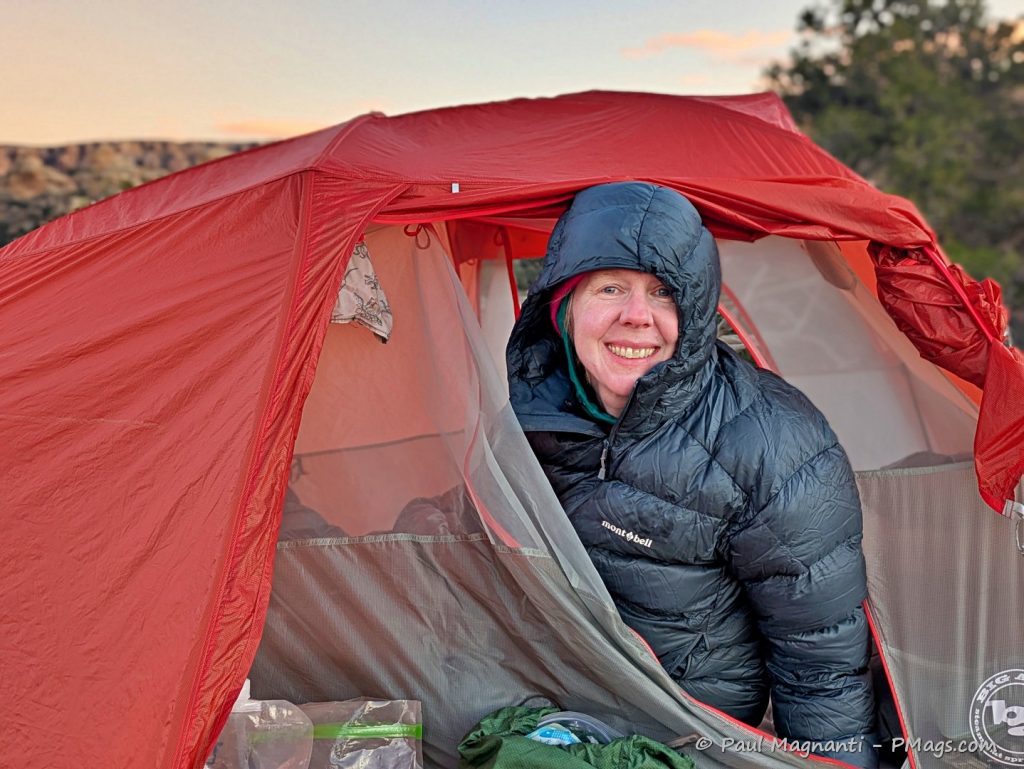
You can barely see it, but Joan’s wearing the pink beanie. Sorry, I don’t have any photos of just the beanie. 🙂
The Squak beanie comes in different Alpha Direct weights, with the 90 GSM version hitting what I think is a particularly useful sweet spot. Squak lists the large 90 GSM version at just 0.5 oz (14 g).
Joan uses a 60 GSM Alpha fleece beanie, and the material has a somewhat looser weave than the 90 GSM material used in my beanie. Otherwise, the two materials are quite similar, and the weight difference between the two versions is negligible on the scale. As we both primarily wear them while static, the real-world performance seems similar.
I rarely wear a beanie while actively backpacking anymore. Between the hoods on my fleece layers and a gaiter (Buff), I usually have enough head insulation while hiking.
But I still like having a dedicated beanie for static use in colder weather, particularly around camp. Sadly, truly cold weather was not exactly common in Utah this past winter.
For many years, I used an SP30 fleece beanie for backpacking. It worked well, packed down to a reasonably small size, and became one of those simple, inexpensive pieces of gear that quietly stayed in my kit.
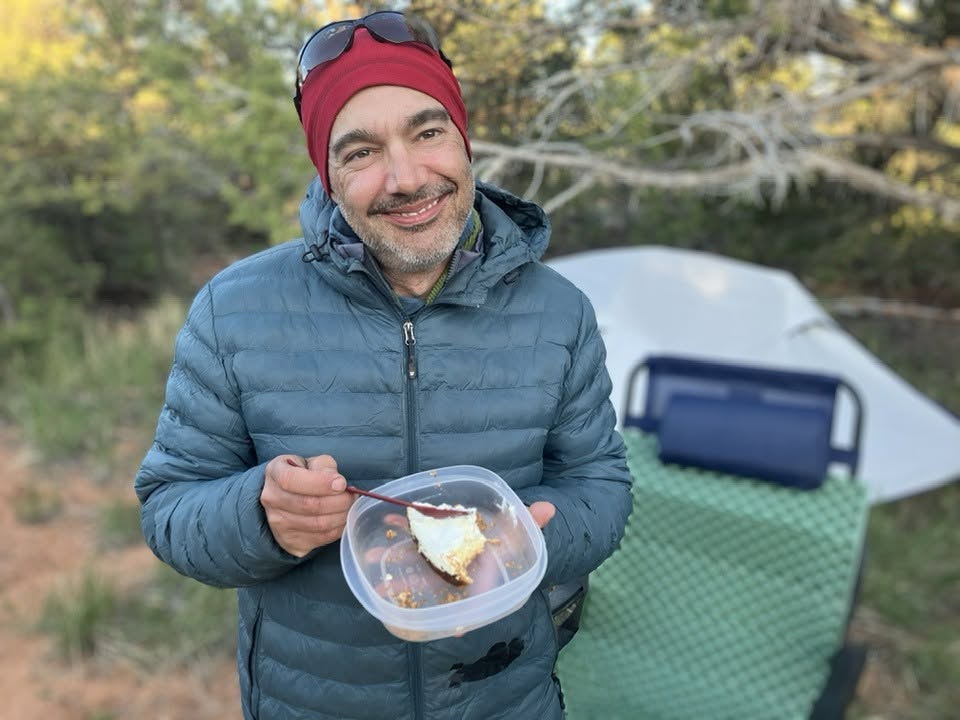
And still using it for camping. I’m enjoying some birthday cheesecake from last year in between backpacking during our “Eight Days at the Edge of Nowhere”
The Squak Alpha beanie takes the same basic concept and pares it down even further.
It’s lighter, less bulky, and more breathable than my previous backpacking beanie. I stuff it into my cold-weather puffy and barely notice it’s there.
I would not choose it for active cold-weather use such as ski touring. For that use, I prefer something more durable and with a little more wind resistance.
But for sitting around camp, taking a break, sleeping, or otherwise supplementing my cold-weather system when I’m not generating much heat? It works quite well.
And, unlike many pieces of cottage ultralight gear, the price is a very reasonable twenty dollars.
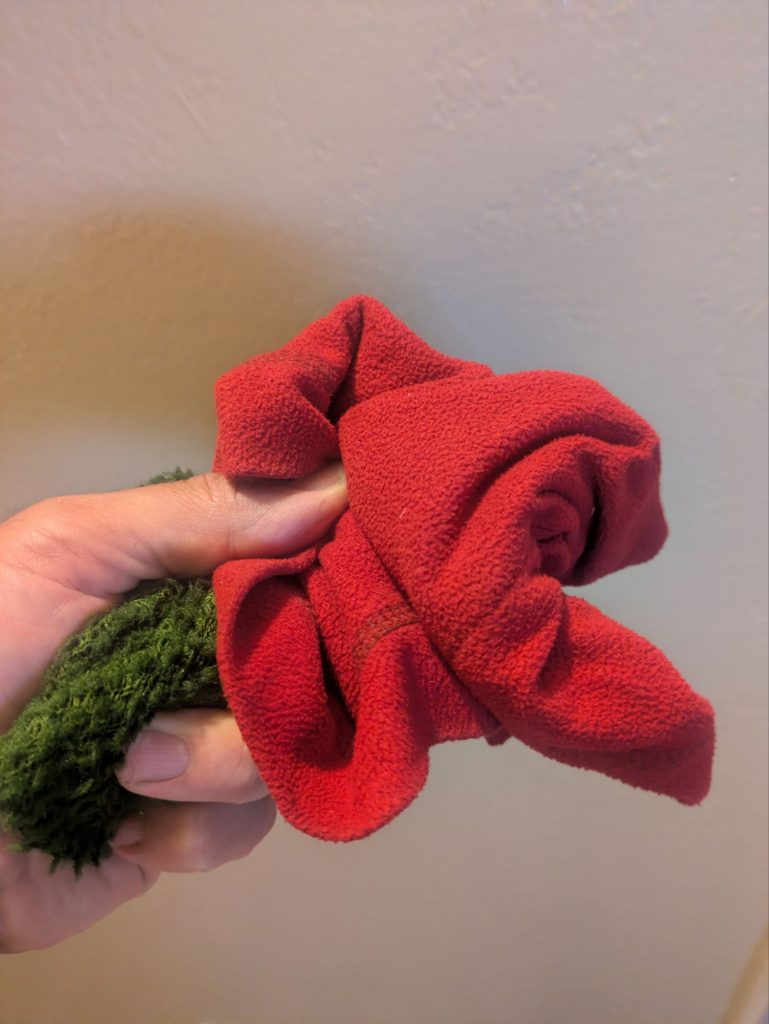
How the two fleece beanies compare when compressed.
Overall? The Squak Alpha Fleece Beanie reinforces my overall opinion of Alpha fleece rather than changing it.
I’m still not enamored with Alpha as an all-purpose active layer. I prefer more durable and versatile fleece for that role. But when used for static insulation, Alpha’s excellent warmth-to-weight ratio and extremely low bulk make much more sense to me.
A beanie may be one of the better applications for the material.
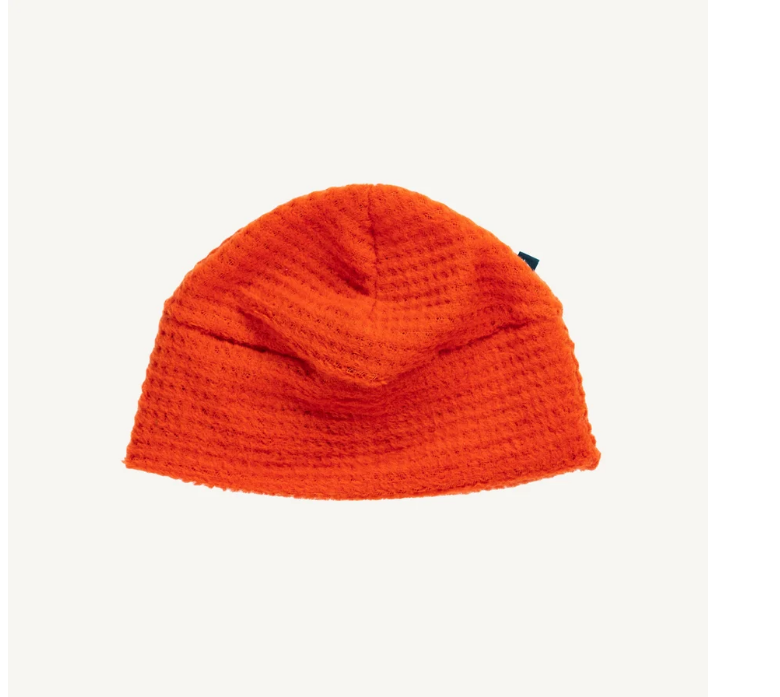
From Squak
The Squak version weighs next to nothing, takes up almost no space, breathes exceptionally well, and adds useful warmth to my cold-weather system. At $20, it’s reasonably priced, too.
At the moment, Squak lists the beanie as nearly sold out. Hopefully they’ll stock it again soon!